

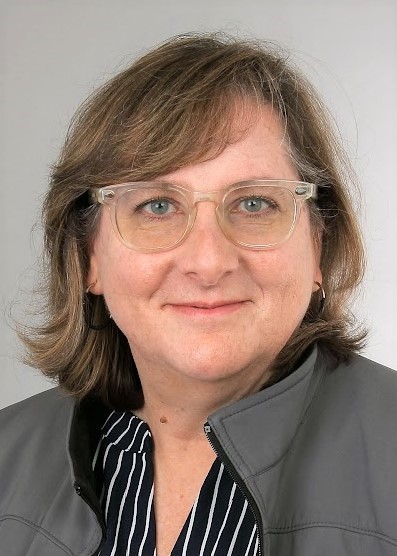
Stefanie Blakely, Liam Blakely and Psychiatric Intake Response Center (PIRC) therapist Ashley Loftis
Stefanie Blakely was at a work event one night in October 2022, when she received a text message that would leave almost any parent in shock. It was from her 12-year-old son, Liam. He was considering suicide.
“I just felt like the world stopped completely,” Stefanie said.
Scared and nervous, Stefanie felt she needed to get to Liam immediately. But he was on the other side of town, and she worried she might not be able to get to him quickly enough to keep him safe. She left the event and drove to pick him up, calling and texting with him along the way. When she arrived, Liam shared the emotions that led to his text. He was still upset.
“I just was really lost as a parent trying to figure out what the best resource was for my son at that point,” Stefanie said.
Stefanie works at Children’s of Alabama and was familiar with the hospital’s Psychiatric Intake Response Center, or PIRC. Liam’s therapist also had mentioned it. While driving down the road wondering how to help Liam, Stefanie remembered it. She pulled into a parking lot, looked up the number and called.
The PIRC is a phone response center for adults seeking mental health resources for their children or adolescents. Callers can have free, confidential conversations with licensed mental health clinicians who assess a child or teen’s mental, emotional and behavioral needs and recommend the best treatment options, including the contact information of multiple mental health professionals in their community.
“For our PIRC therapists, it’s been a very rewarding experience for them to be able to talk to folks who need that help and who are looking to do the right thing for their child. They are getting an opportunity to be there in that moment,” PIRC director Cindy Jones said. “And answering callers’ questions, we do notice a lot of times that if we are there for them, that it decreases the anxiety and the stress level and the frustration that a lot of parents or caregivers or whomever have while trying to find those right resources.”
When Stefanie called, she “got the most reassuring voice on the other end of the line,” she said. Ashley Loftis, the therapist she spoke with, advised her to take Liam to the Children’s Emergency Department. “I think that may have saved my life that night,” Liam said.
The call led to a positive turn in what had been a long process for Liam. Stefanie says he started struggling with depression around 3rd grade and was diagnosed that year with attention deficit hyperactivity disorder (ADHD). School closures resulting from the COVID-19 pandemic led to more challenges. “The isolation of being stuck at home was very difficult for him,” Stefanie said. Even when schools reopened, Liam was still struggling and met with school counselors. His pediatrician recommended increasing his ADHD medications, but by early 2022, it was obvious to Stefanie that more resources were needed. He started seeing a licensed therapist, and in the fall of that year, his pediatrician put him on a low dose of Zoloft. But he was still dealing with depression and having trouble sleeping.
Then came the night of the text message. Initially, it seemed like a low point. “I felt that feeling when you can feel the color just draining from your face into your body,” Stefanie said. Ultimately, however, it became a turning point, leading to changes in Liam’s mental health services.
“They gave us the guidance that we needed,” he said. “And I think that may be what started my journey to better mental health.”
One of the next steps in that journey was the Children’s Partial Hospitalization Program, or PHP—a day treatment program that helps patients who, at the time, are not candidates for an inpatient stay but need more intense treatment than the typical outpatient structure provides. There, Liam worked with a therapist who was able to identify his depression, anxiety, ADHD and obsessive-compulsive disorder (OCD) as symptoms of a larger issue. She suggested having him evaluated for autism spectrum disorder (ASD), with which he was diagnosed a few months later. “[The ASD diagnosis] has been huge for us in navigating his mental health as well as his school experience,” Stefanie said. Now, Liam visits the Children’s outpatient clinic every six months, and his doctor has a full picture of who he really is.
But the process of understanding Liam and getting him the help he needs began at the PIRC.
Stefanie says she’s incredibly thankful for it and for the calming therapist on the other end of the line. “To have someone be the definitive voice of reason to say, ‘This is what you need to do,’ in a moment when you feel just completely lost—not knowing what’s going on or what your next steps are supposed to be—is so nice,” she said. “And I was so grateful in that moment.”
For more information on the PIRC, click here. If you need help for your child, you can call the PIRC at 205-638-PIRC (7472).

No Comments