
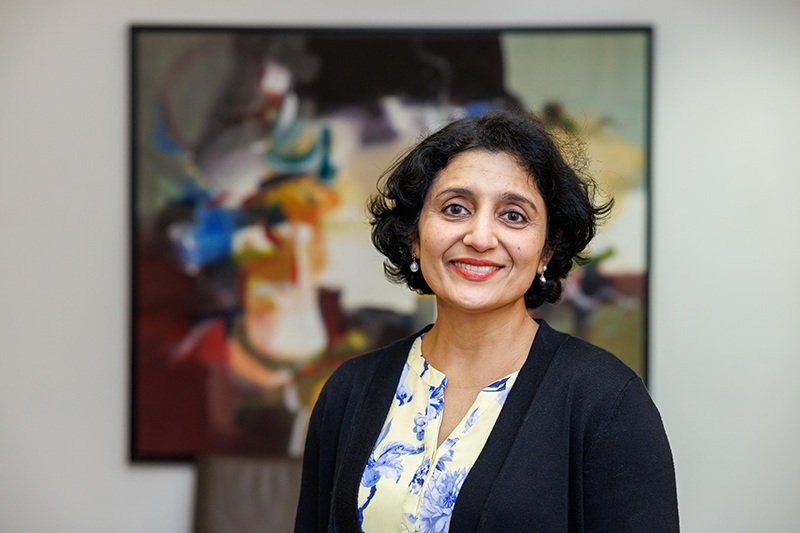
A study led by Ambika Ashraf, M.D., shows the unique challenges that patients with hybrid diabetes face.
A study led by Children’s of Alabama endocrinologist Ambika Ashraf, M.D., highlights the unique characteristics of hybrid diabetes (HD) or double diabetes, distinguishing it from both type 1 and type 2 diabetes. It is pivotal in understanding the different trajectories of diabetes in children and may pave the way for more targeted treatment strategies.
The study, titled “Children and Adolescents With Hybrid Diabetes: A Management Conundrum” is a retrospective analysis from 2016 to 2020, examining 102 subjects with type 1 diabetes (T1DM), hybrid diabetes (HD), and type 2 diabetes (T2DM). It was published in the journal Endocrine Practice.
Key findings of the study indicate that children with HD show a blend of autoimmune diabetes autoantibody positivity (a hallmark in T1DM) and insulin resistance (a hallmark of T2DM), creating a complex treatment and management scenario.
Researchers found that patients with HD were still insulin dependent at a two-year follow-up, like patients with T1DM. Patients with HD also had a strong positive family history of T2DM and preserved endogenous c-peptide production, like patients with T2DM.
“Our study findings underscore the need for healthcare providers to be vigilant in diagnosing and managing this distinct form of diabetes, which poses unique challenges due to its hybrid nature,” said Ashraf, who’s the director of the Division of Pediatric Endocrinology and Diabetes at the University of Alabama at Birmingham (UAB). “The study calls for further research to develop precision treatment strategies for pediatric patients with hybrid diabetes. Our team of researchers wants to encourage more research specifically on using insulin sensitizers and incretin based therapies.”
Other study authors included first author Charles A. Gagnon BS, UAB Heersink School of Medicine medical student, and Jessica Schmitt M.D., assistant professor in the Division of Pediatric Endocrinology and Diabetes.

No Comments