
Browsing Category

Behavioral Health

Behavioral Health

Children’s of Alabama offering mental health training for school personnel

School personnel are often the first to recognize a student’s mental health needs. (Stock photo)

As the mental health crisis continues across the country, children and teens are in greater need of mental health services than ever before. In many cases, the first person to recognize the child’s need is a teacher. But the teacher may not always know how to help. That’s why Children’s of Alabama recently expanded one of its mental health programs to offer training for school personnel.

The program, Pediatric Access to Telemental Health Services (PATHS), has been around since 2019. Children’s established it—with support and funding from the Alabama Department of Mental Health (ADMH)—in response to the need for more mental health services, especially in rural areas. The initial goal was to help primary care providers understand how to help patients who present with mental health concerns. Through the program, Children’s mental health professionals offer consults or education for providers or even telehealth appointments for their patients.

PATHS has since expanded into urban areas, and now, thanks to the extension of a Health Resources and Services Administration (HRSA) grant, Children’s is offering support to school systems across the state.

“This is an important step for our program,” PATHS director Margo Harwell, LICSW, PIP, said. “Because they see students daily, school personnel play a critical role in identifying early signs of mental health concerns in students.”

How it Works

When the PATHS team decided to expand their services to schools, they immediately realized their assistance would differ from what they offer medical centers. Providing on-the-spot consulting for teachers and administrators wouldn’t work, nor would telemedicine appointments. What they could provide, however, was education.

They began their efforts in the summer of 2024, meeting with mental health coordinators in school systems across Alabama to discuss what topics might need to be covered in their respective districts. Once those needs were identified, PATHS leaders set up in-person, virtual or hybrid training sessions.

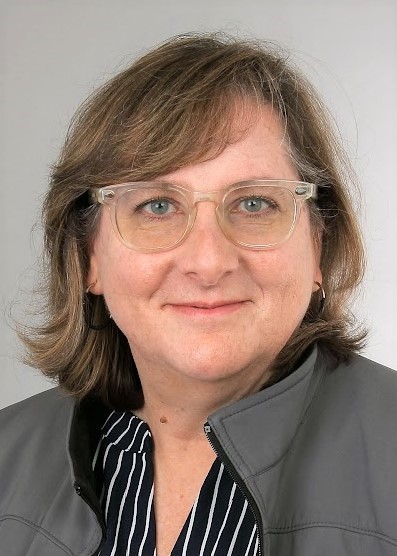
Margo Harwell, LICSW, PIP

“We have found that every school system is unique and has different training needs,” Harwell said. “For example, if schools mention that they have had an increased number of students experiencing anxiety, we can partner with that school to provide a targeted training that is focused on strategies to help students manage their anxiety within the school environment.”

PATHS leaders have offered training on that topic and others, including behavior management, depression, trauma and bullying. They’ve also taught educators how to identify the red flags of mental health concerns among students.

The focus is, of course, on how to help students. But educators’ mental health needs are crucial, too. To help with that, the PATHS team offers sessions on self-care. “If a teacher or counselor isn’t caring for themselves, it becomes much harder to have the patience and emotional capacity needed to identify and support a child facing mental health challenges or coming from a background of trauma—especially when those students might be exhibiting challenging behaviors,” Harwell said. By practicing better self-care, school personnel may be more likely to recognize that the child who’s acting out may actually be in need of support, she added.

The sessions, whatever the topic, are opportunities for discussion among school staff and Children’s mental health experts. “Training sessions include conversations about intervention strategies and guidance on how to help and support students within the school setting who may be experiencing mental health challenges,” Harwell said. Ultimately, they hope to help educators understand how to handle these issues as they arise.

Right now, the team is offering training sessions to teachers and counselors. Eventually, they may offer them to support staff or administrators, who often develop close relationships with students, Harwell says. “Think about bus drivers, for example. In many cases, they’re the first person to see a student each morning,” she pointed out. “Some students have the same bus driver for years, so they get to know them and may share their feelings or thoughts. This gives them insight into the child’s concerns or emotional state.”

More on the HRSA grant

The PATHS program exists because of a HRSA grant awarded to ADMH. The grant is a Pediatric Mental Health Care Access Program (PMHCA) grant, which Children’s helped write. The hospital receives the majority of the money awarded through the grant, which was originally approved in 2018, then extended in 2023. “These grants have been monumental to the building of this program and really sustaining it thus far,” Harwell said.

With the initial grant, Children’s started PATHS and began enrolling primary care practices. Today, 128 practices are enrolled. “The funding has been instrumental in being able to do that,” Harwell added.

The partnership with ADMH also has been vital. The organization offers guidance and facilitates collaboration with the other states and organizations through the HRSA network of PMHCA awardees. “This continually challenges us to look at how we’re doing, what we do and how we can continue to improve our program and our processes.”

The next step

The program’s next improvement may involve expansion into rural emergency departments (EDs). PATHS leaders already have initiated conversations with a few around Alabama. Harwell says the PATHS team hopes to offer access to their consultation lines to extend support if the ED has a child who arrives with mental health concerns. The goal, Harwell says, is not to intervene in situations of acute crisis—that is outside the role of PATHS. “But if a child is in a rural ED and needs to stay for a few days due to, say, lack of available beds, and there are concerns about mild to moderate mental health issues, we want to offer consultation services to support that child’s care,” Harwell said.

The impact

As the PATHS team keeps an eye toward the future, they’re also aware of how far they’ve come. Mental health care is difficult in Alabama—the non-profit Mental Health America (MHA) in 2019, the year PATHS was founded, ranked the state 7th in prevalence of mental illness among youth and 45th in youth access to care. By 2024, when MHA released its most recent rankings, Alabama had dropped to 14th in youth prevalence of mental illness and risen to 36th in youth access to care. Multiple factors have played a role in the improvements, and Harwell says PATHS is one. “Our state has really taken steps forward,” she said. “I happen to believe the PATHS program has helped with that.”

Behavioral Health

Transforming Behavioral Health Services in the Emergency Department

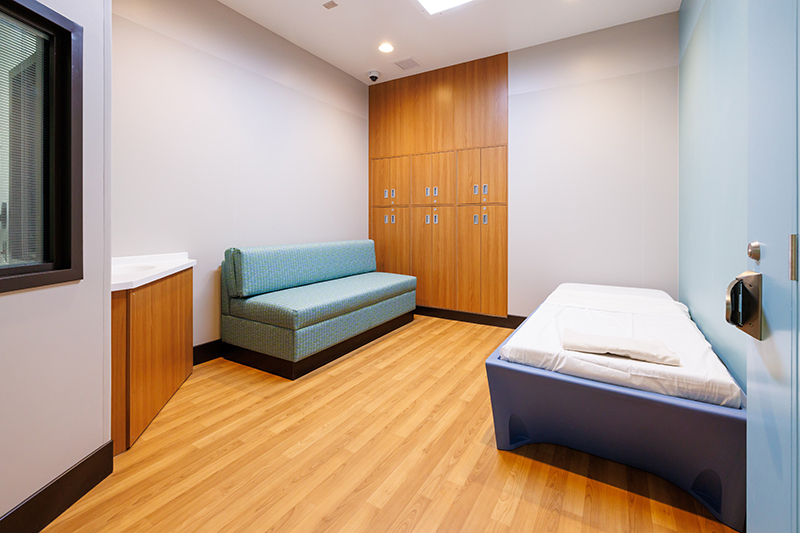
A look inside one of the rooms in Children’s of Alabama’s Nature Hall, a behavioral health unit within the emergency department.

Two years after opening a behavioral health safe area within its emergency department (ED), Children’s of Alabama is already seeing dramatic improvements to the way children in mental health crises are treated. It’s the fruition of a vision the hospital’s behavioral health team began developing several years ago.

The Children’s of Alabama Nature Hall opened in March 2023 as an expansion of the ED designed to provide 24/7 services to children and adolescents who arrive in need of mental health evaluation. With 16 beds, it quadrupled the hospital’s capacity to treat children with mental health needs in the ED. Children’s developed it in response to a record surge in mental health patients that began around 2019.

Marked improvement 

Already, the Nature Hall’s impact is clear. Since it opened, the average length of stay for patients discharged from the ED has decreased from 9.46 hours to 4.55 hours. The number of patients who left without being seen dropped all the way to zero in 2024, compared to 47 in 2022, the year before the Nature Hall opened. “These are incredible outcomes that reflect the dedication of our staff and the importance of having the right resources in place,” said Bonnie Moore, director of Inpatient Behavioral Health Services at Children’s.

Moore attributes the Nature Hall’s success in part to the team’s decision to staff the unit with trained behavioral health professionals, including nurses, behavioral associates and psychiatric providers. “This ensures children receive care from experts who understand their unique needs, which has greatly enhanced patient outcomes,” she said. 

Some of the staff who serve the unit are part of the Psychiatric Intake Response Center (PIRC), which is a phone response center for adults seeking mental health resources for their children or adolescents. The PIRC team is made up of licensed mental health professionals who, in addition to answering calls, provide behavioral health consultation services within the ED. In the Nature Hall, PIRC therapists provide evaluations, Alabama Department of Human Resources reporting, discharge planning, and transfers to outside hospitals. With the PIRC’s robust database of more than 1,900 providers, team members are also able to offer mental health resources for patients and their families.

“The PIRC program bridges a critical gap in mental health care by providing both in-person and phone-based resources,” PIRC director Cindy Jones, MA, LPC-S, NCC, said.

The idea behind the Nature Hall

The need for a behavioral health safe area like the Nature Hall became evident in 2019 when the hospital faced an record surge in emergency mental health cases. Behavioral health patients began occupying up to half of the ED’s beds, far exceeding the capacity of its original four-bed, behavioral-health-safe “pod.” This crisis prompted Children’s to repurpose an underutilized space within the ED, culminating in the creation of Nature Hall. Now, children and providers both benefit from this state-of-the-art area dedicated to pediatric behavioral health patients.

Both Moore and Jones attribute the rising demand for children’s mental health services to several factors, including social media influences, exposure to inappropriate content online, and increased societal stressors. While these challenges existed prior to the pandemic, COVID-19 exacerbated the crisis. “People are now more willing to seek mental health care due to reduced stigma, but this has created additional pressure on resources,” Jones explained. “However, part of the PIRC’s mission is assist caregivers by helping them navigate what behavioral health services are available, match them with the appropriate services and resources in their communities, and educate them on what to expect.” 

Children’s of Alabama continues to refine its approach to managing pediatric mental health demands, demonstrating how targeted efforts address urgent public health issues. Moore says the improvements Children’s has seen since opening Nature Hall highlight the impact of investing in specialized care for the most vulnerable patients.

Behavioral Health

Intensive Outpatient Program helps patients return to normal life

In early August 2024, Children’s of Alabama opened a new Intensive Outpatient Program for behavioral health patients.

A much-needed bridge between inpatient and outpatient care for adolescents facing mental health challenges arrived at Children’s of Alabama in 2020 in the form of the Partial Hospitalization Program (PHP).  This program offers more intense treatment than typical outpatient structure provides and encourages success in symptom management and recovery. Following increased demand for the program in the wake of the COVID-19 pandemic, Children’s has now launched an Intensive Outpatient Program (IOP), an extension of the PHP designed to better help these young patients adapt to daily life.

Just as the PHP was created to fill the gap between inpatient and outpatient services, the IOP is meant to help these young patients make another crucial step—back to normal living. “Many times, our parents and families say they wish there was something available between the PHP and outpatient setting,” program manager Lauren Byrd, MS, LPC, said. “This is something our community has been asking about for some time.”

In 2021 and 2022, The PHP served about 100 adolescents, most of whom were coping with depression with suicidal ideation, Byrd says. About 140 such patients accessed the program in 2023, and referrals continue to increase those numbers.

“Both the PHP and IOP have been really sorely needed for some time in our area for adolescents with mental health issues,” Byrd said. “Combine that with the pandemic—which was really a traumatic experience for a lot of youth in Alabama—and the need has only increased. If a silver lining could exist, the pandemic did a lot to help us address the stigma of mental health, and it helped more people feel empowered to access care who maybe wouldn’t have.”

The IOP, which opened in August, serves adolescents ages 12 to 18 and runs three hours a day, three days a week—a deliberate step back from the PHP’s five-day, six-hours-daily structure. The less-frequent, less-intensive schedule is its main distinction from the PHP. But both programs have the same staff support, including psychiatrists, nurses and other mental health clinicians. The IOP also coordinates a variety of community resources for patients and families that help adolescents build a comprehensive support network to enhance treatment outcomes.

“The PHP is designed to prevent or reduce the length of an inpatient stay,” Byrd said. “So the IOP is a natural progression to our efforts to reduce the time we’re removing a child from a home environment and helping them meet their goals in the least disruptive, least traumatic way possible.”

Family members are involved in the programming, as well, including weekly sessions and education. “We’ll discuss treatment planning goals with the family and help them however they may need,” Byrd explained. “Usually, that looks like building better communication and helping them understand how things are going to be after discharge.”

“The best outcome would be that we continue to grow,” she added. “We want to expand our services and help more kids in the community while providing the same high-quality care we’ve been proud of.”

Behavioral Health

BEST strategies for stopping workplace violence

Children’s of Alabama is implementing an initiative to prevent an de-escalate workplace violence against health care workers.

Health care workers are five times more likely to experience workplace violence than those in other industries. They account for 73% of all nonfatal workplace injuries from violence.[1] The incidence has been rising since the pandemic, with one survey from the American Nurses Foundation finding a 119% increase in nurses reporting worsening workplace violence between March 2021 and March 2022.[2]

That is why the Children’s of Alabama’s Behavioral Event Support Team (BEST) initiative is so critical. The program is designed to ensure a rapid response and de-escalation to potentially violent incidents on medical units. It also helps identify patients at risk for “behavioral events” to prevent them before they occur.

Before BEST was created, it was rare for behavioral health staff to interact on the medical side of the hospital, said Bonnie Moore, RN, nursing director at the hospital’s Behavioral Health Inpatient Ireland Center. And yet, given their training in managing patients who may become violent, they had the skills the rest of the hospital needed. Now, she said, “we’re talking about how we’re meeting the needs of patients who are not housed within the inpatient behavioral health space.”

It starts with a patient and family assessment before admission, with patients (or their caregiver) describing how they think they’ll respond to being in the hospital. The caregiver also shares if the patient has shown any behavior in the past six months that could have harmed someone.

“Partnering with the patient at the beginning of the admission to help them have the most therapeutic environment as possible allows them the best opportunity of healing while they’re here,” said Brandy Reeve, senior executive leader of Behavioral Health Services at Children’s.

The medical staff is trained to identify early signs of problems in both patients and family. For instance, parents are observed daily for any signs of escalating stress or anxiety, such as asking more questions than normal, pacing in the room, or raising their voice on their cellphone when they previously weren’t. “That’s when a social worker will come in and visit with the family to make sure they have their needs met,” Reeve said, “and that there’s nothing else that they can do to help better support them so we’re not getting to a place where it’s escalating.”

Staff are also trained to recognize signs of acute behavioral stress and activate the BEST team to de-escalate the situation.

In one instance, a patient admitted for tonsilitis with no behavioral concerns on assessment became quite agitated at night. The mother spoke only Spanish and tried to communicate with the staff via Google translate that she needed help and didn’t feel safe with her son. The nurse activated the BEST team, which de-escalated the situation within a few minutes with no further problems.

“Sometimes it’s just being able to communicate appropriately; to help the patient better understand what they need to do and why they need to do it,” Reeve said.Having been a medical nurse all my life, we’re not great at that,” she said. “We’re like, ‘just sit still, I’ve got to get this thing done.’” 

The effort is working. “Anecdotally, I believe since we have rolled out the BEST pathway that the things we’re doing on the front end appear to be successful,” Moore said, “which results in fewer calls for the ‘heroes in the capes’ to do all the magical behavioral things. All the pieces come together.”

The pilot phase of the program launched in February, and the team hopes to roll it out throughout the hospital in the fall.

The BEST program represents a shift toward viewing patients holistically, Reeve said. “I think that we’re increasing awareness to all of those that would claim to be, you know, ‘I work on the medical side, not the behavioral health side,’ that they are recognizing that our psychosocial health is just as important as the health we have with any other medical ailment because when it’s not OK, everything else is affected.”


[1] Ninan RJ, Cohen IG, Adashi EY. State Approaches to Stopping Violence Against Health Care Workers. JAMA. 2024;331(10):825–826. doi:10.1001/jama.2024.1140

[2] American Nurses Foundation. Pulse on the Nation’s Nurses Survey Series: 2022 Workplace Survey. Available at: https://www.nursingworld.org/practice-policy/work-environment/health-safety/disaster-preparedness/coronavirus/what-you-need-to-know/covid-19-survey-series-anf-2022-workplace-survey

Behavioral Health

PIRC paves the way to better mental health

Stefanie Blakely, Liam Blakely and Psychiatric Intake Response Center (PIRC) therapist Ashley Loftis

Stefanie Blakely was at a work event one night in October 2022, when she received a text message that would leave almost any parent in shock. It was from her 12-year-old son, Liam. He was considering suicide.

“I just felt like the world stopped completely,” Stefanie said.

Scared and nervous, Stefanie felt she needed to get to Liam immediately. But he was on the other side of town, and she worried she might not be able to get to him quickly enough to keep him safe. She left the event and drove to pick him up, calling and texting with him along the way. When she arrived, Liam shared the emotions that led to his text. He was still upset.

“I just was really lost as a parent trying to figure out what the best resource was for my son at that point,” Stefanie said.

Stefanie works at Children’s of Alabama and was familiar with the hospital’s Psychiatric Intake Response Center, or PIRC. Liam’s therapist also had mentioned it. While driving down the road wondering how to help Liam, Stefanie remembered it. She pulled into a parking lot, looked up the number and called.

Cindy Jones, MA, LPC-S, NCC

The PIRC is a phone response center for adults seeking mental health resources for their children or adolescents. Callers can have free, confidential conversations with licensed mental health clinicians who assess a child or teen’s mental, emotional and behavioral needs and recommend the best treatment options, including the contact information of multiple mental health professionals in their community.

“For our PIRC therapists, it’s been a very rewarding experience for them to be able to talk to folks who need that help and who are looking to do the right thing for their child. They are getting an opportunity to be there in that moment,” PIRC director Cindy Jones said. “And answering callers’ questions, we do notice a lot of times that if we are there for them, that it decreases the anxiety and the stress level and the frustration that a lot of parents or caregivers or whomever have while trying to find those right resources.”

When Stefanie called, she “got the most reassuring voice on the other end of the line,” she said. Ashley Loftis, the therapist she spoke with, advised her to take Liam to the Children’s Emergency Department. “I think that may have saved my life that night,” Liam said.

The call led to a positive turn in what had been a long process for Liam. Stefanie says he started struggling with depression around 3rd grade and was diagnosed that year with attention deficit hyperactivity disorder (ADHD). School closures resulting from the COVID-19 pandemic led to more challenges. “The isolation of being stuck at home was very difficult for him,” Stefanie said. Even when schools reopened, Liam was still struggling and met with school counselors. His pediatrician recommended increasing his ADHD medications, but by early 2022, it was obvious to Stefanie that more resources were needed. He started seeing a licensed therapist, and in the fall of that year, his pediatrician put him on a low dose of Zoloft. But he was still dealing with depression and having trouble sleeping.

Then came the night of the text message. Initially, it seemed like a low point. “I felt that feeling when you can feel the color just draining from your face into your body,” Stefanie said. Ultimately, however, it became a turning point, leading to changes in Liam’s mental health services.

“They gave us the guidance that we needed,” he said. “And I think that may be what started my journey to better mental health.”

One of the next steps in that journey was the Children’s Partial Hospitalization Program, or PHP—a day treatment program that helps patients who, at the time, are not candidates for an inpatient stay but need more intense treatment than the typical outpatient structure provides. There, Liam worked with a therapist who was able to identify his depression, anxiety, ADHD and obsessive-compulsive disorder (OCD) as symptoms of a larger issue. She suggested having him evaluated for autism spectrum disorder (ASD), with which he was diagnosed a few months later. “[The ASD diagnosis] has been huge for us in navigating his mental health as well as his school experience,” Stefanie said. Now, Liam visits the Children’s outpatient clinic every six months, and his doctor has a full picture of who he really is.

But the process of understanding Liam and getting him the help he needs began at the PIRC.

Stefanie says she’s incredibly thankful for it and for the calming therapist on the other end of the line. “To have someone be the definitive voice of reason to say, ‘This is what you need to do,’ in a moment when you feel just completely lost—not knowing what’s going on or what your next steps are supposed to be—is so nice,” she said. “And I was so grateful in that moment.”

For more information on the PIRC, click here. If you need help for your child, you can call the PIRC at 205-638-PIRC (7472).

Behavioral Health

Bridging the mental health gap for children in Alabama

The PATHS program at Children’s of Alabama is helping connect patients with mental health providers more quickly.

The United States is experiencing a crisis regarding children’s mental health, with many emergency rooms overwhelmed with urgent mental health visits.1 Adding to the crisis, said Children’s of Alabama child psychiatrist Vinita Yalamanchili, M.D., is a severe shortage of pediatric psychiatrists and other mental health providers, particularly in rural areas.

“The mental health needs of children have increased exponentially,” she said. “There’s just no way we can match those needs.”

Pediatric Access to Telemental Health Services (PATHS) at Children’s is designed to address both issues. The program is dedicated to increasing primary care providers’ ability to diagnose, treat and manage mild-to-moderate behavioral health conditions in children and adolescents.

Vinita Yalamanchili, M.D.

“It can take three to six months to see a therapist or psychiatrist,” Yalamanchili said. But waiting that long for treatment means kids in crisis are at risk of self-harm. With PATHS, they can get expert care from their primary care provider, often within 24 hours.

Primary care practices enroll with the program and receive access to the PATHS team, which includes child/adolescent psychiatrists and psychologists, psychiatric nurse practitioners, licensed clinical social workers and licensed professional counselors. In return, they agree to start behavioral health screenings for well-child visits and report results to PATHS; participate in one-hour, bi-weekly educational sessions on pediatric and adolescent mental health issues; and maintain ongoing responsibility for their patients’ behavioral health care and treatment.

Providers call PATHS when they have a patient who needs additional assistance. After an initial consult with a social worker, they are directed to the most appropriate team member to help. Yalamanchili, for instance, is usually the point person for medications. “I will tell the provider exactly how to prescribe the medicine and give them different options,” she said. For children who don’t need medication, the provider may talk to an early development specialist or a psychologist for information about topics like sleep training or behavioral management.

“You’re providing a consult for the provider to assist them in helping this child,” Yalamanchili said.

If the child needs more intensive care, they can interact directly with one of the PATHS specialists from their primary care office via telehealth. “This allows a patient not to have to come to Birmingham to see us,” she said. “It’s a really nice bridge until a local psychiatrist can see them.”

Initially founded to help rural practitioners, PATHS now works with providers throughout the state, even those just a few miles away. “They have the same waiting time of three to six months for psychiatric care,” Yalamanchili said. PATHS can continually extend its reach, she said, because as providers gain more education and confidence, they need fewer consults, freeing space for more practices.

“Because we also provide education, I think a pediatrician may not call me for a while because they’ll say, ‘Well, you’ve taught me enough that now I feel comfortable doing this on my own,’ ” she said.

The PATHS team also provides information about mental health specialists in the practice’s area.

“It’s actually one of my favorite jobs, because I am providing care very quickly to children,” Yalamanchili said. “And the pediatricians are just so grateful for these services.”

  1. Sorter M, Stark LJ, Glauser T, McClure J, Pestian J, Junger K, Cheng TL. Addressing the Pediatric Mental Health Crisis: Moving from a Reactive to a Proactive System of Care. J Pediatr. 2023 May 13:113479. ↩︎
Behavioral Health, Inside Pediatrics

PATHS Program to Improve Access to Behavioral Health Care in Alabama

The Alabama Department of Mental Health (ADMH) has contracted with Children’s of Alabama to implement a new program known as PATHS – Pediatric Access to Telemental Health Services through a HRSA grant aimed to improve access to behavioral health care in primary care settings. The goals of the PATHS program are to increase access to behavioral health care, make early diagnosis possible and improve outcomes for pediatric behavioral health patients in rural areas of Alabama.


The PATHS program will:

  • Provide education to pediatricians regarding how to better diagnose and treat behavioral health conditions.
  • Facilitate specialty consultation services for pediatricians in rural communities who have patients with behavioral health needs.
  • Provide limited direct care services via telemedicine to patients in primary care settings who need a higher level of behavioral health care.

PATHS will begin with a small group of pediatricians in July/August 2019. The program will expand statewide over the next five years.


For more information about PATHS, please contact Susan Griffin, Project Director, at Susan.Griffin@childrensal.org or call 205-638-5673.