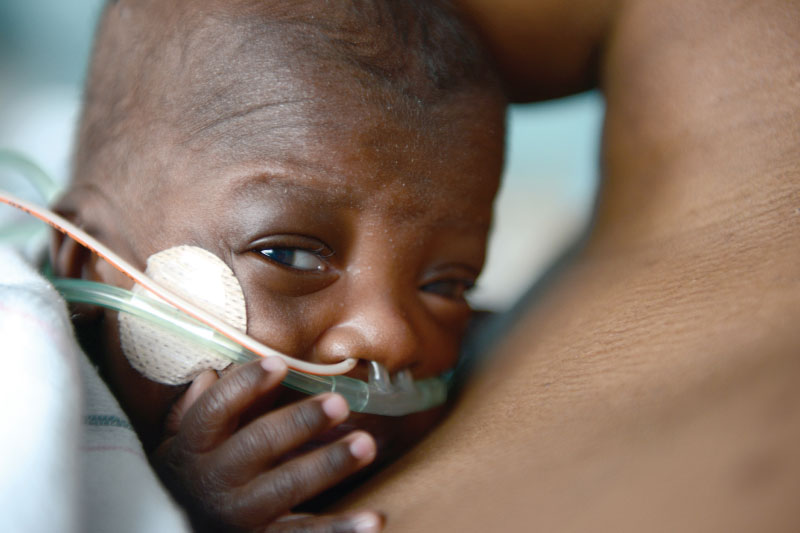

Children’s of Alabama is using FibroScan to help patients with liver disease. (Stock photo)
With obesity in children steadily rising, more young patients are coming to Children’s of Alabama with a form of fatty liver disease that can greatly imperil their health. But determining the progression of liver disease can be a thorny process. To smooth that path, Children’s recently invested in an increasingly popular technology called FibroScan, helping University of Alabama at Birmingham (UAB) pediatric physicians to deftly and comprehensively manage children’s care.
Using a technique known as transient elastography, FibroScan was the first FDA-approved device of its kind and is considered an aid to managing liver disease. Quick, noninvasive and painless, it uses an enhanced form of ultrasound to send vibrations into the liver to measure its stiffness, which typically indicates fibrosis or scarring. “The more quickly the wave passes through the liver, the more stiff the liver is,” Children’s transplant hepatologist David Willcutts, M.D., explained.
By assessing the severity of scarring—and the potential for cirrhosis—FibroScan can help diagnose or monitor the progression of various liver conditions. These range from less-common cystic fibrosis-associated liver disease to more-prevalent autoimmune liver diseases and metabolic dysfunction-associated steatotic liver disease (MASLD). The latter—which can also result from genetic predisposition—essentially makes the liver unable to process the high amounts of extra calories a person is consuming, spurring inflammation.

About one-third of the patients in Children’s Hepatology Clinic, which serves about 500 ongoing patients each year, have suspected or confirmed fatty liver disease.
“We will be using this for almost every patient with confirmed fatty liver disease, so we can measure the baseline stiffness of the liver when they first see us,” said Willcutts, who’s also an assistant professor of pediatrics at UAB. “The machine also provides a CAP (controlled attenuation parameter) score as a surrogate of fat content of the liver, which is useful for the growing numbers of adults—and unfortunately, children—in our country with fatty liver disease. It’s one of the rising conditions leading to adult liver transplants.”
FibroScan is a welcome alternative to invasive liver biopsies and other forms of elastography that require a separate radiology appointment. A FibroScan exam takes just minutes, offering little disruption for young patients and faster treatment decisions for physicians. The new equipment arrived in the summer of 2025.
“One of the big selling points of this technology is it makes the patient experience much easier because it can be done within a clinic visit and will save them a visit with radiology, which involves a separate appointment elsewhere in the hospital or even at another Children’s facility,” Willcutts said. “It’s a one-stop kind of assessment.”
By keeping close tabs on a patient’s liver stiffness, FibroScan offers Children’s specialists the ability to understand “how much runway we have before we need to do potentially invasive assessments and other therapies,” Willcutts said.
While the goal is always to avert lasting damage to the liver, the presence of cirrhosis is generally thought to be irreversible. FibroScan can help doctors pinpoint “how close we’re getting to that and if the patient needs a biopsy—or a repeat biopsy—to evaluate scarring at the microscopic level and make sure we’re not missing something before it’s too late to act upon it,” he explained.
FibroScan results can also help physicians tailor treatments to patients’ precise stage of liver damage, including certain medications that can be tricky for the liver to process.
“Children’s is a referral center for pediatric liver disease in Alabama because we’re the only liver transplant center in the state,” Willcutts said. “Being able to offer FibroScan helps us elevate our level of care and offer smoother visits and a convenient assessment of liver disease that we didn’t have before.”