
Browsing Category

Nephrology

Nephrology

Leading-Edge Technology May Change Kidney Transplant Monitoring and Help Other Specialties

In the UAB Spatial Core Lab, researchers are using spatial transcriptomics to examine specific regions within tissue samples.

A breakthrough technology that allows doctors to study the precise regions of a kidney transplant that are involved in rejection could transform how doctors learn about kidney transplant biology, potentially leading to new diagnostic tests or treatments for children.

The technology, called spatial transcriptomics, is a leading-edge technique that lets researchers see which genes or proteins are active in very specific regions of tissue samples, such as those from a kidney biopsy. Unlike traditional methods that study tissue samples as a whole without regard for the location of important signals from the tissue, this technique allows researchers to examine custom-shaped regions of interest containing just a few cells in their natural environment.

Think of it as having a detailed map that shows not just what’s happening in a city, but precisely in which neighborhoods each activity occurs.

“There’s been decades now of data showing that gene expression patterns coming from a transplant are a little bit more sensitive for problems coming from a kidney transplant,” said Michael Seifert, M.D., director of the University of Alabama at Birmingham (UAB) Spatial Core and medical director of pediatric renal transplantation at Children’s of Alabama. “The problem is that we’ve never exactly known where those signals are coming from. Are they coming from cells in the kidney that we care about or are they coming from cells in the kidney that may not be as relevant?”

For instance, signals from immune system cells would be extremely relevant, he said, but could be distinct from those coming from the endothelial cells lining blood vessels.

With this technique, “we can look at a picture of a kidney biopsy on our instrument screen and take your mouse and draw a shape around it, and it will profile everything in that shape while ignoring everything else around it,” he said. It can even profile a certain cell type within the shape.
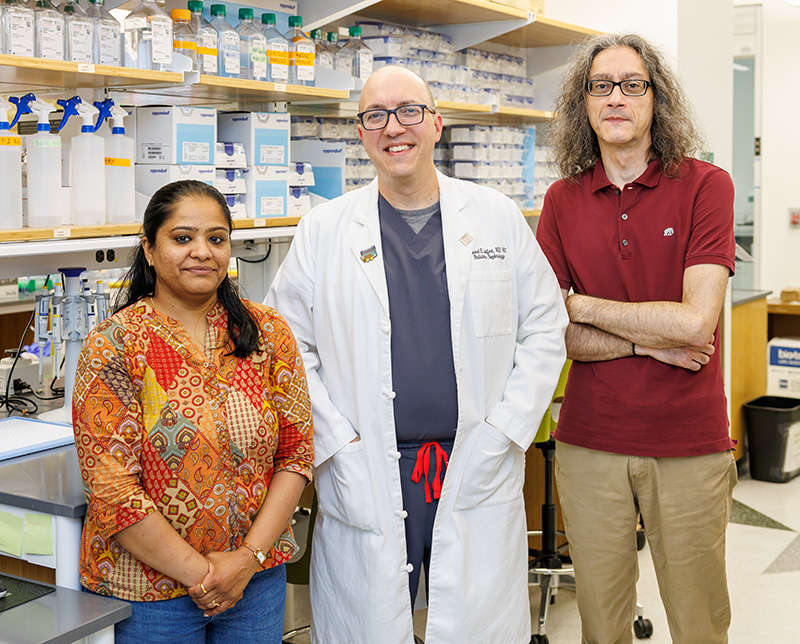
The Spatial Core team (from left): Pooja Nagaraj, MS, CCRP, Michael Seifert, M.D., Miguel Melendez-Ferro, Ph.D.

The technology itself isn’t destined for routine clinical use, Seifert said. “I can’t foresee a scenario where I would do a biopsy and then use spatial transcriptomics to make a diagnosis, because it’s a very labor-intensive, time-intensive and cost-intensive technique.”

Instead, he said, “my hope is that this will allow us to have a deeper understanding of the processes involved in transplants doing well but also transplants doing poorly. That will help us design better management programs, whether that’s using existing medicines in different ways or designing new medicines that can be more targeted and more effective than what we currently have available.”

Understanding exactly which parts of the kidney are affected by rejection also opens the door to personalized transplant care.

“Every cell in the kidney behaves differently depending on where it sits,” Seifert said. “This technology lets us uncover the heterogeneity—that is, the differences—within the tissue,” including if the problem lies in the blood vessels or the tubules or the parts of the kidney that generates urine. “I hope that’ll allow us to understand the signals that vary from person to person so we can really apply that more personalized technique.”

Thus, rather than treating all kidney transplant patients the same way, doctors could tailor anti-rejection treatments based on what is happening in an individual child’s kidney. This would, however, require advances in the spatial transcriptomics technology to make it faster and less expensive.

Spatial biology is not limited to the study of kidney transplant diseases. Seifert and his team in the UAB Spatial Core are working with specialists in other disciplines throughout Children’s and UAB, including ophthalmology, oncology and pulmonology. “We’re open to collaborating with any investigator with a good question that spatial biology can answer,” he said.

In fact, he sees spatial biology as an important technique for understanding all diseases in children. “I think what’s come out of this is an appreciation that the spatial context is incredibly important in so many of the diseases that we study.”

Nephrology

Reducing hypertension numbers in children—and adults

The Children’s of Alabama Hypertension Clinic aims to help children in the short-term and long-term. (Stock photo)

Successfully stemming rising rates of cardiovascular disease in adults needs to start in childhood. But with mounting numbers of children and adolescents developing high blood pressure—a trend driven largely by skyrocketing obesity rates—this objective is getting harder to achieve. Enter the Pediatric Hypertension Program at Children’s of Alabama, which, with its steady growth, seeks to break the cycle.  

The Hypertension Clinic, which operates three half-days each week, now sees about 45 patients weekly, a 10-fold increase from 14 years ago, says Daniel Feig, M.D., Ph.D., director of the Division of Pediatric Nephrology at Children’s, who was recruited in 2011 to oversee the clinic’s development and expansion.

High blood pressure—defined in adults and children 13 years and older as a reading of 130/80 mm Hg or higher—is relatively unusual in healthy young patients, affecting 2-3% of typical children and adolescents. (For younger children, the definition of hypertension is a statistical one, based on greater than 95th percentile for age, sex and height.) But children with obesity—who account for nearly 20% of all Americans under 18—have a 20-30% rate of hypertension, says Feig, also the Margaret Porter Professor of Pediatrics at University of Alabama at Birmingham (UAB).

Daniel Feig, M.D.

“There’s a fairly large number of kids with high blood pressure, and one of the major concerns is how we can impact the long-term epidemic that results in cardiovascular disease in adults,” he said. “Controlling hypertension in adults hasn’t gone very well—only about half of those diagnosed have even remotely effective control. This impacts their cardiovascular disease and stroke risk.”

“The only way we can get this under control is by prevention,” Feig added. “If we can make an impact in children and adolescents, we can push back cardiovascular disease in adults.”

Drawing patients from across Alabama as well as some from eastern Mississippi and western Georgia, the Children’s Hypertension Program provides ongoing care for about 2,200 children. But this “catchment area” is likely home to about 70,000 young people with high blood pressure who are undiagnosed. Part of the problem is that many pediatricians aren’t comfortable diagnosing or treating the condition, Feig explains.

When patients come to Children’s, they’re often set up with ambulatory blood pressure monitoring equipment they wear for 24 to 48 hours to measure blood pressure a few times each hour while doing normal activities. The technology enables Children’s clinicians to tease out who actually has hypertension and not blood pressure spikes resulting from factors such as exertion, nervousness or pain.

Once diagnosed, Feig and pediatric nurse practitioner Jessica Edmondson collaborate with dietitians, pharmacists, social workers and others at Children’s to ensure patients benefit from a multidisciplinary approach to treatment. Ultimately, they’re trying to prevent both short- and long-term health implications resulting from hypertension, including heart thickening, retinal damage and even impairments in cognitive function.

It’s a daunting task, Feig acknowledges. “Anything we can do to reduce the numbers right now has a domino effect that reduces long-term target organ damage and long-term cardiovascular risk,” he said. “We’re not at a point where we can reverse the trajectory in 70,000 undiagnosed kids in Alabama, but we can positively impact a good number of kids, improve their health and quality of life, and gain the opportunity to gradually access more and more of them.”

Nephrology

Studying outcomes in Continuous Renal Replacement Therapy

Children’s of Alabama is part of international research effort designed to improve care for CRRT patients.

With most research that evaluates a vital form of dialysis care in children called continuous renal replacement therapy (CRRT) lacking in size and scope—hampering efforts to glean practice-changing insights—an international effort in which Children’s of Alabama is integral is expected to fill the gap.

Dubbed WE ROCK (Worldwide Exploration of Renal Replacement Outcomes Collaborative in Kidney Disease), the retrospective study involves a total of nearly 1,000 children treated at 32 centers in seven countries between 2018 and 2021. Representing the largest international registry of children receiving CRRT for acute kidney injury or fluid overload—which can result from a variety of factors, including congenital anomalies, nephrotoxins and others—WE ROCK aims to evaluate the association of factors such as fluid balance and timing of CRRT initiation and duration with patient outcomes.

“It’s so hard to get data of this type, so this study is very significant,” said Children’s of Alabama pediatric nephrologist Tennille Webb, M.D., who’s also assistant director of the Pediatric and Infant Center for Acute Nephrology (PICAN) and an assistant professor of nephrology and pediatrics at University of Alabama at Birmingham (UAB). At Children’s, research nurse coordinator Jessica Potts, RN, is carrying out the crucial task of collecting and analyzing the data.     

Children’s serves as a hub for CRRT care for a high volume of pediatric kidney patients. In the decade-plus between 2013 and mid-2024, 602 patients were treated with CRRT at Children’s. Just over half of CRRT is performed in the neonatal intensive care unit (NICU), while 32% is done in the pediatric intensive care unit (PICU) and the remaining 15% in the cardiovascular intensive care unit (CVICU).

Children’s has long stood out among pediatric hospitals by offering CRRT to the tiniest infants using modified Aquadex equipment. Aquadex had initially been developed for adult patients with heart failure to remove fluid from the heart, but Children’s nephrologist and PICAN director David Askenazi, M.D., seized on the technology’s small filters to adapt it for use in neonates. Now, other centers offer neonatal dialysis with modified Aquadex, as well.

“Other dialysis machines pull a lot of blood out of babies because the filters are so large, which makes everyone nervous,” Webb explained. “CRRT is gentler than hemodialysis because you can remove fluid at a slower rate over an extended amount of time, allowing for fewer fluid shifts and blood pressure swings, especially in those who may have low blood pressure. We’re still meeting our goals, but not being as aggressive.”

The WE ROCK effort has generated at least 10 published manuscripts so far by study collaborators, with the promise of many more to come, Webb says. By looking at outcomes such as major adverse kidney events 90 days after CRRT (including mortality, dialysis dependence, and persistent kidney dysfunction) as well as functional outcomes, investigators should be able to derive data that could change pediatric nephrology practice. 

Insights will be bidirectional: Children’s specialists will learn from other centers, and others will learn from Children’s. Researchers can also determine new questions and angles that fuel future research. It’s an exciting prospect for Webb and her colleagues.

“Having that data from 32 centers, we can see what they’re doing, model it and make some improvements in these patients,” Webb said.

Nephrology

Improving care for children with TSC

The Children’s nephrology team is working with the UAB Tuberous Sclerosis Clinic to improve the care of children with TSC.

Tuberous sclerosis complex (TSC) is a rare genetic condition in which non-cancerous tumors grow in various body organs. It affects about one in 1 million births. Although primarily viewed as a neurological condition, it requires multidisciplinary care since the tumors may appear in any organ, particularly the kidneys. That’s why Children’s of Alabama’s nephrology specialists have become more involved with the University of Alabama at Birmingham’s Tuberous Sclerosis Clinic, one of only 10 in the country designated as a Center of Excellence by the TSC Alliance.

Between 50% and 75% of patients with TSC develop benign tumors in their kidneys, called angiomyolipomas, pediatric nephrologist Daniel Feig, M.D., Ph.D., said. They rarely cause symptoms, but can crowd out kidney function, squashing blood vessels adjacent to the tumors, resulting in high blood pressure. If they get much bigger than 3 to 4 cm, he said, “there’s a very, very high risk of them bleeding.” Such bleeding could be life threatening. Medications called mTOR inhibitors can shrink the tumors and may prevent their recurrence after surgery.

About 5% of patients with TSC develop a more serious cystic kidney disease called polycystic kidney disease, the result of yet another genetic mutation. “They can progress to kidney failure because the cysts replace the normal functional tissue in the kidneys.” There isn’t much available to treat the condition, Feig said, other than monitoring and managing blood pressure. About 3% of people with TSC will develop kidney cancer.

The weekly tuberous sclerosis clinic is directed by Martina Bebin, M.D., a pediatric neurologist at Children’s; and Bruce Korf, M.D., Ph.D., a pediatric neurologist who also specializes in genetics. “Over the last year we’ve worked to improve the communication between the pediatric neurology and nephrology groups as well as becoming more involved with the Tuberous Sclerosis Alliance,” Feig said. “That includes presentations for families about the optimal care of pediatric patients and how to avoid complications.”

Feig and his team are also involved in clinical trials to manage renal tumors and identify agents that can shrink them, thus avoiding surgery or even kidney loss. Screening is key, he said, “so we can identify when children need interventions.” In addition, understanding the growth parameters of the tumors and how they link to the two genetic mutations that cause the disease enables clinicians to personalize care and “take some of the guesswork out of how we’re monitoring these patients.”

People with TSC may be diagnosed in utero if an ultrasound shows the presence of tumors in the heart, called rhabdomyomas. Some are diagnosed after birth because of hypopigmented macules on the skin that look like the leaves from an ash tree. Seizures during the first year of birth are another clue, but many children aren’t diagnosed until they demonstrate developmental delays when they start school.

With only two Centers of Excellence in the Southeast, Feig said, “We’re situated to help provide care for our region and extending far beyond Alabama.”

Nephrology

Testing the first potential treatment for AMKD

Daniel Feig, M.D., Ph.D., and other Children’s researchers are leading a trial that provides hope for patients with AMKD.

A team of clinicians and researchers from Children’s of Alabama and the University of Alabama at Birmingham (UAB) has launched a potentially groundbreaking clinical trial testing the first potential treatment for APOL1-mediated kidney disease, or AMKD, a genetic condition linked to mutations in the APOL1 gene that can lead to rapid kidney function decline and, ultimately, kidney failure.

“The gene itself is involved in activation of inflammatory arms of the immune system,” said Daniel Feig, M.D., Ph.D., a pediatric nephrologist at Children’s. The APOL1 gene variant doesn’t just cause AMKD; it also exacerbates other kidney conditions. “Individuals with focal segmental glomerulosclerosis (scarring in the kidneys), IgA nephropathy, or diabetic nephropathy with APOL1 risk variants progress to end-stage kidney disease much faster than those without the risk variants.”

This genetic factor is particularly common in African Americans, contributing significantly to the higher rates of kidney failure seen in this population, Feig said.

The current trial, called AMPLITUDE, is testing the efficacy and safety of a first-in-its-class oral medication called VX-147, or inaxaplin. The drug is designed to inhibit the inflammatory pathway triggered by the APOL1 gene variant. The hope is that blocking this pathway will slow or even stop the progression of AMKD.

“It’s exciting because these patients have no other options for therapy,” Feig said.

An earlier trial evaluating standard-of-care plus inaxaplin in people with two APOL1 variants showed a nearly 50% reduction in proteinuria (a marker of kidney damage) after 13 weeks of treatment and reduction in scar tissue in the kidneys. The most common side effects were headache, back pain and nausea. The study was published in the New England Journal of Medicine.

The current trial is enrolling about 500 adult and pediatric participants, including about 150 children ages 10 to 18. More than 200 centers in the U.S. and other countries are involved.

Those eligible for the trial must have confirmed AMKD (with two APOL1 variants), proteinuria, and reduced kidney function. Participants will be monitored for two years while taking the study medication.

“If we can slow the disease by a number of years, that means these patients don’t need dialysis, they don’t need transplant, they don’t have the risk of kidney failure and their life expectancy is much, much, much longer,” Feig said. “It offers hope to families that have been having a difficult time and are really frustrated by the lack of alternatives.”

Neonatology, Nephrology

New hope for neonates with severe congenital kidney disease

ECMO in use at Children’s of Alabama (file photo)

Almost a decade ago, Nephrology specialists at Children’s of Alabama embarked on a journey to improve outcomes in neonates with severe congenital kidney disease by adapting the Aquadex machine, a small extracorporeal circuit used for adults with heart failure. Traditionally, extracorporeal membrane oxygenation (ECMO) was deemed unsuitable for this population due to perceived nonviability. In 2016, at the family’s request, a baby with severe congenital kidney failure and severe respiratory failure was placed on ECMO to be given a chance at life. The baby also required kidney support therapy (KST) to survive. After receiving a kidney transplant at age 2, the child now goes to school, plays sports, sings and dances. 

Since 2016, of the 31 neonates with congenital kidney failure who were admitted to the Children’s neonatal intensive care unit (NICU), five required ECMO support and KST in the first two weeks of life. In February 2024, Kara Short, MSN, CRNP, CPNP-PC, David Askenazi, M.D., MSPH, and others published a case report in Pediatrics, highlighting the complex treatment of the five babies and the journey to NICU discharge for the four survivors. This study challenges the previous norms and conventions that these babies had no chance at life. 

Kara Short, MSN

Congenital kidney failure poses unique challenges to neonates, affecting not only renal homeostasis but also respiratory integrity. Diagnoses among the five patients in the study included posterior urethral valves, bilateral renal dysplasia and autosomal recessive polycystic kidney disease. Despite gestational age ranging from 35.6 to 37.1 weeks and birth weight from 2,740 grams to 3,140 grams, all five patients received KST by postnatal day seven. Additionally, they were all placed on ECMO within the first nine postnatal days due to severe respiratory distress after being unresponsive to conventional interventions.

Four of the five patients survived and are thriving today. Pulmonary hypertension resolved in each survivor, with three requiring no oxygen support and one needing only nocturnal oxygen. Three survivors underwent successful kidney transplants, while one awaits transplant evaluation. This challenges the traditional notion of reflexively assigning nonviability to neonates with congenital kidney failure and severe pulmonary complications.

This research highlights the significance of ECMO and kidney support therapy in mitigating the adverse effects of pulmonary edema, uremia and electrolyte complications. The use of a filter through the ECMO circuit—to perform continuous venovenous hemodialysis (CVVHD), continuous venovenous hemofiltration (CVVH) with the Aquadex machine, peritoneal dialysis and intermittent hemodialysis—showcases the synergism and need for different approaches to manage these complex cases.

David Askenazi, M.D.

Managing congenital kidney failure requires a multidisciplinary approach involving neonatology, nephrology, surgery and multiple ancillary divisions. “As healthcare providers, we all bring something to the table,” Askenazi said. “The families need clear, concise information so they can understand their options when making treatment decisions. Our job is to develop programs, systems and plans to help those kids have the best chance at life.”

The families of the neonates faced challenging decisions, including the choice of full medical support or palliative care. Despite the complexity and potential extended NICU stay, all five families opted for full medical support. Clear communication, counseling and informed decision-making were instrumental when families made medical decisions about their baby’s care.

The successful outcomes of neonates with congenital kidney failure undergoing ECMO challenge previous assumptions of nonviability. Meticulous ECMO, respiratory, nutritional and kidney support therapies are essential to favorable long-term results. Further investigation is needed to define the optimal strategies to improve outcomes in severe congenital kidney disease cases. “We want to share this information with other programs to let them know that these kids have a chance at life; what we learned in this very small cohort is that these lungs can develop and grow if given a chance,” Short said.

“When thinking about the future, we’re asking ourselves: How can we get the very best technology to care for these babies? How can we help other programs improve so they can better care for their kids? How do we ensure that families are counseled with all viable options in an honest and comprehensive way?” Askenazi said. “We will continue to make progress. We have recently received a grant from the National Institutes of Health (NIH) to partner with industry to make a better device for neonates. We recognize that we must continue to educate our colleagues across the U.S. and the world about what we have learned from these miracle babies.”

Nephrology

New Leadership on Dialysis Unit

Kaci Caradine and Dr. Daniel Feig took on new leadership roles on the Children’s of Alabama Pediatric Dialysis Unit in the fall of 2023.

As more children requiring kidney dialysis survive and thrive—able to leave the hospital and return for treatment on an outpatient basis—the Pediatric Dialysis Unit at Children’s of Alabama has needed to adapt and grow. New leadership is poised to tackle this shift with aplomb, planning to increase staffing, expand education for team members and boost current programs for patients and families.

As of fall 2023, the unit is headed by medical director Daniel Feig, M.D., Ph.D., MPH, medical director of pediatric nephrology at Children’s, along with nursing director Kaci Caradine, BSN, RN, CNML. The pair replace the outstanding former medical director Sahar Fathallah, M.D., who is pursuing other professional opportunities at Children’s, and former nursing director Suzanne White, RN, who retired.

Within the last several years, the dialysis unit’s patient load doubled. It now includes about 20 patients who undergo outpatient hemodialysis treatments three times weekly, along with another 15 who receive home-based, nightly peritoneal dialysis and visit the unit about once a month. Most commonly, pediatric dialysis patients are affected by congenital abnormalities of the kidneys or urinary tract that lead to irreversible kidney failure, Feig said. Others require dialysis due to problems such as sepsis, solid organ transplantation, autoimmune diseases and other chronic issues.

“As we continue to make great improvements in the care we deliver, more kids are able to leave the hospital and lead full lives,” said Caradine, previously the director of nursing for Children’s Cardiovascular ICU.

Feig agreed, noting that referrals to the Children’s dialysis unit have also increased, both from the Southeast and around the nation. “We’ve gotten better at treating kidney failure in the Neonatal ICU and the very youngest patients, so kids who didn’t use to survive are now growing up with kidney failure,” said Feig, who’s also a professor of pediatrics and director of the Division of Pediatric Nephrology at the University of Alabama at Birmingham (UAB). “Now, the average age in the dialysis population is dropping from young teenager to about 5 to 7 years old.”

To keep pace, Feig and Caradine intend to quickly add to the dialysis team, which currently consists of 17 nurses, three nurse practitioners, nine attending physicians, and other roles that include a social worker, a dietitian and a counselor.

But many new clinicians to the unit don’t have experience in dialysis, making it crucial to “develop education and career development programs that get new staff up to speed,” Feig said. “We’re pulling together a didactic program involving the physicians and nurse practitioners who care for these patients, so they have a greater understanding of kidney disease and the challenges these kids face.”

“We want to develop a comprehensive educational program and onboarding curriculum for our new nurses,” Caradine agreed, “as well as ensure our current nurses are able to grow their knowledge base to continue to provide state-of-the-art care for our patients.”

Additional priorities include enhancing the Food as Medicine program, which provides packages of ingredients to patients’ families to assist them in preparing dialysis-safe meals. “This program is associated with huge improvements in patients’ quality of life and lab testing, and they’re much more able to stick to a prescription diet,” Feig said. “Expanding the program to a larger portion of the unit is a goal that will allow us to help all of our families.”

Nephrology

Exploring the Link Between Childhood Adversity and Adult Heart Disease

Children’s of Alabama researchers are using an NIH grant to study the link between childhood adversity and adult heart disease.

Children’s of Alabama pediatric nephrologist Michael Seifert, M.D., and cardiorenal physiologist Jennifer Pollock, Ph.D., have received a five-year, National Institutes of Health-funded grant to explore the link between stressful childhood experiences and increased risk for cardiovascular disease in adulthood.

“We’re trying to study how exposure to early life stress (ELS) starts to have an effect in childhood on your cardiovascular system,” Seifert said. ELS includes adverse experiences such as physical and emotional abuse or neglect before age 18.

Studies over the last 20 years have linked ELS to adult-onset heart disease and other poor health outcomes like diabetes, mental illness, cancer and high-risk health behaviors. “But despite that, we still know relatively little about the mechanisms connecting the two,” Seifert said.

Seifert and Pollock will test their central hypothesis: ELS causes immune cell activation and inflammation, leading to vascular dysfunction and increasing the risk for hypertension and cardiovascular disease (CVD) later in life.

The investigators will follow a group of 300 adolescents from racially diverse backgrounds to identify critical clinical features and molecular pathways in ELS-associated CVD risk. Early research shows that this population has increased vascular stiffness and ambulatory diastolic blood pressure as well as pro-inflammatory metabolite and gene methylation patterns in plasma and circulating monocytes, respectively.

Seifert and Pollock will use comprehensive profiling to measure vascular stiffness and blood pressure and analyze the metabolome and epigenome—chemical signatures in blood and genes. The goal is to identify inflammatory and molecular pathways linked to cardiovascular changes. The grant also includes two basic science studies that will further inform the clinical trial and a similar study in young adults who had early-life stress exposure.

While it might seem counterintuitive to have nephrology specialists working on a cardiovascular health study, the two are closely linked. “We expect the same things increasing cardiovascular risk probably also increase chronic kidney disease risk,” Seifert said. “There is a lot of cross-talk between the cardiovascular system and the kidneys.” Findings may reveal new therapeutic targets. “This study has important translational potential,” Seifert said. “If we identify something in adolescence that’s driving this, maybe we can mitigate some effects of early-life stress.”

Nephrology

Initiative Aims to Reduce Fluid Overload in NICU Infants

A baby in a Neonatal Intensive Care Unit (Stock photo)

A new effort led by Children’s of Alabama pediatric nephrologist Lindsey Gordon, D.O., is taking aim at fluid overload and its harmful offshoots—including acute kidney injury, prolonged ventilation and hospital stays—in hopes of smoothing the path for infants in the NICU toward a healthier future. The initiative, dubbed CAN-U-P-LOTS, encapsulates a 10-step clinical practice bundle that will be tested over the coming year in collaboration with Children’s NICU clinicians.

Babies in the NICU face many grave health challenges, not least of which is fluid overload from IV medications and nutrition intended to keep them alive and help them thrive.

“New evidence shows how fluid overload in these neonates can cause a lot of problems in the long run, and many times, this can lead to a poor outcome,” Gordon, a third year fellow at Children’s and the University of Alabama at Birmingham (UAB), explained. “We’re trying to recognize the problem early to prevent some of these negative outcomes.”

Elements of the CAN-U-P-LOTS practice bundle include:

  • C: Evaluating the cause of fluid overload
  • A: Assessing albumin level and replenishing as needed
  • N: Limiting nephrotoxic medications that can hurt the kidneys
  • U: Assessing and treating high levels of uric acid and using dialysis for ultra-filtration to remove extra fluid
  • P: Perfusion to the kidneys by increasing blood pressure to ensure adequate blood flow
  • L: Lasix stress test and attempting diuretic use to assess if the kidneys respond
  • O: Monitoring urine output/obstruction carefully and considering placing a Foley catheter or doing a renal ultrasound to ensure no blockage
  • T: Monitoring total fluid intake with an eye toward reducing fluid amounts without sacrificing nutrition
  • S: Considering steroid use if a patient is on several vasopressors to further support blood pressure

Some NICU neonates have risk factors that confer a high risk for fluid imbalance, including patients:

  • with sepsis or acute kidney injury
  • receiving multiple antibiotics
  • being prepared for major surgery
  • requiring blood pressure support with multiple medications

“Preliminary data suggest that the vast majority of neonates admitted to the Children’s of Alabama NICU meet the criteria at least once for fluid overload problems,” Gordon said.

The CAN-U-P-LOTS effort “will produce valuable data that will help us understand whether and how this practice bundle can be implemented on a widespread basis,” said David Askenazi, M.D., director of the Children’s Pediatric and Infant Center for Acute Nephrology (PICAN).

“The idea started with a collaborative approach to help standardize care of these children and educate providers in an effort to equip the NICU team with these systematic tools, so babies don’t ever have to develop fluid overload—the soggy lungs or wet heart that will keep them sicker longer,” Askenazi said. “It takes a village because a project like this takes multiple people, conversations and opportunities to learn from one another.”

“Our hunch is it’s going to work,” he added. “If we can show clinical improvements in these vulnerable babies, we can communicate this to our colleagues to help babies around the country and world. We’re giving them 10 things to think about that can help them maximize medical management before these babies need dialysis.”

Nephrology

Desensitization Brings Hope to Children Waiting for a Kidney

Dr. Michael E. Seifert is the medical director of the Pediatric Kidney Transplant Program at Children’s of Alabama.

A new protocol at Children’s of Alabama is giving sensitized children who need a new kidney a brighter glimmer of hope for successful donor match and transplant.

Children who need a kidney transplant typically wait about a year or two for an organ. But if they’ve been exposed to external blood products, been pregnant or had a previous organ transplant, they could find themselves waiting up to five times longer. That’s because they’ve become sensitized to certain proteins that are foreign to their immune system, which results in high antibody levels that react to foreign tissues. “That makes finding a compatible transplant for them really, really problematic,” pediatric nephrologist Michael E. Seifert, M.D., said. Plus, those antibodies significantly increase the risk of an immediate rejection or graft failure.

Historically, finding a compatible kidney donor for sensitized patients has been challenging, but thanks to a process called desensitization, that’s changing for some. It involves using a combination of immunosuppressive therapies to try to reduce the immune reaction to potential donor organs. Although it’s been used in adults for years, pediatric centers like Children’s have only recently introduced their own protocols. “With these immunomodulatory therapies, we try to turn down the volume on their sensitization,” Seifert said. “You can’t get rid of it altogether. Once a patient is sensitized, they’re always sensitized to some extent.”

The desensitization protocol is a combination of plasmapheresis—a kind of dialysis for blood that removes some of the problematic antibodies and immune proteins—and IV and oral immunosuppressants to prevent the antibodies from returning. Together, Seifert said, “this creates a more potent and widespread ratcheting-down of the immune response that allows some transplants to be done safely.”

The process requires close collaboration between clinicians and the immunology, or HLA, laboratory to choose the right cocktail of immunosuppressants and the right time for transplant. While it’s still challenging to find compatible organs, Seifert says the therapies can help shorten the time on the waitlist for some patients and give them access to more donors.

The team has used the protocol on several children so far, one of whom was able to receive a transplant. “So far, the patients are doing really, really well on it,” Seifert said. “And it’s been a success. But it’s a more challenging transplant because they are still much more likely to reject this kidney than a straightforward kidney transplant. We balance that risk against the risks of remaining on the kidney transplant waitlist for several years, waiting for a compatible donor.”

The children also need more attention post-transplant to keep their immune system at bay without triggering complications like infections, and they’ll have to maintain that throughout their lives, Seifert said. They will also always have a higher risk of rejection and premature graft loss. Yet if the transplant fails, subsequent transplants become more challenging, given greater sensitization.

“It’s a Catch-22,” Seifert said, “in that we achieve our goal, which is getting them a transplant, but it’s a lot more work for us to keep that transplant going.”