
Browsing Tag

adult care

Hematology and Oncology, Orthopedics

Combining two specialties, Hess plays unique role at Children’s

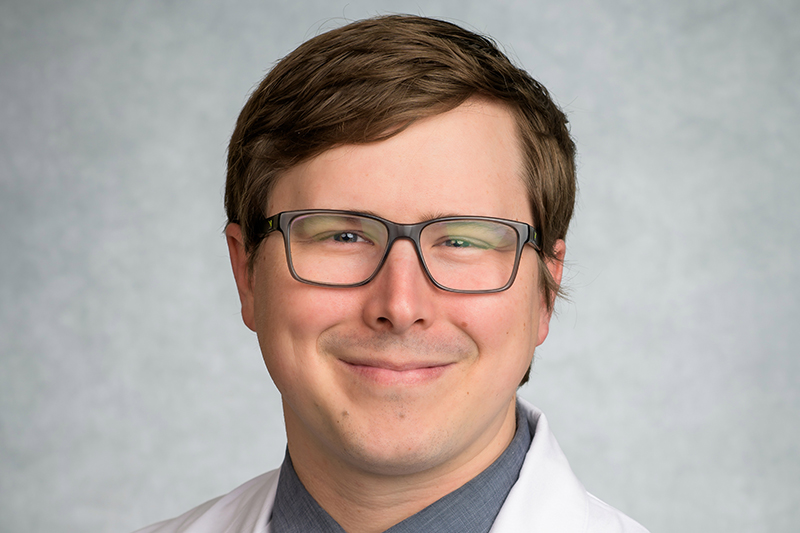
Matthew Hess, M.D. specializes in pediatric and adult orthopedic surgical oncology.

By Maureen Salamon

After witnessing his beloved drum teacher cope with sarcoma, Matthew Hess, M.D., knew starting in high school he wanted to someday work in oncology. That fraught life stage also brought a variety of orthopedic injuries that piqued Hess’s interest in orthopedics. Then he learned he could combine the two specialties by performing orthopedic surgery on children and adults with cancer.

The result has benefited patients at Children’s of Alabama. Hess, who came to Children’s in September 2024, is the only specialist in Alabama who’s trained in both pediatric and adult orthopedic surgical oncology.

The conditions Hess tackles are fairly uncommon, he notes, attracting only about 20 new fellows nationwide to his dual specialty each year. In children, he most often treats osteosarcoma, Ewing sarcoma, and non-cancerous tumors that are locally aggressive and threaten to destroy bone. In adults, Hess usually sees patients with metastatic cancer that has spread to bone and requires surgical stabilization or reconstruction.

Also an assistant professor of orthopedics at the University of Alabama at Birmingham (UAB), Hess—who earned his medical degree from the UAB Heersink School of Medicine and spent his residency at UAB Hospital—was thrilled to come back into the fold by joining Children’s.

“I had some faculty members who put teaching and mentorship at the forefront of practice and inspired me to want to do that for the residents around me,” he said. “The thing that stood out to me was that they were extremely collaborative.”

Hess is using that example well. His role requires extensive collaboration with a wide variety of other highly trained physicians, including medical oncologists, pathologists, and musculoskeletal radiologists. Children’s and UAB also boast a cross-institutional collaboration group designed for adolescent and young adult (AYA) patients—those ages 15 through 39—in which Hess features prominently because of his skillset.

“AYA patients exist right in the middle and can get a little lost in translation—do we treat them like an adult, or like a kid?” Hess said. “Osteosarcoma in particular is pediatric, but we see it a lot in teenagers and college students, who are trying to start to be adults. I tend to be the one who helps facilitate which team they end up seeing.”

While there’s some overlap between the way pediatric and adult orthopedic oncology patients are treated, children have certain unique considerations, Hess noted—“namely, a long life ahead. Sometimes you can make different decisions for someone who’s 70 years old versus someone who’s 7,” he said. “Mostly it comes down to how we choose to get rid of the cancer and keep their limb functional.”

What Hess enjoys most about his role is the continuity of care. Ideally, pediatric sarcoma patients who undergo successful surgeries—often living with metal implants in a limb—need a specialist to monitor and treat them through many decades. Hess is happy to oblige.

“I have patients who had surgery with another surgeon 20 years ago and are now 35, and we’re doing revision surgery together to keep them walking and fully ambulatory,” he said. “You’re the continuity person for these kids when they become adults, because the cancer is gone but they’re still dealing with the repercussions.”

“Every orthopedic oncologist goes into the specialty with the dream of seeing the kids they treated in their first years of practice come back someday having had their own kids,” Hess added. “I don’t think you get to do that in most medical specialties. It’s very exciting.”

Endocrinology

Helping Teens with Diabetes Move to Adult Care

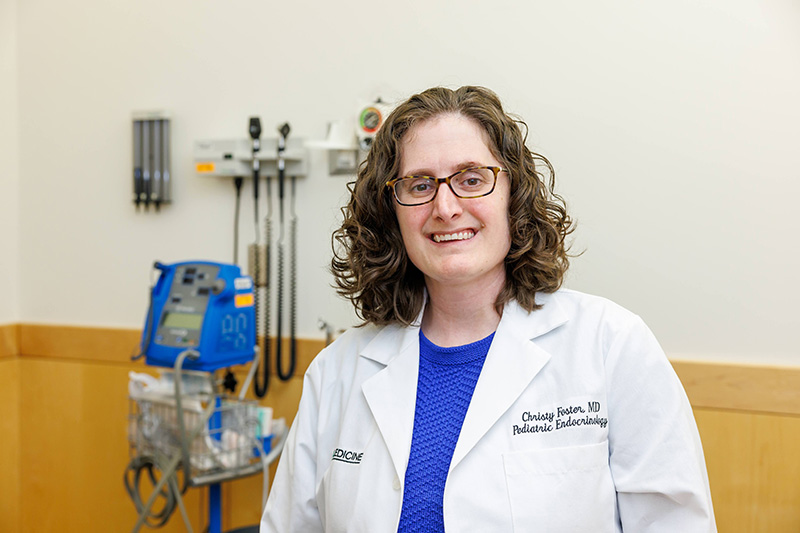
Christy Foster, M.D., leads a new clinic that helps prepare adolescents for the transition to adult care.

By Rachel Arterberry

For adolescents with diabetes, moving from pediatric to adult healthcare can be one of the most vulnerable periods in disease management. Studies have shown that gaps in care often occur during this transition, increasing the risk for complications such as worsening glycemic control and diabetic ketoacidosis.

To address this challenge, Children’s of Alabama recently launched the Bridge Clinic, a dedicated program designed to help adolescents and young adults with type 1 and type 2 diabetes gain the skills and confidence needed to successfully navigate healthcare independently.

The clinic, which officially began seeing patients this spring, provides a structured, multidisciplinary approach to transition planning for patients beginning at age 16 and continuing through their move to adult endocrinology providers.

“We really want to help patients build confidence over a couple of years before they leave pediatric care,” Christy Foster, M.D., assistant professor in the Division of Pediatric Endocrinology and physician in the Bridge Clinic, said. “Our goal is to partner with them so that transitioning into adult healthcare doesn’t feel abrupt or overwhelming.”

The idea for the clinic grew out of a healthcare transition workgroup that has spent several years refining educational tools and identifying ways to improve continuity of care for adolescents with diabetes. Although transition topics are already incorporated into routine endocrinology visits, Foster says the Bridge Clinic offers an opportunity to explore those issues more intentionally and in greater depth.

Patients in the Bridge Clinic continue seeing their primary endocrinologist every three months, while alternating visits with the clinic approximately every six months. During those visits, they work with a multidisciplinary team that includes physicians, diabetes educators, dietitians, and social workers.

One of the clinic’s distinguishing features is its encouragement of adolescents to take a more active role in their own healthcare. Patients are asked to spend at least part of their visits independently with providers, allowing them to practice discussing concerns, asking questions, and making decisions about their diabetes management in a familiar and supportive environment.

“We’re trying to create a safe place where patients can gain skills for navigating the healthcare system while still having the security of their family being involved if needed,” Foster said.

For many patients diagnosed in early childhood, this may be the first time they are expected to discuss concerns directly with their provider, describe their medications, or discuss adjustments to insulin doses without relying on a parent.

The clinic also focuses heavily on practical life skills that become increasingly important as teenagers gain independence. Topics include learning how health insurance works, understanding prescription costs, requesting medication refills, navigating college life, driving safely with diabetes, and managing alcohol use.

Rather than simply providing information, the Bridge Clinic emphasizes hands-on learning.

Patients may be asked to complete “scavenger hunts” between visits to determine the out-of-pocket costs of medications, practice refilling prescriptions, or explore insurance options available through college, employment, or other coverage plans. The team then reviews those experiences during follow-up visits and helps troubleshoot any challenges.

Social workers collaborate closely with families to discuss changes that often accompany young adulthood, including moving into dormitories, entering the workforce, or transitioning to a different insurance plan. Dietitians address healthy habits and nutrition concerns that become more relevant as adolescents begin making more independent choices.

Another key objective of the clinic is to reduce the number of patients who lose care during the transition from pediatric to adult endocrinology.

“We know from the literature that this is a high-risk period for gaps in care,” Foster said. “Anything we can do to help prevent that gap and maintain continuity has the potential to make a meaningful difference.”

As patients approach adulthood, the Bridge Clinic team helps identify an adult endocrinologist, prepares a transition summary letter, and guides patients through establishing care with a new provider.

The clinic currently has the capacity to see approximately 30 patients per session and serves a population of more than 800 patients aged 16 and older with type 1 or type 2 diabetes.

Although the program is still in its early stages, Foster hopes it will become an important resource for families seeking additional support during a period that can feel daunting for both patients and parents.

“This is really about giving young people the opportunity to practice being successful adults with diabetes,” Foster said. “If we can help them gain knowledge, confidence, and independence before they leave pediatric care, we’ve given them a stronger foundation for lifelong health.”

Nephrology

Reducing hypertension numbers in children—and adults

The Children’s of Alabama Hypertension Clinic aims to help children in the short-term and long-term. (Stock photo)

Successfully stemming rising rates of cardiovascular disease in adults needs to start in childhood. But with mounting numbers of children and adolescents developing high blood pressure—a trend driven largely by skyrocketing obesity rates—this objective is getting harder to achieve. Enter the Pediatric Hypertension Program at Children’s of Alabama, which, with its steady growth, seeks to break the cycle.  

The Hypertension Clinic, which operates three half-days each week, now sees about 45 patients weekly, a 10-fold increase from 14 years ago, says Daniel Feig, M.D., Ph.D., director of the Division of Pediatric Nephrology at Children’s, who was recruited in 2011 to oversee the clinic’s development and expansion.

High blood pressure—defined in adults and children 13 years and older as a reading of 130/80 mm Hg or higher—is relatively unusual in healthy young patients, affecting 2-3% of typical children and adolescents. (For younger children, the definition of hypertension is a statistical one, based on greater than 95th percentile for age, sex and height.) But children with obesity—who account for nearly 20% of all Americans under 18—have a 20-30% rate of hypertension, says Feig, also the Margaret Porter Professor of Pediatrics at University of Alabama at Birmingham (UAB).

Daniel Feig, M.D.

“There’s a fairly large number of kids with high blood pressure, and one of the major concerns is how we can impact the long-term epidemic that results in cardiovascular disease in adults,” he said. “Controlling hypertension in adults hasn’t gone very well—only about half of those diagnosed have even remotely effective control. This impacts their cardiovascular disease and stroke risk.”

“The only way we can get this under control is by prevention,” Feig added. “If we can make an impact in children and adolescents, we can push back cardiovascular disease in adults.”

Drawing patients from across Alabama as well as some from eastern Mississippi and western Georgia, the Children’s Hypertension Program provides ongoing care for about 2,200 children. But this “catchment area” is likely home to about 70,000 young people with high blood pressure who are undiagnosed. Part of the problem is that many pediatricians aren’t comfortable diagnosing or treating the condition, Feig explains.

When patients come to Children’s, they’re often set up with ambulatory blood pressure monitoring equipment they wear for 24 to 48 hours to measure blood pressure a few times each hour while doing normal activities. The technology enables Children’s clinicians to tease out who actually has hypertension and not blood pressure spikes resulting from factors such as exertion, nervousness or pain.

Once diagnosed, Feig and pediatric nurse practitioner Jessica Edmondson collaborate with dietitians, pharmacists, social workers and others at Children’s to ensure patients benefit from a multidisciplinary approach to treatment. Ultimately, they’re trying to prevent both short- and long-term health implications resulting from hypertension, including heart thickening, retinal damage and even impairments in cognitive function.

It’s a daunting task, Feig acknowledges. “Anything we can do to reduce the numbers right now has a domino effect that reduces long-term target organ damage and long-term cardiovascular risk,” he said. “We’re not at a point where we can reverse the trajectory in 70,000 undiagnosed kids in Alabama, but we can positively impact a good number of kids, improve their health and quality of life, and gain the opportunity to gradually access more and more of them.”