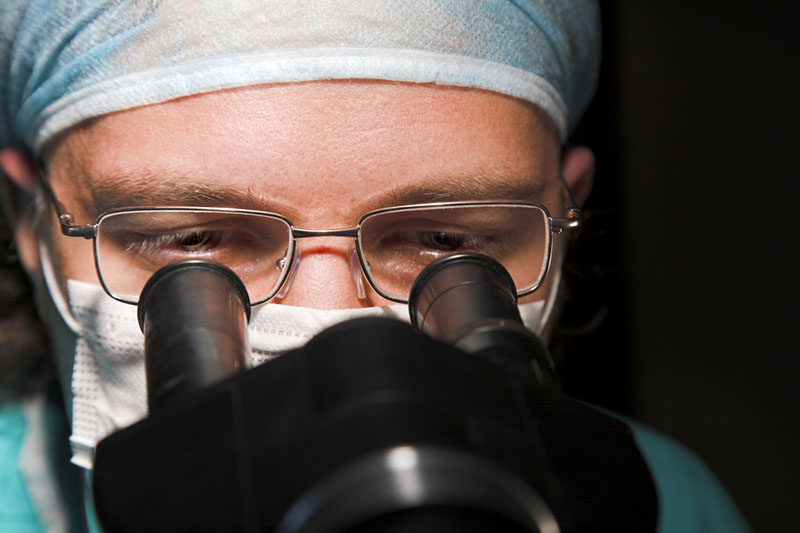

William “Tom” Harris, M.D., is a pulmonologist at Children’s of Alabama and UAB.
By Charles Buchanan
Cystic fibrosis (CF) is often defined as a disease of the lungs. But as advanced therapies help today’s young patients breathe easier and live longer—many will reach their 60s, according to the 2024 Cystic Fibrosis Foundation Registry—attention is shifting to the disease’s impact on other organs that may be vulnerable to the consequences of aging. This evolving landscape of CF clinical care has prompted Tom Harris, M.D., a pulmonologist at Children’s of Alabama and the University of Alabama at Birmingham (UAB), to investigate the kidneys.
“Interestingly, there’s more CFTR [cystic fibrosis transmembrane conductance regulator], the protein that causes cystic fibrosis, in the kidneys than the lungs,” Harris said. That means that as people with CF grow older, they face a higher incidence of chronic kidney disease than the general population, where the risk is about one in seven, according to Harris. Acute kidney injury (AKI) is more prevalent among people living with CF due to frequent antibiotic exposure and previous hospitalizations, and recurrent AKI is a major risk factor for development of chronic kidney disease. Harris also suspects loss of CFTR function takes away some of the kidney’s reserve.
Protecting the kidneys and other organs that express CFTR is crucial as lung disease stabilizes and people with CF age to help prevent health complications that can consume the patients’ hard-earned longevity. “The priorities of CF are changing,” Harris said. “We are now very much prioritizing quality of life across the years.”
Not every person with cystic fibrosis will develop kidney disease, of course. The challenge for researchers like Harris is to find biomarkers that will identify the ones at risk—and sound the alarm early enough for therapeutic intervention to preserve kidney function. “Right now, we are trying to establish which biomarkers are important and how they might indicate the progression of chronic kidney disease over time,” Harris said. Joining him in this mission are a team of scientists across the country who are part of a landmark project funded by the Cystic Fibrosis Foundation (CFF). Together they will follow a group of inpatients and outpatients for three years to study promising new diagnostic tools for CF-related kidney disease. They also are looking at kidney disease in the CF animal model that was pioneered at UAB. “We are very grateful to the CFF for having such vision to allow us to lay such a firm foundation to study kidney disease, combining both human observational study with mechanistic analyses in gene-edited animal models,” Harris said. “We are hopeful this project will allow us to pioneer the field of CF kidney disease and health.”
The researchers are focusing on urine in their quest to find novel biomarkers because of its direct connection to kidney health. Urine is “like a liquid biopsy,” Harris said. “With every urinary output, you can measure how well the kidney is working.” Physicians traditionally have tested urine or blood for elevated levels of specific proteins, electrolytes, and waste products such as creatinine to find proof of disease. But organ damage has already occurred by the time those reveal a problem, Harris said. Instead, he and his colleagues are investigating more subtle, sensitive measures that could flash the earliest warning signs of trouble. Candidates include kidney injury molecule (KIM-1) and neutrophil gelatinase-associated lipocalin (NGAL), two urinary biomarkers indicating minute structural changes in the kidney that precede a deterioration in function.
“In addition to detecting which patients might have some evidence of disease, we also want to use those biomarkers to help us understand the pathways of disease,” Harris said. “Is it more fibrotic? Is it more inflammatory?” Exosomes, which are the molecular packages transmitted between cells, offer a prime example. Exosomes can be informative about the intercellular communication in health and disease, but they also often carry the mediators that affect change. For instance, neutrophil-derived exosomes may shed light on the inflammatory triggers of kidney disease.
Such detailed methods of diagnosis could hold promise for designing personalized treatments for patients. CF already is a precision medicine success story following breakthrough discoveries about the CFTR gene that causes the disease, including the distinct ways in which each CFTR mutation affects protein function. Some mutations impact how much CFTR is made; some affect how well CFTR gets to the cell surface; some impact how well CFTR transports electrolytes. Knowing each patient’s genetic mutation plays a role in the choice of CFTR-directed therapy.
Now, researchers are applying what they know about CFTR’s impact in the lungs to the kidneys, where they suspect it plays a different role. In the lungs, CFTR is needed to transport chloride ions, and a lack of it can cause airway secretions to thicken. But in the kidneys, CFTR is involved in acid-base metabolism, which may be disrupted in chronic kidney disease. “Part of the reason CF-related kidney disease has been overlooked previously is that, instead of being a disease of obstructed lumens from mucus plugging, the kidney disease is an organ of pH balance and fluid transport,” Harris said. Scientists want to pinpoint the specific cell types and regions of the kidney that are affected most by CFTR dysfunction. “CFTR expression is not the same across all cell types in either the lung or the kidney. In the lung, an ionocyte that is positioned near mucus glands is the highest CFTR-producing cell,” Harris said. “Investigators at UAB have recently discovered a similarly high CFTR-expressing cell in the kidney. Future steps will be to define how this high CFTR-expressing cell promotes renal health.” These findings could illuminate new targets for potential treatments to protect kidney function and help patients thrive as they age.
“The future’s bright,” Harris said. “CF has primarily been considered a pediatric disease. Now it’s very much an adult disease. And we as pediatricians have to think about the future . . . to transition our focus from disease to health—and to celebrate the wonderful, previously unimaginable question of how can we help our pediatric patients with CF age well into senior adulthood.”
For more information about Harris’ research, check out this episode of the Children’s of Alabama PedsCast.