Browsing Tag

clinical trials

Hematology and Oncology

Building a national leader in clinical trials

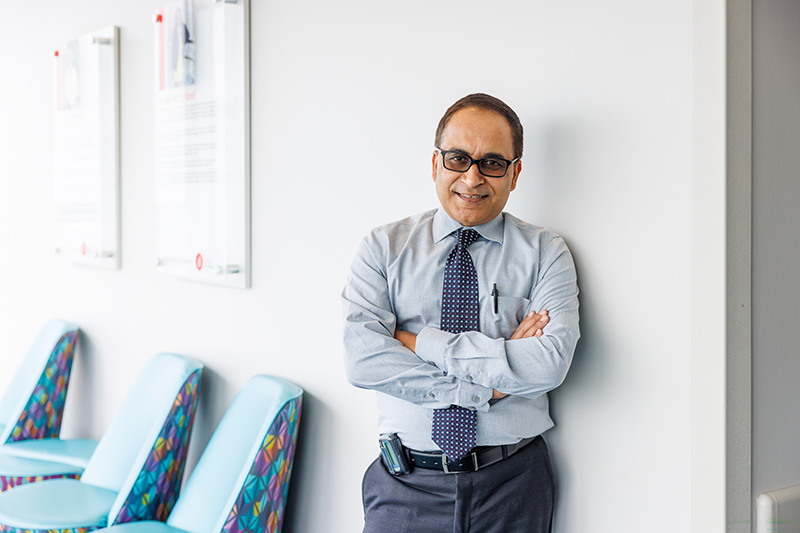
Since joining Children’s in 2019, Girish Dhall, M.D., has helped the hospital become a national leader for clinical trials.

When Girish Dhall, M.D., arrived at Children’s of Alabama in 2019, he inherited a division with a plethora of strengths: great facilities, compassionate physicians and a robust clinical trials program. He knew he was somewhere special. Still, he knew it could be better—a national destination center for research and clinical trials. That became his vision. As he began his new role as director of the Division of Hematology, Oncology, and the Blood and Marrow Transplantation Program, he immediately started work on one of his first objectives—expanding the clinical trials program.

Prior to Dhall’s arrival, the hospital offered many clinical trials through the Children’s Oncology Group—the largest consortium in the U.S.—for children who were newly diagnosed with cancer. For patients who had relapsed or had experienced progression of their disease, however, the options were limited. Dhall knew the hospital would need to join more consortia—groups of hospitals that collaborate to offer large-scale clinical trials that might be impossible for a single institution. For Children’s, joining more consortia would give patients access to a wider array of clinical trials.

Dhall and his team of experts began applying for membership in various consortia. Five years later, Children’s has more than doubled the number in which it is enrolled. “What that did,” Dhall said, “is gave us access, suddenly, to a large number of clinical trials for this group of patients that we didn’t have great options for.”

The benefits for Alabama and beyond

For children in Alabama with cancer, the new clinical trials are game-changing. Previously, patients may have had to travel out of state or even to another part of the country to access the trials they needed. “And that was only accessible for some families who have the resources to do it,” Dhall said. “For a large number of our patients, that was not possible.”

Now, those children have access to the same clinical trials without having to leave the state. That’s big even beyond Alabama. Dhall says patients come from Mississippi, Louisiana, North Florida and other parts of the Gulf Coast region for the trials. The hospital even gets referrals from other countries. “The impact of having access to these clinical trials is great for this region,” he said. “It’s a good challenge to have to accommodate all those patients and provide access. So I think it’s been great not just locally, but regionally as well.”

Jaxan’s story

For Jaxan Jernigan and his family, the new trials are already paying off. When he was 6 years old, he began experiencing headaches and seizures. At the local hospital in Pensacola, Florida, doctors discovered a large brain tumor. After a 14-hour surgery, they determined it was a high-grade aggressive tumor called a CNS embryonal tumor.

At Children’s, Dhall was leading the Head Start 4 clinical trial—one of the new trials added through his expansion efforts. Jaxan’s parents agreed to have him receive therapy on this trial, and he went through several rounds of intensive chemotherapy and three stem cell transplants followed by 30 days of brain and spinal irradiation. Nearly eight months later, Jaxan was considered to be in remission. Today, he’s back to an active life. “We owe so much of that to Dr. Dhall and the entire staff at Children’s,” Jaxan’s dad, Craig, said. “It was obvious that everyone at Children’s genuinely cares, and that’s truly inspiring.”

Head Start trial

The Head Start trial is just one example of the opportunities Dhall brought. It opened in 1990 and is currently in its fourth iteration, now involving more than 60 institutions across the U.S., Canada, Australia, New Zealand and Europe. Dhall is a national co-chair of the study.

“The idea behind Head Start is to give high-dose or intensive chemotherapy up front so that we can either avoid whole-brain irradiation completely for these infants and young children or be able to give really reduced dose and volume of irradiation,” Dhall said, “and keeping in mind that we want to maintain the survival that we see with irradiation, but with much less long-term side effects.”

Just in the last couple of years, researchers involved in Head Start have seen big results. At an international conference in Philadelphia in 2024, Dhall reported on a group of patients with SHH-activated medulloblastoma, a highly malignant brain tumor. Using the Head Start treatment strategy, doctors were able to cure more than 95% of the patients without using radiation therapy to the brain, Dhall said. “So that actually moves the field significantly forward,” he added.

Other trials

Treating brain tumors is just one of the program’s focal points. The hospital also has teams that specialize in blood disorders, leukemia and lymphoma, solid tumors such as kidney and liver cancer and more.
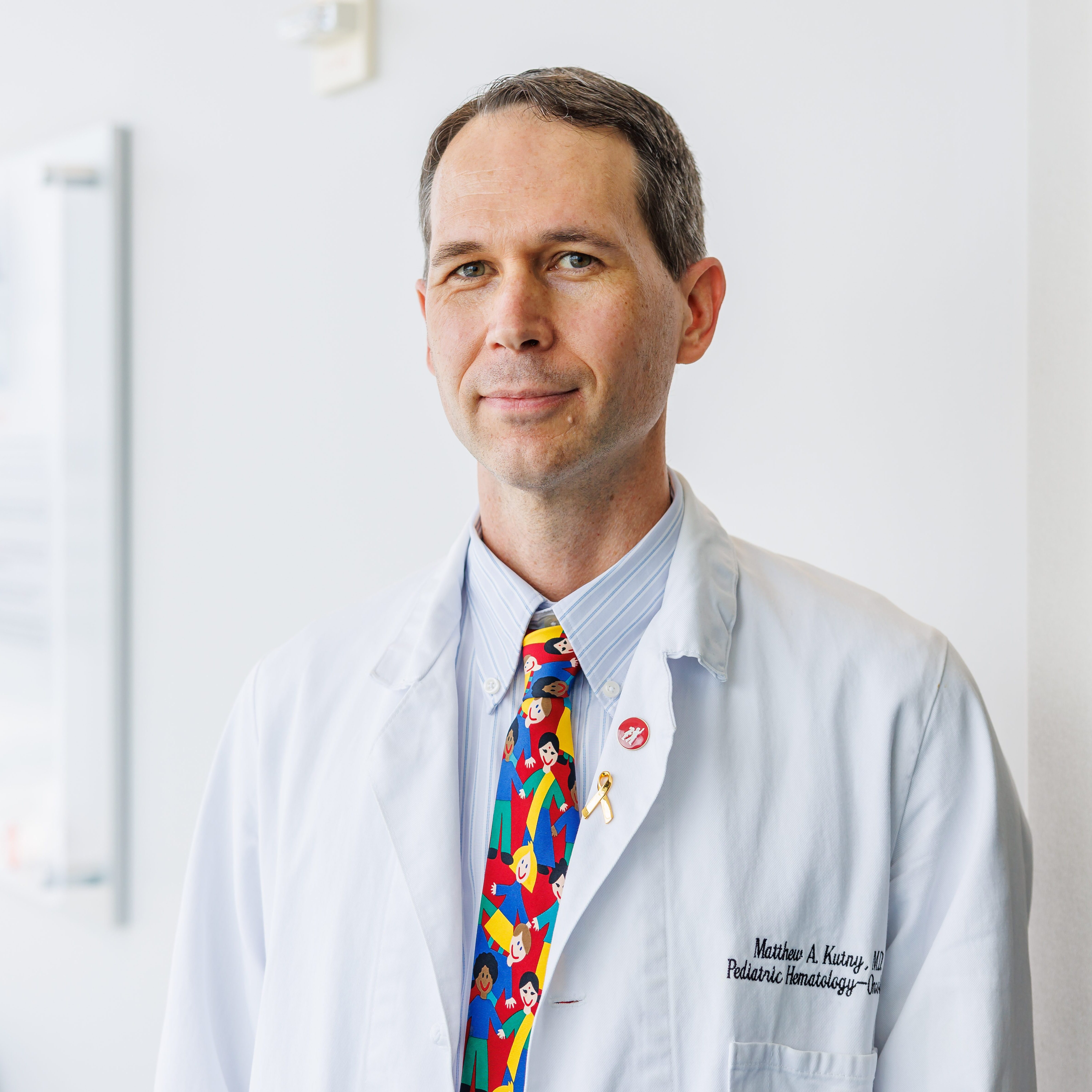
Matthew Kutny, M.D.

“So you can imagine the breadth of the trials that are involved,” said Matthew Kutny, M.D., director of the Children’s Pediatric Clinical Trials Office—a role Dhall held until he turned it over to Kutny in 2022. Since then, Kutny has continued to build the program and seen a lot of exciting developments, including the move toward targeted therapy and immunotherapy. These can allow patients, when possible, to avoid chemotherapy, which can damage healthy cells in the process of killing cancer cells. Targeted therapies zero in on the changes that occurred in the cells to make them cancerous. Kutny says these treatments have been successful against leukemia and solid tumors. Immunotherapy, on the other hand, engages a child’s immune system to fight off cancer as if it were an infection. “There are several exciting immunotherapy research projects that we’ve been able to participate in and lead here in Alabama,” Kutny said.

Children’s also performs bone marrow and stem cell transplants, which have proven life-saving for many patients. The stem cell transplant team offers CAR T-cell therapy, in which a patient’s own immune cells are taken into a lab and programmed to fight their cancer.

“We’ve been able to offer that to some of the children of Alabama here who otherwise would have had to go through those very intensive treatments with chemotherapy and stem cell transplant,” Kutny said. “And they’ve been able to respond to these new cellular therapies, and it’s really amazing to see how well they tolerate the treatments, and it’s been a great success in our era of oncology.”

A promising future

Because of the efforts of Dhall and Kutny, Children’s now has one of the nation’s largest clinical trial programs in pediatric oncology and hematology. “I’ve been really blessed to be a part of this team that has seen extreme growth over the last five years,” Kutny said.

More growth may be coming. Kutny says the team is actively expanding the number of consortia and partnerships with other hospitals. With cellular therapy and immunotherapy, they’re already offering an array of complicated, leading-edge trials. “We can offer, across a wide spectrum, the best clinical trials that are out there right here for patients in Alabama regardless of the type of disease that the patient is facing in oncology or hematology,” he said. “And that’s been great for the families of these patients to know that they come to Children’s of Alabama and they’re receiving the very best care that can be offered.”

In the process, they’re contributing to research that can help develop more advanced treatments. “We are making an impact, not just locally, but nationally and globally,” Dhall added.

Just the way he envisioned it when he first arrived.

Pulmonology

Developing treatments for patients with the most severe Cystic Fibrosis

Dr. Isabel Virella-Lowell and the pulmonology team at Children’s of Alabama are working on two clinical trials to help CF patients.

The evolution of cystic fibrosis (CF) treatment is considered one of the major success stories in medicine, with average life expectancy for patients skyrocketing from early teens in the 1970s to well over 50 years today. But Children’s of Alabama specialists continue dogged efforts to help the 5% of CF patients who don’t qualify for or respond to groundbreaking disease-modulating drugs—which Children’s faculty helped develop and test—that have transformed CF treatment over recent years.

Co-directed by Isabel Virella-Lowell, M.D., and George “Marty” Solomon, M.D., the University of Alabama at Birmingham (UAB) Cystic Fibrosis Therapeutics Development Center—a joint pediatric and adult endeavor—boasts more than 25 years of prominence in CF research. Nationally recognized as one of the top centers of its kind, it’s one of only 13 national resource centers for the more than 90 clinical trial centers that comprise the CF Clinical Trials Network.

Gene mutations in an epithelial membrane protein called CFTR trigger chloride transport defects that drive CF symptoms. Much-heralded disease-modulating drugs to target those defects—including Trikafta, a triple combination therapy approved in 2019 to treat patients with the most common CF mutation—have greatly improved both health and quality of life for the vast majority of these patients, Virella-Lowell said.

But the research team wants all CF patients—about 30,000 in the United States and 70,000 worldwide—to have those same advantages.

“About 5% of patients don’t have a life-changing medication,” Virella-Lowell explained. “The answer for them will be introducing a corrected gene or fixing the CFTR gene with gene editing techniques so the epithelia will produce its own normal chloride channels. If genetic therapies are successful, they could be extended to the entire CF population. Ultimately, the goal is to develop a genetic therapy that cures cystic fibrosis.”

Two of the team’s current clinical trials are focusing on these potential approaches. One is an mRNA-CFTR therapy, while the other is an adeno-associated virus (AAV)-based CFTR gene therapy. Both are phase 1 trials to determine safety and potential side effects. Other genetic therapy trials are in the pipeline as well.

With this research, the UAB CF Therapeutics Development Center is again setting itself apart in the region. It’s one of only four centers in the Southeast conducting the mRNA genetic therapy trial and one of only three performing the AAV gene therapy trial.

Neurology & Neurosurgery

Children’s of Alabama neurologists launch SMA clinical trial opportunity

Dr. Michael Lopez is a co-investigator of a clinical trial involving a new drug for spinal muscular atrophy.

A new drug is in late-stage clinical trials at Children’s of Alabama for spinal muscular atrophy (SMA), a rare genetic disease marked by progressive muscle deterioration and atrophy. The drug, apitegromab, has a different mechanism of action than other SMA treatments and is being studied in patients already taking others.

Apitegromab is a human monoclonal antibody that targets the myostatin pathway, which affects muscle cell mass. “The thought is that if you can inhibit this pathway, then you could increase the muscle cell mass,” said Michael Lopez, M.D., Ph.D., co-investigator with Han Phan, M.D., at Children’s. Numerous animal studies show that inhibiting the myostatin pathway increases muscle mass, while overactivation reduces muscle mass.

Apitegromab binds to the precursor (pro/latent) myostatin, preventing its conversion into the active, mature form of the protein. This prevents the muscle cells from receiving the signals to reduce their mass. Because it works differently from the gene-based therapies already available, it’s being investigated as an adjunctive therapy, ideally providing another avenue to building muscle and reversing the weakness and atrophy SMA patients experience. “Muscle is regenerative; it can repair and renew itself,” Lopez said.

Apitegromab is the latest encouraging investigational drug in SMA treatment. In 2016, the FDA approved the first disease-modifying treatment for SMA, nusinersen, which works by increasing the amount of spinal motor neuron (SMN) protein produced by the SMN2 gene. SMA patients have nonfunctional SMN1 genes but several copies of SMN2 genes.

Since then, two other treatments, the gene therapy onasemnogene abeparvovec—which is administered just once to those less than 2 years of age—and the oral therapy, risdiplam—which also alters how effectively the SMN2 gene makes the SMN protein—have been approved.

In the latest clinical trial, called SAPPHIRE, participants must already be taking nusinersen or risdiplam. The trial will evaluate the drug in patients ages 2 to 12 who have SMA type 2 or 3 and can no longer walk. They will be randomized to receive one of two doses of apitegromab or placebo by IV infusion every 4 weeks for a year. Children’s is one of several participating centers in the U.S.

Previously, a phase 2 trial called TOPAZ showed improved motor function, even in patients who couldn’t walk. “The preliminary data was encouraging, but additional study is required,” Lopez said.

The progress that’s been made in SMA in the last few years, which Lopez called “revolutionary and game changing,” would not have been possible without the support of the families enrolling in clinical trials for the currently approved drugs, he said. “And they didn’t know if there would be a benefit, or even if they were in the investigational arm or placebo arm.” He also praised the Muscular Dystrophy Association Clinic at Children’s for the “superb care provided.”

“Every day, I’m in awe of the progress that has been made in treating this disease,” Lopez said. “We have gone from not having any treatment options at all and watching patients succumb to the disease to knowing that every patient now has a different life ahead of them—something that wasn’t imaginable when I started med school.”

Hematology and Oncology, Inside Pediatrics

Children’s of Alabama Ramps Up Pediatric Oncology Research Program

HemOncFaculty_WEB

The faculty of the Pediatric Hematology, Oncology, and Blood and Marrow Transplantation program at Children’s of Alabama and the University of Alabama at Birmingham (UAB). The program is currently working to offer more potentially life-saving clinical trials to patients.

It’s only been a year since Girish Dhall, M.D., moved from Los Angeles, where he was an associate professor of pediatrics and director of the Neuro-Oncology Program at Children’s Hospital Los Angeles, to Birmingham to become division director for the Pediatric Hematology, Oncology, and Blood and Marrow Transplantation program at Children’s of Alabama and the University of Alabama at Birmingham (UAB). Yet he’s already made significant progress on one of his key goals: offering more potentially life-saving clinical trials to patients.

“We’re trying to increase our research portfolio through multiple mechanisms,” he said. Children’s already belongs to the largest pediatric cancer research organization in the world, the Children’s Oncology Group (COG), an international consortium of more than 200 children’s hospitals, universities, and cancer centers. Children’s of Alabama and UAB participate in the COG Phase I Consortium, the Neurofibromatosis Consortium and the Next Consortium, all of which conduct cutting-edge clinical trials for pediatric patients with nervous system tumors.

While COG is a major force in pediatric oncology, the number of trials it offers is limited. With about 150 new cancer patients a year seen at Children’s of Alabama, Dhall said, more opportunities are needed. “Even though we’ve come from a survival rate of zero 50 or 60 years ago to nearly 70 percent, 30 percent of patients still relapse,” he said.

Thus, Children’s of Alabama and UAB joined the Sunshine Project, which is a part of the National Pediatric Cancer Foundation. It emphasizes basic and translational research in the areas of bone and soft tissue sarcoma and brain tumor immunology, Dhall said. In addition, Children’s of Alabama and UAB are joining the ReMission Alliance Against Brain Tumors (RAABT), a University of Florida-led network of neuro-oncology, tumor immunology and genetics experts from top peer institutions as well as a community of vested collaborators and influencers affected by brain cancer.

To manage the expected growth in clinical trials, Dhall is also reorganizing the department’s clinical trial infrastructure to improve efficiency and recruiting additional staff to prepare for the anticipated increase. He also wants to add other scientists who can build on the department’s portfolio not just in brain tumors, but also in sickle cell disease and leukemia. “That’s my hope for the next year,” he said.

He predicts that the number of clinical trials, today at about 10, will double within the next two years.

“Patients who relapse after front-line therapy have a very poor prognosis with poor survival,” Dhall said. “So, for us to be able to offer treatment options here means they don’t have to travel to other sites like Atlanta or Memphis, which is a huge disruption for patients at the end of life.”

“As a physician,” he said, “this gives me hope and it keeps me going.”