
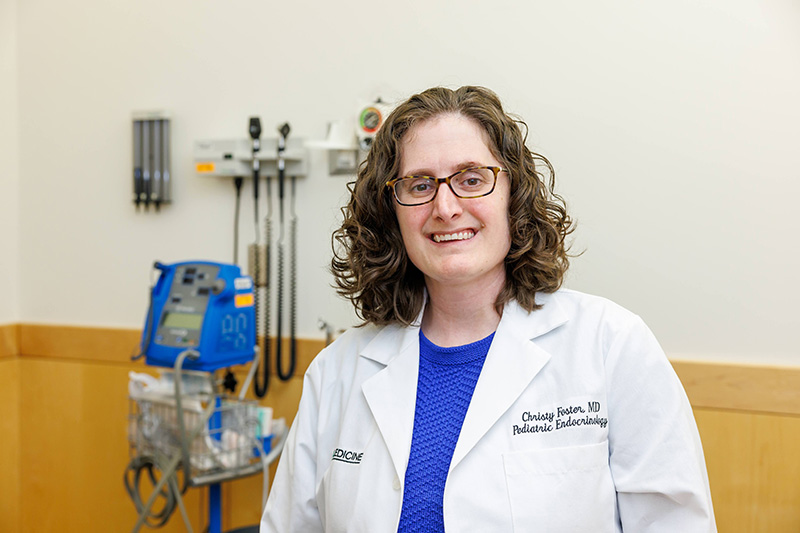
Christy Foster, M.D., leads a new clinic that helps prepare adolescents for the transition to adult care.
By Rachel Arterberry
For adolescents with diabetes, moving from pediatric to adult healthcare can be one of the most vulnerable periods in disease management. Studies have shown that gaps in care often occur during this transition, increasing the risk for complications such as worsening glycemic control and diabetic ketoacidosis.
To address this challenge, Children’s of Alabama recently launched the Bridge Clinic, a dedicated program designed to help adolescents and young adults with type 1 and type 2 diabetes gain the skills and confidence needed to successfully navigate healthcare independently.
The clinic, which officially began seeing patients this spring, provides a structured, multidisciplinary approach to transition planning for patients beginning at age 16 and continuing through their move to adult endocrinology providers.
“We really want to help patients build confidence over a couple of years before they leave pediatric care,” Christy Foster, M.D., assistant professor in the Division of Pediatric Endocrinology and physician in the Bridge Clinic, said. “Our goal is to partner with them so that transitioning into adult healthcare doesn’t feel abrupt or overwhelming.”
The idea for the clinic grew out of a healthcare transition workgroup that has spent several years refining educational tools and identifying ways to improve continuity of care for adolescents with diabetes. Although transition topics are already incorporated into routine endocrinology visits, Foster says the Bridge Clinic offers an opportunity to explore those issues more intentionally and in greater depth.
Patients in the Bridge Clinic continue seeing their primary endocrinologist every three months, while alternating visits with the clinic approximately every six months. During those visits, they work with a multidisciplinary team that includes physicians, diabetes educators, dietitians, and social workers.
One of the clinic’s distinguishing features is its encouragement of adolescents to take a more active role in their own healthcare. Patients are asked to spend at least part of their visits independently with providers, allowing them to practice discussing concerns, asking questions, and making decisions about their diabetes management in a familiar and supportive environment.
“We’re trying to create a safe place where patients can gain skills for navigating the healthcare system while still having the security of their family being involved if needed,” Foster said.
For many patients diagnosed in early childhood, this may be the first time they are expected to discuss concerns directly with their provider, describe their medications, or discuss adjustments to insulin doses without relying on a parent.
The clinic also focuses heavily on practical life skills that become increasingly important as teenagers gain independence. Topics include learning how health insurance works, understanding prescription costs, requesting medication refills, navigating college life, driving safely with diabetes, and managing alcohol use.
Rather than simply providing information, the Bridge Clinic emphasizes hands-on learning.
Patients may be asked to complete “scavenger hunts” between visits to determine the out-of-pocket costs of medications, practice refilling prescriptions, or explore insurance options available through college, employment, or other coverage plans. The team then reviews those experiences during follow-up visits and helps troubleshoot any challenges.
Social workers collaborate closely with families to discuss changes that often accompany young adulthood, including moving into dormitories, entering the workforce, or transitioning to a different insurance plan. Dietitians address healthy habits and nutrition concerns that become more relevant as adolescents begin making more independent choices.
Another key objective of the clinic is to reduce the number of patients who lose care during the transition from pediatric to adult endocrinology.
“We know from the literature that this is a high-risk period for gaps in care,” Foster said. “Anything we can do to help prevent that gap and maintain continuity has the potential to make a meaningful difference.”
As patients approach adulthood, the Bridge Clinic team helps identify an adult endocrinologist, prepares a transition summary letter, and guides patients through establishing care with a new provider.
The clinic currently has the capacity to see approximately 30 patients per session and serves a population of more than 800 patients aged 16 and older with type 1 or type 2 diabetes.
Although the program is still in its early stages, Foster hopes it will become an important resource for families seeking additional support during a period that can feel daunting for both patients and parents.
“This is really about giving young people the opportunity to practice being successful adults with diabetes,” Foster said. “If we can help them gain knowledge, confidence, and independence before they leave pediatric care, we’ve given them a stronger foundation for lifelong health.”