
Browsing Tag

DMD

Neurology & Neurosurgery

Children’s and UAB expanding access to promising DMD therapy

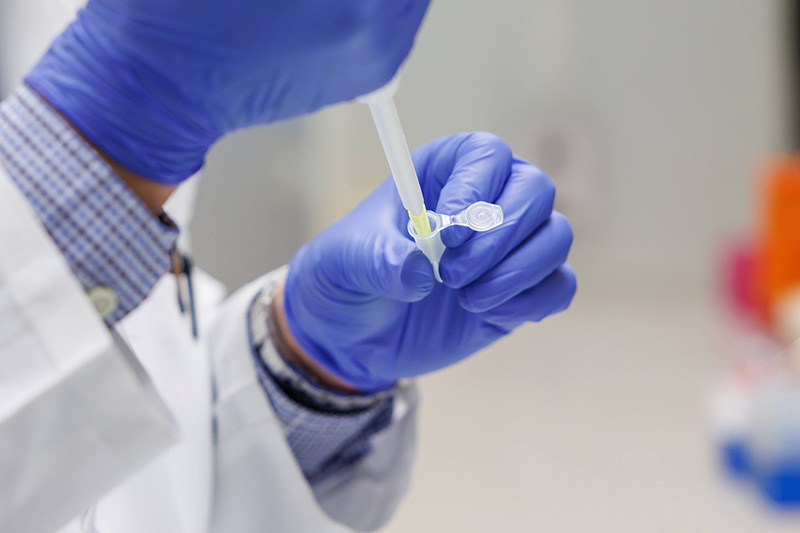
A researcher working in a lab at UAB (File photo)

By Angel Pine

Children’s of Alabama and the University of Alabama at Birmingham (UAB) Department of Pediatrics are expanding access to a promising investigational therapy for patients with Duchenne muscular dystrophy (DMD), offering new hope for families affected by the progressive neuromuscular disease.

Through an expanded access program, they will begin offering delpacibart zotadirsen, a novel antibody-oligonucleotide conjugate (AOC) developed by Avidity Biosciences. The program gives select patients access to the therapy before full U.S. Food and Drug Administration approval while researchers continue evaluating long-term outcomes.

Samantha Weaver, DNP, CRNP, assistant professor in the UAB Division of Pediatric Neurology, says the therapy represents an important step forward in the treatment of DMD.

Samantha Weaver, CRNP

“There is still no cure for Duchenne muscular dystrophy, therefore we are always interested in expanding access to therapies that may improve quality of life and slow disease progression,” she said.

Duchenne muscular dystrophy is an inherited neuromuscular disorder caused by changes in the DMD gene, one of the largest genes in the human body. The condition primarily affects boys because it is inherited in an X-linked pattern. Sequence changes in the DMD gene prevent the body from producing dystrophin, a critical protein that helps protect muscle cells during movement and contraction. Without dystrophin, muscles become increasingly damaged over time. “In the absence of dystrophin, fragile muscle fibers become susceptible to contractile injury, leading to damage and progressive weakness,” Weaver explained.

Early signs of DMD can include delays in walking, enlarged calf muscles, and weakness in the hips and thighs. Symptoms typically worsen throughout childhood, with many patients losing the ability to walk between ages 8 and 12 years of age. In later stages, the disease can affect the heart and lungs, leading to serious complications such as heart and respiratory failure.

UAB and Children’s currently care for approximately 80 patients with Duchenne muscular dystrophy through the multidisciplinary Muscular Dystrophy Association (MDA) clinic, the only nationally designated MDA care center in the state.

Over the past two decades, advances in genetic research have significantly improved treatment options for DMD. While early therapies focused primarily on reducing inflammation through long-term steroid use, newer approaches aim to address the root cause of the disease via dystrophin restoration.

Steroids remain a standard treatment to help slow the inflammatory damage that occurs alongside muscle breakdown. Combined with multidisciplinary care, these therapies have improved life expectancy for many patients. “Thanks to routine corticosteroid treatment and coordinated multidisciplinary care, life expectancy for individuals with Duchenne muscular dystrophy has improved dramatically, with many patients now surviving into adulthood,” Weaver noted.  

Delpacibart zotadirsen is an antibody-oligonucleotide conjugate, or AOC. An AOC uses a laboratory-made genetic molecule or PMO to bind to dystrophin RNA. The PMO helps the cell bypass the faulty sections of genetic instructions. A new “genetic blueprint” is formed, one that provides instructions for restored dystrophin production. Rather than permanently changing DNA, AOC therapy works by modifying RNA instructions after they are copied from the gene but before they are used to build proteins. “Although full dystrophin restoration may not be possible, enough functional protein may create a milder disease phenotype,” Weaver explained. “Even partial dystrophin restoration can lead to meaningful improvements in disease severity and progression.”

Earlier generations of exon-skipping therapies have provided modest results. Passive uptake of molecules into muscle cells produced small increases in dystrophin on muscle biopsy and limited improvements in motor function. While those therapies received accelerated FDA approval, researchers continued working to improve the selectivity of these treatments.

Delpacibart uses an antibody-mediated delivery system designed to improve uptake into muscle cells. By selectively binding to muscle cells, researchers can better tailor dosing and reduce the risk of toxicity.

According to Weaver, this next-generation approach may significantly improve dystrophin production compared to previous therapies.

In randomized, placebo-controlled trials, data supported a mean increase of approximately 25% of normal dystrophin production from baseline after four months of treatment, with some patients reaching as high as 54% restoration. Researchers also observed more than an 80% reduction in creatine kinase, a muscle enzyme that is typically elevated in patients with DMD due to ongoing muscle damage.  

“We do not currently have therapies that produce this degree of creatine kinase improvement,” Weaver said. “Although these findings are encouraging in small research numbers, how these will translate to actual strength and slowing of disease is still being studied.”

The therapy is delivered once every six weeks because it does not permanently alter DNA and must be re-dosed to maintain its effect.

Only a small percentage of patients with Duchenne muscular dystrophy are eligible for exon 44 skipping therapy. Weaver estimates about 6-7% of patients have gene variants that make them candidates for this treatment. While that percentage is relatively small, Weaver emphasizes the broader significance of the program. “Six percent may not sound like a lot, but it is still meaningful for the patients who qualify,” she said. “More importantly, if this approach continues to succeed, the hope is that the same technology can be adapted to target other variants and help many more patients in the future.”

The expanded access program has received institutional approval and is supported through all required regulatory channels. UAB is now preparing to enroll eligible patients.

For families affected by Duchenne muscular dystrophy, each scientific advancement represents another step toward better treatment options and improved outcomes. “This is a really exciting development in Duchenne care,” Weaver said. “Every breakthrough moves us closer to changing the long-term trajectory of this disease.”

Neurology & Neurosurgery

Children’s of Alabama Offering New Gene Therapy for Patients With DMD

A new treatment offers the hope of longer, better life for DMD patients. (Stock photo)

In January 2025, Children’s of Alabama, for the first time, treated a patient with Duchenne muscular dystrophy (DMD) using a new gene therapy offered by only a few academic hospital facilities in the nation. The milestone followed a lengthy approval process and marked a new opportunity for patient success and scientific progress. Though not a cure, the treatment represents the hope of a longer life for these patients. For researchers, it will contribute to greater learning about the potential of this new treatment.

What is DMD?

While it is considered a rare disease, DMD is the most common form of muscular dystrophy, affecting one in every 5,000 males born in the United States. Patients experience progressive muscle degeneration, starting with proximal muscles and expanding to the limbs over time. They have trouble with many physical activities such as jumping, running and walking, and lose the ability to walk over time. The disease is fatal, and most patients don’t live past their late 20s. DMD has no cure; treatment focuses on extending the patient’s life by slowing down the disease’s progression.

According to the Muscular Dystrophy Association, symptoms of DMD can begin as early as ages 2-3 years, but in Alabama, where DMD is not yet part of newborn screening, many boys are not diagnosed until ages 4-6. That, says Children’s neuromuscular nurse practitioner Samantha Weaver, DNP, CRNP, is when patients begin to experience a steady decline. 

Treatment

Since the 1990s, physicians have prolonged the lives of patients with DMD using corticosteroids, whose anti-inflammatory properties can slow down the disease’s progression by about three years. Gene therapy, however, represents a new treatment aimed at restoring the function of the causative gene, DYSTROPHIN. The U.S. Food and Drug Administration originally approved it in 2023 for use in patients ages 4-5. In 2024, the agency extended that approval to all patients 4 years and older.

In this treatment, the transgene (a micro-DYSTROPHIN synthetic gene) is packaged within a viral capsid—a virus not intended to harm the patient that can hold the genetic material. In essence, physicians are “giving back the missing genetic information to the muscle tissue,” Children’s neurologist Michael Lopez, M.D., Ph.D., said. Unlike any other option, he noted, gene therapy treats the root cause of DMD.

“Now that we’re starting to get these really breakthrough therapies, they’re fulfilling on the promise that we all were searching for, which is that we could get closer to making this disease really better,” he said.

For the patient, improvements don’t happen overnight. That’s not how gene therapy works, Lopez says. “What we hope is that over many years, we’ll see a slow progression of the disease that is beyond what we would get with just treatment with corticosteroids alone,” he explained. “And I think that added benefit is something that’s going to be more of a long-term improvement.”

So, what can the parents of each patient treated with gene therapy hope to see? Ideally, in the short-term, their child will be more active. “I hope that our children can have more of a shot at more play and more jumping and more climbing and all of those things in the future,” said Erin McLeod, M.D., a pediatric neuromuscular neurologist at Children’s. In the long-term, the hope is that they’ll have a longer life.

Evidence supports the treatment’s efficacy. The clinical trials show that gene therapy is being delivered to patient’s muscles, and while the motor assessments haven’t shown clear evidence of clinically observable benefits, the data has trended toward improvement. Lopez says in other, more-recent studies, treated patients are starting to show improvements compared to those not receiving gene therapy. “The MRIs of the muscles themselves look a little bit healthier in some of these patients,” he said. “There’s less evidence of disease in that.”

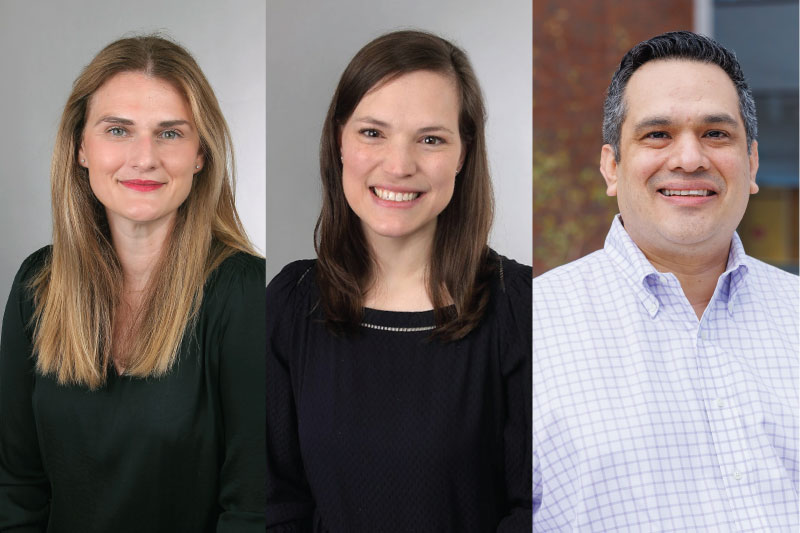
From left: Samantha Weaver, DNP, CRNP; Erin McLeod, M.D.; Michael Lopez, M.D., Ph.D.

Finding the Right Fit

Gene therapy, however, is not the right fit for every patient. To determine candidates, Children’s looks at age, underlying disease and disease progression, Weaver said. They also consider the patient’s overall health and risk for infectious diseases. “It’s an extensive process,” she explained.

With all gene therapies, safety must be prioritized. The treatment can produce a significant immune response that can even prove life-threatening to patients with more advanced stages of the disease. Liver injury is also a major concern. Thus, Weaver says the team must ensure the patient has no antibodies that will reject the virus. “These are important steps to make sure the patient will have the best outcome,” she said.

Because of these considerations, only a small percentage of patients are ideal for the treatment.

Why Offer it at Children’s?

In Alabama, Children’s is the only hospital that offers gene therapy for patients with DMD. Making it available made sense—the hospital already treats spinal muscular atrophy (SMA) patients with gene therapy. Brad Troxler, M.D., and Shelley Coskery, CRNP, led the way on that, Lopez said, and “built in a lot of the infrastructure that we needed to be able to start doing gene therapies.”

“That really has put us out in front of the field with the experience to deliver these high-cost and novel leading-edge treatments,” he added.

Challenges

Cost was one of many challenges for the team as they sought approval to implement this multimillion-dollar therapy. To that end, they involved hospital administration and a pharmacoeconomics committee in the process. But, as Weaver pointed out, the process involved many more steps including determining who would write a protocol to ensure patient safety. They also had to build a larger team, which ultimately included hepatologists, pulmonologists, cardiologists, physical therapists and social workers.

Obstacles persist, even as Children’s offers the treatment. “A high cost remains a big challenge,” Lopez said. “And so we’ve been fortunate to be able to provide these treatments because we’ve gotten support from the insurers, so far.” But not every insurer is the same, he noted, and some may be slow to cover or even decline to cover the treatment.

What the Future Holds

So far, Children’s has dosed only one patient—out of roughly 100 that it follows—with the new gene therapy. While few will be candidates for the treatment, the team hopes to dose more in the future, as long as “the risk is appropriate and the benefit is continuing to be demonstrated,” Lopez said. The team also expects more advancements, which may make it possible for others—especially those with more severe cases—to receive the treatment.

“This first approved treatment for Duchenne that is a gene therapy is just the beginning, and there are going to be more down the road,” Lopez added. “There are certainly some that are in clinical trials now. So I think we’re right to be optimistic in that we’re starting to really push the treatment of Duchenne in a way that’s going to give us lots of options that weren’t there before.”

And as Children’s continues to offer the treatment, they’ll contribute to the scientific community’s information on its effectiveness, which means the team is paving the way toward greater success for the broader population of patients with DMD.

“I think everyone who is familiar with it at this point knows it is not a cure. But it is supposed to significantly slow the disease, and we are still gathering and gaining more data to that,” Weaver said. “So we’re very excited to be part of that process.”