
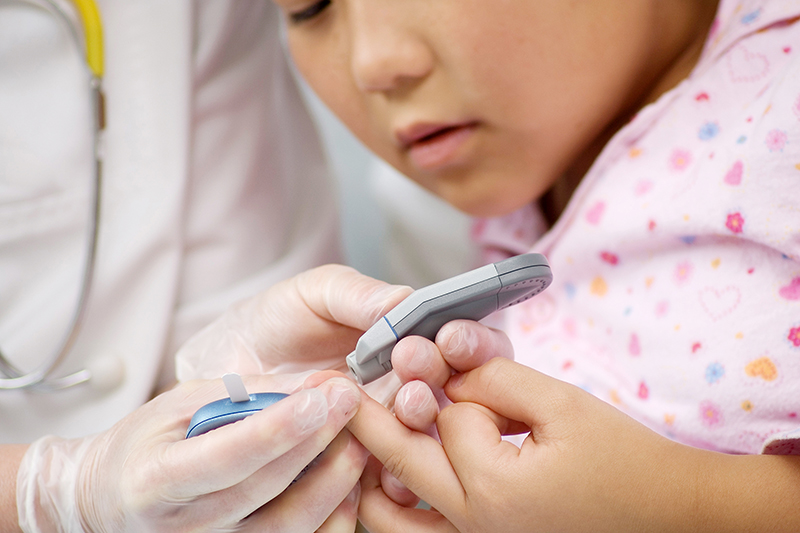
Children’s of Alabama is one of 15 institutions across the U.S. involved in the DISCOVERY study. (Stock photo)
It’s a troubling trend: Type 2 diabetes diagnoses have rapidly increased in children and teens, especially during the COVID pandemic. Now, University of Alabama at Birmingham (UAB) and Children’s of Alabama investigators are joining others from 15 prominent institutions across the United States to reveal the factors leading to this phenomenon, which poses massive public health implications worldwide.
The DISCOVERY study aims to determine why some children who are overweight or obese develop type 2 diabetes while others do not. Children with diabetes tend to have a more rapid progression than adults to other serious health conditions and complications such as high blood pressure, kidney disease and retinopathy, experts say. So it’s crucial to fully understand the contributing factors in order to more precisely predict which children are at the highest risk—and potentially prevent them from developing the condition.
“Very few longitudinal studies have been done to determine which of these kids converts to type 2 diabetes,” said DISCOVERY co-investigator Barbara Gower, Ph.D., who’s also a professor and chair of the Department of Nutrition Sciences at UAB. “This study is designed to recruit at-risk children and see who actually converts to type 2 diabetes, looking at a broad suite of factors—everything from social risk factors to biological factors.”
Ambika Ashraf, M.D., study co-investigator and director of the Division of Pediatric Endocrinology at Children’s, agrees. “Even though we understand that high BMI predisposes someone to type 2 diabetes, what is really unclear is what prompts a child who has all these risk factors to convert,” she said.
The issue is particularly relevant to Alabama, which is one of 15 states considered to be in the “Diabetes Belt” because the incidence of type 2 diabetes is about one-third higher than the national average. Children’s cares for more than 80% of the state’s pediatric type 2 diabetes patients, with nearly 650 such children referred for evaluation for new-onset cases between March 2017 and March 2021. Additionally, hospital admissions for new-onset pediatric type 2 diabetes cases in Alabama more than doubled over a two-year span that led up to the early stages of the pandemic.
Over the next two years, DISCOVERY will enroll approximately 3,600 children and teens ages 9-14, all with a BMI at or above the 85th percentile and HbA1c levels of 5.5% or higher. Children will be tracked for between two-and-a-half and four years, completing comprehensive annual visits, including a three-hour oral glucose tolerance test and detailed physiological assessments. They will also undergo a brief visit every six months, along with telephone checks every three months to monitor for type 2 diabetes.
The study’s size is a huge strength, says Gower, also a senior scientist at UAB’s Diabetes Research Center. “Because the actual conversion rate to type 2 diabetes is still quite low, we need a lot of sites and participants in order to have enough children to analyze,” she explained.
Ideally, Ashraf and Gower say, the DISCOVERY trial will produce new insights that help clinicians pinpoint exactly which children with high BMIs are most vulnerable to developing diabetes and stop the process.
“If we can determine the risk factors that predispose certain individuals to develop type 2 diabetes, that could have a huge impact,” said Ashraf, also a professor of pediatric endocrinology and associate director of the Comprehensive Diabetes Center at UAB. “It may have a global impact, too, because type 2 diabetes is going to cause a huge economic impact throughout the world.”

No Comments