
Browsing Category

Inside Pediatrics

Neurology & Neurosurgery

Children’s Embarks on Multi-Center Pediatric Migraine Study

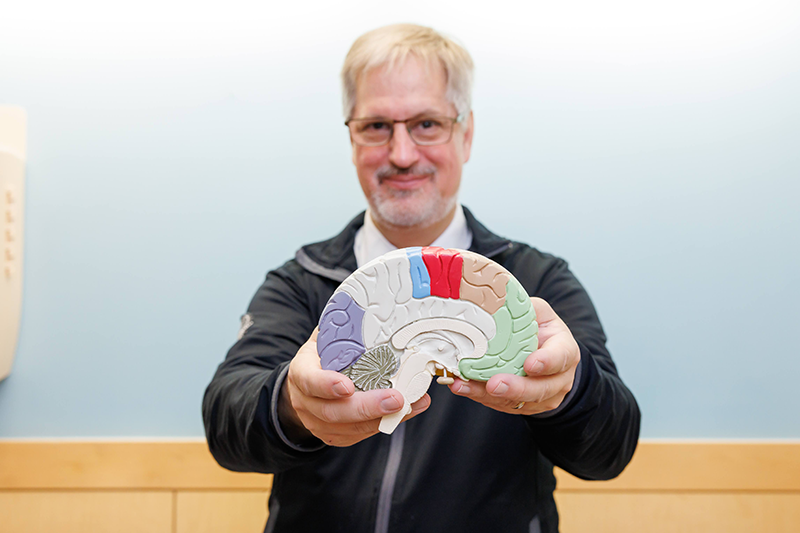
Dr. Scott Turner is leading a pediatric migraine study at Children’s of Alabama.

The University of Alabama at Birmingham’s pediatric neurology group at Children’s of Alabama is launching its first externally funded study on migraines this year, marking the start of what they hope will become a robust research program in the area. Such research is needed given that an estimated 17% of children have frequent or severe headaches according to their parents. [i],[ii] The Children’s headache clinic team knows these numbers well—they see hundreds of children with headaches each year.

The five-year study, funded by the Patient-Centered Outcomes Research Institute (PCORI), is a comparative effectiveness trial designed to determine which works better at preventing pediatric migraines: medication (amitriptyline) plus cognitive behavioral therapy (CBT) or CBT alone. Current guidelines recommend using the two together to prevent migraines, but there is limited data on whether CBT is just as effective on its own.

“The big question is, do they really need amitriptyline?” nurse practitioner Scott Turner, DNP, the principal investigator for the Children’s of Alabama site, said. “Or would CBT alone actually be effective?” If it is, he said, patients might not need medication, which always carries a risk of side effects.

CBT teaches kids how their body and brain experience pain and how to use relaxation skills to reduce stress and pain. Therapists also work with patients to help them reduce negative thought and feeling patterns, such as always thinking the worst is going to happen or that a migraine will ruin an important event. Parents learn how to reinforce their child’s active coping efforts. 

Children’s is one of 15 sites participating in the study. Its primary outcome is reducing the number of headache days and migraine-related disability from baseline to 28 weeks. Secondary outcomes include changes in headache severity and effects on the patient’s physical functioning and quality of life. Participants will receive CBT via telehealth, an approach that worked well during the pandemic and provides greater availability. The goal is to recruit about 400 children nationally, and Children’s hopes to enroll approximately 25 patients in the study beginning this spring.

Although he’s in charge of the study at Children’s, Turner initially doubted that CBT alone could be better than CBT with medication. “I would have thought that pill-taking was essential,” he said. But after researching the topic and learning more about CBT, he’s unsure. “I guess we’ll find out in about five years.”


[i] Nieswand V, Richter M, Gossrau G. Epidemiology of Headache in Children and Adolescents-Another Type of Pandemia. Curr Pain Headache Rep. 2020 Aug 25;24(10):62. doi: 10.1007/s11916-020-00892-6. PMID: 32840694; PMCID: PMC7447651.

[ii] Lateef TM, Merikangas KR, He J, Kalaydjian A, Khoromi S, Knight E, Nelson KB. Headache in a national sample of American children: prevalence and comorbidity. J Child Neurol. 2009 May;24(5):536-43. doi: 10.1177/0883073808327831. PMID: 19406755; PMCID: PMC2794247.

Neurology & Neurosurgery

RNS Device Can Reduce Seizures in Children with Epilepsy

Dr. Kathryn B. Lalor is a pediatric neurologist at Children’s of Alabama.

A new procedure that can reduce the number and severity of epileptic seizures in children is now available at Children’s of Alabama. The NeuroPace RNS®, or responsive neurosurgical stimulation, is a small device about the size of a matchbox. When placed inside the skull with two wires attached to the brain surface and/or inside the brain, it monitors and responds to brain signals, often short-circuiting a seizure before it begins. It’s been approved for use in adults since 2013, but with recent studies on its safety and effectiveness in children, more centers like Children’s are now offering it “off label” to patients whose seizures don’t respond to medication and/or other surgical interventions.

“It’s an adjunctive therapy, meaning we don’t do it as an initial treatment or thinking someone will necessarily be cured, although that is always our goal,” pediatric neurologist Kathryn B. Lalor, M.D., said. In a multicenter study of 17 patients under age 18, the average number of seizures fell 54.4% over the 1.7-year follow-up. Most patients also experienced less intense, shorter or less frequent seizures. One patient became seizure-free, although four showed no improvement.[1]

The device wouldn’t be a first step in managing seizures, Lalor said, because it’s surgical. “We would only undertake it if we know the seizures can’t be controlled with medications alone,” she said. It also has advantages over medications, including fewer, if any, long-term side effects. One major benefit of the device is that it seamlessly uploads data on its activity to a database clinicians can access, enabling them to track and measure seizures objectively.

“Right now, we know about seizures we witness,” Lalor said. “But there are silent seizures or ones that happen during sleep or when no one is around.” Better data enables doctors to ensure they’re treating all the seizures because even silent seizures can have an effect. With this data, she said, the team can remotely adjust the amount of stimulation the device sends and/or change a child’s medication.

While the device is still not FDA-approved for children, Lalor said more insurance companies are covering it, and a growing number of hospitals offer it with successful outcomes. There is also an ongoing multi-center trial—including the University of Alabama at Birmingham—evaluating its use in adolescents ages 12 to 17.

 “We’re excited to be able to offer this,” Lalor said. The team hopes to implant the first device early this year.


[1] Nagahama Y, et al. Real-World Preliminary Experience With Responsive Neurostimulation in Pediatric Epilepsy: A Multicenter Retrospective Observational Study. Neurosurgery. 2020;39(6):997-1004.

Nephrology

Desensitization Brings Hope to Children Waiting for a Kidney

Dr. Michael E. Seifert is the medical director of the Pediatric Kidney Transplant Program at Children’s of Alabama.

A new protocol at Children’s of Alabama is giving sensitized children who need a new kidney a brighter glimmer of hope for successful donor match and transplant.

Children who need a kidney transplant typically wait about a year or two for an organ. But if they’ve been exposed to external blood products, been pregnant or had a previous organ transplant, they could find themselves waiting up to five times longer. That’s because they’ve become sensitized to certain proteins that are foreign to their immune system, which results in high antibody levels that react to foreign tissues. “That makes finding a compatible transplant for them really, really problematic,” pediatric nephrologist Michael E. Seifert, M.D., said. Plus, those antibodies significantly increase the risk of an immediate rejection or graft failure.

Historically, finding a compatible kidney donor for sensitized patients has been challenging, but thanks to a process called desensitization, that’s changing for some. It involves using a combination of immunosuppressive therapies to try to reduce the immune reaction to potential donor organs. Although it’s been used in adults for years, pediatric centers like Children’s have only recently introduced their own protocols. “With these immunomodulatory therapies, we try to turn down the volume on their sensitization,” Seifert said. “You can’t get rid of it altogether. Once a patient is sensitized, they’re always sensitized to some extent.”

The desensitization protocol is a combination of plasmapheresis—a kind of dialysis for blood that removes some of the problematic antibodies and immune proteins—and IV and oral immunosuppressants to prevent the antibodies from returning. Together, Seifert said, “this creates a more potent and widespread ratcheting-down of the immune response that allows some transplants to be done safely.”

The process requires close collaboration between clinicians and the immunology, or HLA, laboratory to choose the right cocktail of immunosuppressants and the right time for transplant. While it’s still challenging to find compatible organs, Seifert says the therapies can help shorten the time on the waitlist for some patients and give them access to more donors.

The team has used the protocol on several children so far, one of whom was able to receive a transplant. “So far, the patients are doing really, really well on it,” Seifert said. “And it’s been a success. But it’s a more challenging transplant because they are still much more likely to reject this kidney than a straightforward kidney transplant. We balance that risk against the risks of remaining on the kidney transplant waitlist for several years, waiting for a compatible donor.”

The children also need more attention post-transplant to keep their immune system at bay without triggering complications like infections, and they’ll have to maintain that throughout their lives, Seifert said. They will also always have a higher risk of rejection and premature graft loss. Yet if the transplant fails, subsequent transplants become more challenging, given greater sensitization.

“It’s a Catch-22,” Seifert said, “in that we achieve our goal, which is getting them a transplant, but it’s a lot more work for us to keep that transplant going.”   

Nephrology

A New Protocol for Dialysis Catheter Use in Neonates After Cardiac Surgery

Dr. Tennille Webb is a pediatric nephrologist at Children’s of Alabama.

Cardiac surgery-associated acute kidney injury (CS-AKI) is a common complication following heart surgery involving cardiopulmonary bypass (CPB). One multicenter study found it occurred in 54% of neonates after the procedure. One option to reduce negative outcomes is to start prophylactic peritoneal dialysis (PD) immediately after surgery, which numerous studies have found improves outcomes. Children’s of Alabama is one of only a few pediatric hospitals in the country that provides prophylactic PD in this population. However, there is no consensus on the optimal time to initiate it.

To learn more about which neonates are most likely to benefit from prophylactic PD after cardiac surgery involving CPB, Children’s pediatric nephrologists Tennille Webb, M.D., MSPH, and David Askenazi, M.D., MSPH, reviewed four years of data from patients who developed CS-AKI to identify common characteristics. They also collaborated with cardiac intensivists to gain their perspective.

The team collected baseline data, which showed that about 13% of patients who needed PD didn’t receive it in the operating room (OR), while 51% of those who received PD didn’t need it. “This is undesirable,” Webb said, “because having a PD catheter is not without risks, such as infection.”

Based on their findings, Webb and Askenazi identified three risk factors that were independently associated with the need for PD:

  1. Pre-operative serum creatinine levels
  2. Day-of-surgery weight
  3. Having an open chest post-operatively
     

Using that information, they implemented a new prophylactic PD protocol. After implementing the new protocol, all neonates who eventually needed PD had the catheter inserted in the OR. “This is significant in avoiding delays in initiating PD, therefore mitigating worse outcomes,” Webb said. In addition, the number of unnecessary PD catheters fell by half. “This has huge implications in care delivery, including resources used and exposing children to therapies that are not needed,” she said.

Webb attributes the success to the team effort between nephrologists, cardiothoracic surgeons and cardiac intensivists. The team will continue to assess the impact of prophylactic PD on outcomes such as the duration of mechanical ventilation and fluid overload. “We are excited that we were able to develop and implement an evidence-based prophylactic PD protocol that has improved our ability to provide PD to this neonatal population,” Webb said.

Nephrology

Children’s Nephrologists Hope to Use Biomarkers to Better Identify Kidney Transplant Rejection

Dr. Michael E. Seifert is leading a study to evaluate biomarkers for their potential to predict kidney transplant rejection.

A new study at Children’s of Alabama aims to establish a new, non-invasive way to predict kidney rejection through the blood or urine with better accuracy than the current standard.

The study, Biomarkers from Multiple Platforms to Enhance Diagnosis of Rejection in Children and Young Adults after Renal Transplantation (BuMPER-CAR), is led by pediatric nephrologist Michael E. Seifert, M.D. He and the Children’s nephrology team are conducting it using a large biorepository of patients’ blood, urine and kidney biopsy tissue. With this, they’re evaluating individual biomarkers for their potential to predict rejection. They’re also trying to identify a panel of several biomarkers that may be more accurate and may provide results quickly.

“The idea with this study is, hopefully, we can not only find the patients that are having trouble but confirm the patients who are stable, so we can feel confident that we’re not missing something clinically by avoiding a biopsy in that patient.” The results, he said, could be transformative.

An estimated 1,000 children in the U.S. receive a kidney transplant each year—about 15 to 20 of them at Children’s of Alabama. While the procedure is usually successful, 10-15% of patients experience acute rejection each year, and most transplants fail after about 10-15 years. The standard for assessing the health of a transplant has been to measure creatinine blood levels and urine protein levels. If either is elevated, patients must undergo an invasive biopsy, which carries risks of complications—a heavy cost when only about 1 in 5 biopsies show signs of rejection, meaning most are unnecessary.

According to Seifert, one reason for the poor correlation between rejection and creatinine and protein levels is that the tests are “notoriously bad indicators” of transplant health. By the time the creatinine levels signal a problem, the kidney has often already suffered significant injury.

“On the flip side, there are lots of reasons why somebody’s creatinine might become abnormal, or they might start spilling protein in the urine that has nothing to do with rejection. But we must do biopsies to figure that out,” Seifert said. “So, we need better markers to tell us when the creatinine is a problem, so we can make better assessments.”

The study’s genesis came from a nephrology fellow who wanted to do a research project around biomarkers of kidney transplant diseases. A literature search revealed a plethora of “favorite” biomarkers to predict transplant rejection, but Seifert said there was no consensus on which biomarker worked best. “I think that’s part of the reason why, despite having really good data to support their clinical use, a lot of biomarkers remain on the outskirts of clinical medicine and aren’t being integrated into clinical practice,” he said.

The BuMPER-CAR study is funded in part by Natera, a molecular diagnostics company that manufactures a blood test that detects a form of DNA from the donor kidney, called donor-derived, cell-free DNA (dd-cfDNA), that can be a sign of kidney damage. However, the test is approved only for adults and has not been validated in children. One goal of the study is to set baseline levels for children.  

The study also assesses other biomarkers, including new ones in development at Natera and others developed in Seifert’s lab. Researchers hope to see if a panel of any of these biomarkers would perform better than any individual biomarker. They also want to know if the biomarkers can predict the type of rejection, which could help guide management.

Nephrology

Getting Creative to Address the Nursing Shortage in the Dialysis Unit

Dr. Sahar Fathallah-Shaykh is a pediatric nephrologist at Children’s of Alabama.

The pandemic hit the dialysis unit at Children’s of Alabama with a double whammy: increased census and staff shortages—particularly among nurses. “Similar to many other centers, we are searching for additional outstanding nurses” Children’s nephrologist Sahar Fathallah-Shaykh, M.D., said. Despite this deficit, the dialysis team is finding creative ways to give patients the attention they need while still prioritizing work-life balance for nurses.

Because of the nature of dialysis patients’ needs, it’s tough for the dialysis unit to compensate for staffing issues by limiting patient access. “We provide life-saving care, and patients have to get dialysis,” Fathallah-Shaykh said. “Otherwise, they cannot survive.” Children’s is also home to the only pediatric dialysis unit in the state. “The dialysis unit is not just a machine,” Fathallah-Shaykh said. “It’s not just a physician or just a nurse. It’s all of us working together. And if one is understaffed, that affects the whole dialysis unit.”

In addition, the unit provides dialysis to a significant number of infants and toddlers. While most dialysis patients wait about a year on average for a transplant, Fathallah-Shaykh says little infants or toddlers may have to wait until they’re big enough to be able to successfully receive a transplant. This can require them to be on dialysis longer.

Those patients also require dialysis four to five days a week, with one nurse assigned to a patient for three to four hours. “We have to be very careful to pay attention to details so we can do a good job,” Fathallah-Shaykh said.

The team has been working closely with the administration at Children’s to come up with alternatives. “It starts with recruiting more nurses and retaining nurses in their jobs,” Fathallah-Shaykh said. They also get help from nurses from other service areas, such as the intensive care unit, although they need significant training. “But they have some dialysis experience and have been a good help to us,” she said.

The team has also hired traveling nurses, but their availability is limited because they are in high demand nationwide. In some cases, physicians have stepped in to cover night calls. A newly hired nurse practitioner is also taking some of the pressure off and standardizing care.

For the long term, however, the unit is identifying ways to improve nurses’ work-life balance—the lack of which is one of the main reasons some healthcare professionals are changing careers. For example, dialysis nurses must be on-call at night for patients who require acute dialysis, so one change is to assign nurses to cover either acute dialysis on nights and weekends or chronic dialysis during the week to reduce the amount of on-call time overall. “We feel that dividing the acute dialysis from the chronic dialysis may help with a work-life balance and recruitment,” Fathallah-Shaykh said.

“We are very grateful for the nurses for everything they do,” she said. “Without them, these kids would not survive.”

Neonatology

BRAIN Protocol Reduces Brain Bleeds in Very Preterm Babies

Dr. Vivek Shukla is a neonatologist at Children’s of Alabama.

After implementing new measures to protect the brain health of preterm babies, a multidisciplinary team at Children’s of Alabama at the University of Alabama at Birmingham (UAB) saw promising results that suggest a new protocol could prevent brain bleeds in preterm neonates.

More and more infants born before 29 weeks, 6 days are surviving, bringing greater attention to their long-term outcomes, particularly their neurological health. In their first few weeks of life outside the womb, these babies have a high risk of intraventricular hemorrhage (IVH), a type of bleeding in the brain. To reduce the risk of IVH and other brain bleeds, Children’s of Alabama neonatologists Vivek Shukla, M.D., and Maran Ramani, M.D., led a multidisciplinary team from the level IV regional neonatal intensive care unit (NICU) at the University of Alabama at Birmingham (UAB) in the development of a quality-improvement and management program for infants at high risk of IVH or other neurological complications. The team implemented the program, called BRAIN, in April 2018 with the goal of improving long-term neurological outcomes for these babies.

The interventions begin at birth and continue through the first week of life, which is considered the highest-risk period for IVH and other brain bleeds. Components of BRAIN include:

  • Using more sophisticated monitoring such as near-infrared spectroscopy
  • Protocolizing routine medication use within six hours of birth for most of babies—such as initiating IV indomethacin prophylaxis, which can reduce the risk of IVH—and limiting the use of saline boluses and bicarbonate
  • Reducing noise levels by carefully handling equipment and the incubator, minimizing incubator

door opening, reducing the intensity of alarms and promptly responding to them, avoiding conversations at the bedside as much as possible and using a soft voice if needed.

  • Standardizing infant positioning with an elevated head of the bed, avoiding putting the baby flat on the bed and getting help when turning the baby to ensure a neutral head position.

Of 127 babies tracked after implementing the neuroprotective protocol, none experienced a brain bleed or early death in the first week of life compared to 11 out of 99 (11%) prior to the intervention. The results were published in the Journal of Perinatology in July 2022. The work isn’t finished, however, with several additional approaches planned, including using machine learning and artificial intelligence to identify features that predict worse outcomes.

“All the congratulations go to my wonderful team, my wonderful mentors and my excellent colleagues here,” Shukla said. “This is not a single-person show. A lot needs to be done to ensure that preterm infants reach their best potential development.”

Neonatology

Study Identifies Noninvasive Marker for Risk of Acute Kidney Injury

Dr. Christine Stoops is a neonatologist and the leader of the Baby NINJA team at Children’s of Alabama.

The leaders of an innovative project at Children’s of Alabama are looking to add a strategy that could help them identify an acute kidney injury (AKI) earlier.

The Baby Nephrotoxic Injury Negated by Just-in-Time Action, or Baby NINJA, project at Children’s of Alabama was established in 2015 to reduce the use of nephrotoxic medications and monitor neonates for early signs of AKI, which is a common complication in the Neonatal Intensive Care Unit (NICU) because very low birthweight infants are typically exposed to nephrotoxic medications during their stay.  In Baby NINJA’s first 18 months, this first-of-its-kind program—which has now been validated at other major children’s hospitals—led to a 42% drop in nephrotoxic medication exposure and a 78% drop in AKI prevalence, according to Baby NINJA team leader Christine Stoops, D.O., M.P.H. The improvements have continued through 2022.

Stoops, a neonatologist at Children’s, hopes recent research will lead to even better outcomes for Children’s patients. In 2019 and 2020, Stoops worked with investigators at Cincinnati Children’s Hospital to see if a noninvasive urinary marker, neutrophil gelatinase-associated lipocalin (NGAL), could provide an earlier warning sign of AKI. The results of the study, which was funded by the National Institutes of Health, were strong, and Stoops hopes Children’s will ultimately be able to incorporate NGAL into its Baby NINJA program.

NGAL can provide a timely way to predict which babies are at risk of AKI because it accumulates in the kidney tubules and urine after an injury, such as those caused by nephrotoxic medications. Studies in other settings show that NGAL elevations occur a couple of days before changes in serum creatinine, which is the traditional method of screening for AKI. But serum creatinine involves a needle stick and waiting for lab results. By the time babies show high levels of creatinine, they are already far along in the AKI. NGAL, in addition to being an earlier marker of AKI, is noninvasive, requiring just a few drops of urine. “The benefits of a noninvasive marker for kidney injury are a win all around for our babies, their families and the caregivers,” Stoops said.

In the NGAL study, researchers obtained daily creatinine and urine samples from 148 NICU babies for up to seven days after they were exposed to nephrotoxic medication, plus two days after they stopped the medication and/or when their AKI resolved. They identified the positive and negative predictive values of NGAL for AKI, confirming the results with the creatinine test. Stoops hopes the study and others like it will lead to FDA approval of NGAL as a test for AKI so Children’s of Alabama can incorporate its use into their Baby NINJA program and the very tiny babies in the NICU will receive far fewer blood draws.

Neonatology

New Research May Lead to Changes in the Care of Nano-preterm Infants

Researchers at Children’s of Alabama are studying the best ways to care for some of the smallest neonates.

Preliminary research conducted by neonatologists at Children’s of Alabama and the University of Alabama at Birmingham (UAB) could pave the way for new standards of care for extremely preterm babies.

Today, some babies with a gestational age between 22 weeks and 23 weeks, 6 days (previously considered inviable) may survive. However, very little is known about what increases the likelihood of survival and reduces the risk of long-term complications in these babies. In fact, until Children’s of Alabama and UAB neonatologists published a large series showing feasibility and outcome differences in infants who receive invasive and non-invasive respiratory support at birth, there wasn’t even a formal nomenclature for them.

“We coined the term ‘nano-preterm,’” Children’s of Alabama neonatologist Vivek Shukla, M.D., said. He is the lead author of a paper published in the journal JAMA Network that provides some of the first data on the best way to manage these neonates just after birth. UAB neonatologist Charitharth Vivek Lal, M.D., is also the senior author of the paper.

Non-invasive respiratory support at birth—rather than immediate intubation and delivery of lung surfactant—has been shown to improve short-term respiratory outcomes in extremely premature infants, defined as those born at gestational age 24 weeks to 27 weeks, 6 days. But it was assumed that non-invasive respiratory support was not feasible in those born between 22 weeks and 23 weeks, 6 days (now known as nano-preterm infants). The problem was that it had not been studied.

Shukla, Lal and their co-authors reviewed data on 230 nano-preterm infants treated at UAB’s level IV neonatal intensive care unit (NICU) between January 2014 and June 2021 to see if non-invasive respiratory support was best for these babies. Eighty-eight of the infants (whose average weight was 1 pound, 4.4 ounces) received non-invasive respiratory support in the first 10 minutes after birth; the rest (whose average weight was 1 pound, 2.4 ounces) received invasive respiratory support.

There was no difference in the combined primary outcomes of death or the complication of bronchopulmonary dysplasia at 36 weeks postmenstrual age between the two groups, but there was a higher risk of severe brain hemorrhageand deathin those who received non-invasive respiratory support. Shukla and Lal are planning a large, multicenter study to confirm the findings and provide data needed for professional societies to develop guidelines of care for nano-preterm infants.

“This could be practice-changing,” Shukla said. “It is also particularly important data given the increasing number of nano-premature babies who are surviving today.”

Neonatology

Initiative Aims to Send Low Birthweight Babies Home on Human Milk

Dr. Allison Black is a neonatologist at Children’s of Alabama.

Children’s of Alabama neonatologist Allison Black, M.D., is spearheading a project with the Children’s Hospital Neonatal Consortium to improve the percentage of babies in the neonatal intensive care unit (NICU) receiving human milk at 120 days of life or at discharge. More than 30 of the best level IV NICUs throughout the country are participating in the Project HOME (Home On Milk Every time) quality improvement project and sharing best practices to increase their success rates.

Breast milk has a host of benefits for babies, but for very low birthweight (VLBW) babies in the NICU, it can be lifesaving. The unique composition of human milk can reduce morbidity and mortality while conveying long-term cognitive and behavioral benefits.[1] Human milk that comes from an infant’s own mother is ideal because it includes antibodies to fight infection and a composition specific for each baby. But even donated breast milk can be beneficial. Despite these benefits, only about half of VLBW infants throughout the U.S. are discharged home on human milk. That rate is even lower among babies born in the South.[2]

The Project HOME initiative is built on research showing that a multidisciplinary approach is the most successful way to increase rates of human-milk feeding. “It’s not just one team member who makes a difference,” Black said. “Every caretaker who encounters patients and their families should provide the same messaging and education about the importance of human-milk feeding. We need to ensure that every staff member has the resources and knowledge to give this support to our families.” To that end, Black is assembling a team of NICU providers including bedside nurses, lactation consultants, speech and occupational therapists, nursing educators and even a mother of a NICU baby to identify and address barriers to providing the support needed for human-milk feeding.

The message is that human milk is a medicine that only you can provide for your baby.

One major barrier to getting mothers’ milk to babies at Children’s of Alabama is that the babies are born at hospitals throughout the state, some more than 100 miles away, then moved to Children’s via critical care transport teams. “We don’t see the mother until she’s discharged,” Black said, “and many times she’s too ill to speak by phone.” Yet studies find that expressing milk within the first six to 12 hours after delivery is associated with the highest success rates for initiating human-milk feedings.

Black says the transfer challenge requires them to think outside the box, such as including referring centers and the transport team in efforts to provide education about human-milk feeding before mothers arrive at Children’s.

“Another huge barrier is the physical and emotional distance a mother feels when her child has to be transferred to another facility,” Black said. This separation combined with the fact that many mothers are ill themselves can make it quite challenging for mothers to provide milk. Other barriers include access to electric pumps, support from someone who is knowledgeable about the benefits of human milk and a family and community support system. “These challenges continue as mothers have huge amounts of physical and emotional stress when their babies have prolonged hospitalizations, not to mention the different logistical challenges for mothers providing milk when they are back in the workplace and dealing with life outside of the NICU,” she said.

But Black sees numerous opportunities to overcome these obstacles, including educating mothers while they’re still in the hospital; outreach to high-referral centers to begin the education pre-delivery; giving brochures to families as early as possible; and forming a community support system.

While Black says the percentage of pre-term babies at Children’s who are still on human milk at 120 days or discharge is higher than the national average, she believes there is still room for improvement. She’d like to see the rate increased by at least 10 percent and is confident they’ll meet that goal. “All members of our team are passionate about working together to improve the care of our patients.”


[1] Vohr BR, Poindexter BB, Dusick AM, et al. Beneficial effects of breast milk in the neonatal intensive care unit on the developmental outcome of extremely low birth weight infants at 18 months of age. Pediatrics. 2006;118(1):e115-e123. doi:10.1542/peds.2005-2382

[2] Parker MG, Greenberg LT, Edwards EM, Ehret D, Belfort MB, Horbar JD. National Trends in the Provision of Human Milk at Hospital Discharge Among Very Low-Birth-Weight Infants. JAMA Pediatr. 2019;173(10):961–968. doi:10.1001/jamapediatrics.2019.2645