Browsing Category

Inside Pediatrics

Hematology and Oncology

Pediatric and Adult Physicians Collaborating to Improve Cancer Survival Among Adolescents and Young Adults

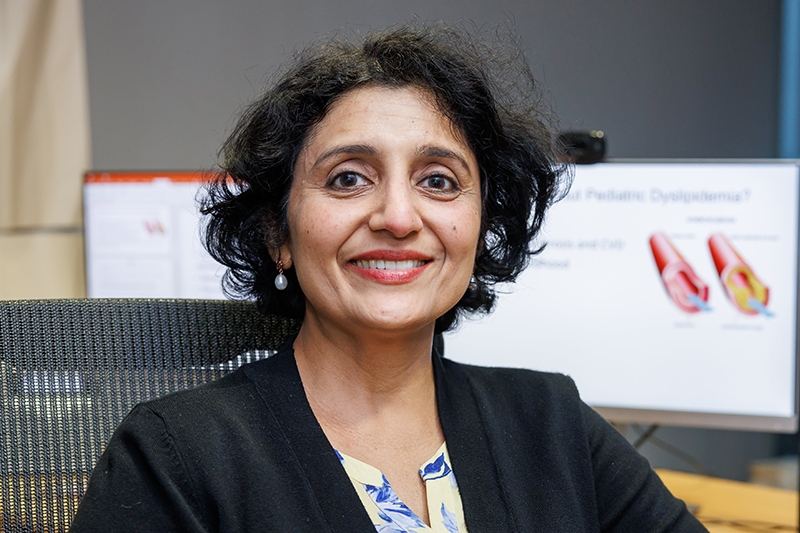
Dr. Julie Wolfson is the founder of the Adolescent and Young Adult Oncology and Oncofertility Program at Children’s of Alabama.

It might surprise many people to learn that cancer survival rates have been showing continual improvement in children under 14 and mature adults, but not among the 15-to-39-year-old age group. The Adolescent and Young Adult (AYA) Oncology and Oncofertility Program at Children’s of Alabama is aiming to change that.

When Julie Wolfson, M.D., MSHS, pediatric oncologist at Children’s of Alabama and founder of the AYA Program, was learning about healthcare delivery a decade ago, she noticed the survival disparities for adolescents and young adults and began to investigate how it could be addressed. She researched registry data and found that across a host of different diagnoses, survival rates were better when patients treated at a National Cancer Institute-designated Comprehensive Cancer Center.

She began to focus her research on understanding why. And she became determined to ensure the highest level of care for adolescents and young adults at Children’s of Alabama. In 2018, using seed money from the Hyundai Hope on Wheels Foundation, Wolfson launched the AYA program, which provides clinical treatment support and an array of psychosocial support services vital for patients in the adolescent to young adult stage of life.

“These patients are in a really vulnerable time in their social, emotional and physical development,” Wolfson says. “While their friends are at college, they have to come home. They were independent, and suddenly, they’re back under their parents’ roof, or they’re working and they don’t have help. When their peers keep growing and doing normal young adult things, they’re stalled, and they don’t feel well.”

To address these issues, the AYA Program offers wraparound, multidisciplinary services. “An AYA social worker meets with every patient to figure out what they can help with that is AYA-specific. They also connect with their assigned hematology-oncology social worker and the Hope and Cope Program for any psychosocial support needs or provides resources outside the institution,” Wolfson explains.

Preserving Fertility for Young Adults with Cancer

Unfortunately, getting treatment for cancer can put patients at risk for not being able to have their own children later on. One of the things that Wolfson is trying to do through her partnership with the director of fertility preservation is increase the number of patients who undergo fertility preservation. “The director and I are very much partners in this, and she bends over backwards to get our kids in,” Wolfson said. The oncofertility program allows young patients to bank sperm or extract and preserve eggs. Soon, they will also be able to take advantage of a relatively new process that allows for cryopreservation of ovarian tissue that can be re-implanted later when they are ready to have children.

Wolfson also reports that survival improvement in the AYA group is correlated to clinical trial participation, so enrolling AYA patients into as many clinical trials as possible is a key focus area for the program. “Our treatment and our care of these patients only has a chance to get better if they’re treated in a research study,” Wolfson said. “When you look at pediatric oncology, well over 70% to 75% of the patients are enrolled in a clinical trial, but it’s very different the older patients get.” As the patients age, the proportion of those who are enrolled in clinical trials drops. For this reason, Wolfson tries to ensure the AYA group has access to appropriate trials.

Ultimately, everyone’s mission is to ensure that each patient gets the best treatment possible. “This age group can walk through either door—pediatric oncology or adult oncology,” Wolfson said. As a result, the pediatric oncology team works hand-in-hand with their counterparts on the adult oncology staff to make sure all patient care options are examined. This interdisciplinary approach is carried out at monthly tumor board meetings and with paired disease specialists—one from the pediatric side, one from the adult side—who bring a deeper understanding to leukemia, lymphoma, sarcoma, neuro-oncology, genitourinary and gynecological oncology and more. Radiologists, pathologists and other specialists also bring their expertise to bear.

Since AYA’s launch, Wolfson has received investments from the O’Neal Comprehensive Cancer Center and the Vestavia Hills High School service-learning project, RISE.

“It’s outstanding to have the support of the leadership from Children’s of Alabama, as well as University of Alabama at Birmingham and the O’Neal Comprehensive Cancer Center,” Wolfson said. “It’s pretty unique.”

Hematology and Oncology

Improving End-of-Life Care for Pediatric Cancer Patients

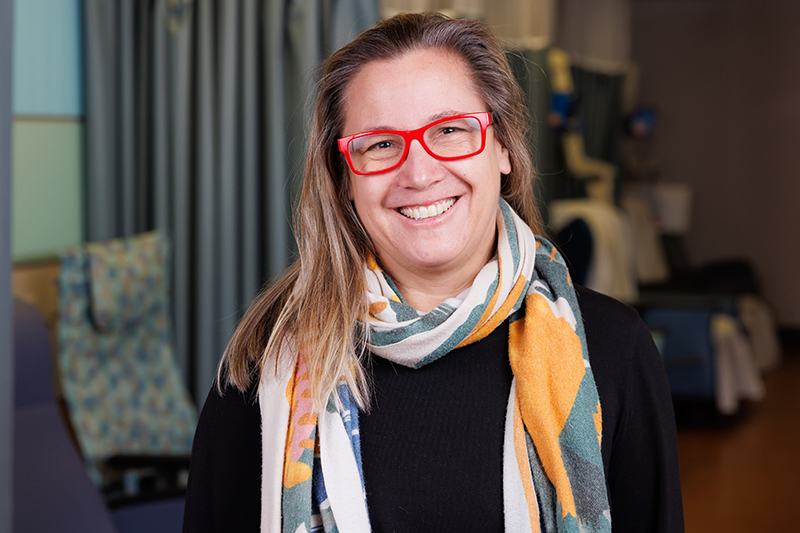
Dr. Emily Johnston is a pediatric oncologist at Children’s of Alabama.

Almost 3,000 children die from cancer each year in the United States. But in pediatrics, unlike adult care, there are no quality measures for end-of-life care. That’s changing, however, thanks to the pioneering work of Children’s of Alabama pediatric oncologist Emily Johnston, M.D., M.S.

“My goal is to establish quality measures for end-of-life care for children with cancer and then leverage those quality measures to reduce disparities in care,” Johnston said.

The mission comes from her time as a fellow, when she saw many deaths that did not go the way she believes patient families would have wanted. Systemic issues, like the inability to get a child into hospice given the lack of pediatric hospices, presented significant barriers.

In researching pediatric end-of-life issues, she found significant variation in care for underrepresented minorities. For instance, Hispanic children with cancer are more likely than non-Hispanic white children to die in the hospital and have medically intense end-of-life care. “When I would say this to people, they would tell me, ‘It’s okay, it’s what they want,’” Johnston said. But through dozens of interviews with bereaved parents, she found that was not the case.

During one series of interviews with 28 parents of 24 children who died of cancer, most parents said they preferred a home death and did not want their child dying in the restrictive environment of the intensive care unit (ICU). While they wanted their children to die peacefully, parents didn’t want to stop cancer treatment. They also told interviewers that they needed more education around end-of-life issues and more support around non-medical issues, such as financial challenges, so they could focus on their child. Parents also talked about a sense of abandonment after their child died.

Johnston and her colleagues then brought together a panel of nine experts in pediatric oncology, including representatives from nursing, social work and palliative care, to develop quality measures for end-of-life care for children with cancer, much like those available for adults. The 16 measures fit into four categories:

  • Avoiding medically intense end-of-life care
  • The location of death
  • Hospital policies/programs
  • Supportive care

For instance, one indicator measures the proportion of children who were intubated during the last 14 days of life, given that intubation usually increases suffering. Another measures the proportion of children who received palliative care or hospice support in the last month of life since both offer an additional layer of support for families, help alleviate suffering and facilitate the identification of the goals of the family and child.   

Hospital policies designed to improve the patient end-of-life experience included having pediatric palliative care services and a bereavement program available and eliminating visiting-hour restrictions, including age and number of visitors. Johnston and her colleagues are now working on validating and implementing the quality measures.

But, she said, “that research is a very big-picture; it’s not going to affect care tomorrow.” So, she partnered with University of Alabama at Birmingham palliative care physician Susan Buckingham, M.D., to improve access to palliative care for patients with high-risk cancers such as some brain and solid tumors.

Today, instead of starting palliative care near the end of a child’s life (and then only if the parent or physician requests it), families meet with Buckingham at diagnosis and have access to palliative care services throughout their child’s illness. Meanwhile, Buckingham attends oncology staff meetings and is now part of the multidisciplinary team treating those patients. She can spot unmet needs early in the process and work collaboratively with the nurses, social workers and other clinicians caring for the child and family. “We’ve done interviews with 12 families who had early palliative care about their experiences, and the feedback has been really positive,” Johnston said. As one family told her, “I didn’t really understand what palliative care did until we needed it, and I was so glad I already knew them by then.”

Gastroenterology

New Surgical Liver Transplant Director Hopes to Build on Transplant Center’s Success

Dr. Marcos Pozo Jatem joined Children’s of Alabama as the surgical liver transplant director in September 2022.

In March 2023, the Children’s of Alabama Transplant Center will celebrate its 10th anniversary. It’s a decade that’s been marked by growth, and leaders believe more is ahead.

One reason for that belief is the arrival of a new surgical liver transplant director. Marcos Pozo Jatem, M.D., arrived in September after completing a fellowship in pediatric transplant and hepato-pancreato-biliary (HPB) surgery at Lurie Children’s Hospital of Chicago. He’s also completed fellowships in abdominal transplant surgery and clinical bioethics at Northwestern and was a resident at Johns Hopkins. He’s a member of 10 professional societies related to surgery and transplant, holds nine board certifications and has won several surgery and teaching awards.

Pozo Jatem was drawn to the Children’s Transplant Center because of its history of success and potential for growth. The program currently serves three to five patients per year; he believes it can serve at least eight to ten. He hopes to build a referral pattern, especially for children in Alabama. A transplant hospitalization, he says, can last a couple months, depending on how complicated the transplant is. He doesn’t want a transplant family to have the additional burden of traveling outside the state to get the services they need.

“It is a significant investment for the family, not just economically, but also for rearranging other children that they may have, their school, the parents’ work commitments, and it’s sometimes very, very difficult for a parent, for a whole family to be uprooted like that to another state,” he said.

He also hopes to begin offering partial liver transplants, which are often ideal for smaller babies. For these patients, finding a donor match with a perfectly sized liver can be rare, even when the donor is similar in size to the recipient. Giving that child a portion of a larger liver can reduce the amount of time the child is on the transplant waiting list.

“Being on the waiting list and needing a liver is still a risky position to be in sometimes,” he said.

So far, Pozo Jatem has been impressed with the center’s culture. He says he’s humbled to join the transplant team, led by Jayme Locke, M.D., director of the Division of Transplantation; and Mike Chen, M.D., chief of the Division of Pediatric Surgery. The team also includes two hepatologists, Helena Gutierrez, M.D., and Henry Shiau, M.D., who have a partnership in patient care. “We share medical decisions; we constantly communicate and discuss evaluations, assessments and plans,” Gutierrez, the medical director of the liver transplant program, said. “We have a great partnership that has been built on open communication, respect and support.”

Pozo Jatem recognizes the team’s past efforts and the resulting growth and says he looks forward to helping the center grow more.

“I think the arc of progress has led us to this point that we can now expand on the services we can provide,” he said. “So that’s the thing that I’m most proud of—being part of a team that is interested in providing the best for children.”

Gastroenterology

Children’s Physicians Identify Adenovirus as Common Link in Hepatitis Outbreak

Adenovirus in the blood was a common link between cases during a recent hepatitis outbreak, according to researchers at Children’s of Alabama.

When a cluster of Alabama children were diagnosed with severe hepatitis in the fall of 2021, pediatric physicians at Children’s of Alabama and the University of Alabama at Birmingham (UAB) notified public health leaders and began investigating. As a result of their efforts, the Centers for Disease Control and Prevention (CDC) issued a health alert to warn the public about the spread of the illness. Hundreds more cases were subsequently discovered across the United States and Europe, many with a common link: adenovirus within the blood.

Researchers at Children’s and UAB discovered the link in the Alabama cases through a routine screening.

“We were able to uncover the possible association with the adenovirus-41 strain because it is our standard practice to screen patients diagnosed with hepatitis for adenovirus,” said Markus Buchfellner, M.D., a pediatric infectious disease physician at Children’s and UAB.

But the outbreak was something of a mystery to doctors. The nine patients in the Alabama cluster—all between 2 and 11 years old—were previously healthy. They lived in different parts of Alabama, and none attended the same day care or had known contact with any of the others. All developed severe hepatitis, with some experiencing acute liver failure and even requiring liver transplants.

“The adenovirus is typically associated with respiratory infections as well as gastrointestinal infections,” said Helena Gutierrez, M.D., Medical Director of the UAB and Children’s Pediatric Liver Transplant Program. “It is very rare for a healthy person to develop a severe illness that requires hospitalization from this virus.”

Gutierrez investigated the cases alongside Buchfellner and their colleague Henry Shiau, M.D., a pediatric hepatologist at Children’s and UAB. She served as lead author of the study, which was ultimately published in the New England Journal of Medicine. It showed that while the adenovirus was a common finding among the Alabama cases, it was unclear whether adenovirus infection itself, or a combination of the virus with other factors, led to the pediatric hepatitis outbreak.

Researchers noted that the timing of the outbreak during the COVID-19 pandemic should be considered, but it’s role also was unclear. COVID-19 is known to cause elevation of liver enzymes and multisystem inflammatory syndrome in children. The nine children tested negative for COVID-19 upon hospital admittance but did not receive antibody testing. While the outbreak remains a mystery, it’s clear that the work done by researchers at Children’s and UAB made an impact on the worldwide medical community. They led the way in researching the outbreak and alerting the public about symptoms and protective measures.

Endocrinology

Lipid Clinic Addresses Abnormal Cholesterol Levels in Children

Dr. Ambika Ashraf is the director of pediatric endocrinology at Children’s of Alabama.

Through early intervention, the lipid clinic at Children’s of Alabama is aiming to give kids with lipid problems a shot at healthier adulthoods.

The clinic used to be hosted as part of the weight management clinic at Children’s until leaders realized that lipid problems are not limited to children with obesity. Ambika P Ashraf, M.D., director of pediatric endocrinology at Children’s of Alabama, runs the clinic with nurse practitioner Erin Tuanama, N.P., and pediatric endocrinologist Christy Foster, M.D. Patients also receive nutritional counseling, recommendations for physical activity and lifestyle changes and, depending on their condition, genetic and cardiology consultations. The clinic meets weekly, and the team currently follows more than 1,000 patients.

Twenty-percent of children between ages 12 and 19 have some type of lipid disorder, and that rate jumps to 42% in children who are obese.[i] Ashraf calls pediatric dyslipidemia “a no man’s land” because different pediatric subspecialists take care of children with the condition.

As the only pediatric lipid clinic in the state—and one of the largest directed by pediatric endocrinologists in the Southeast—Children’s sees patients with familial hypercholesterolemia (FH). This genetic disorder affects about one in every 250 people and dramatically increases their risk of premature heart disease. The clinic receives referrals from throughout the South and treats patients with rare, genetically linked types of dyslipidemia, such as familial chylomicronemia (FCS), severe hypertriglyceridemia, familial combined hyperlipidemia and sitosterolemia. “Lipid problems start early in childhood, and it’s very important to intervene in a timely manner to prevent the cardiovascular risk,” said Ashraf, who is board certified in lipidology and is a fellow of the National Lipid Association.

Early diagnosis is critical for early intervention, which can prevent the heart disease and stroke that dyslipidemia can bring later in life. At the clinic, patients with high triglycerides or combined dyslipidemia (high LDL and triglycerides) are primarily managed with diet and lifestyle changes. Losing just 5-10% of their body weight can normalize cholesterol levels in children with dyslipidemia resulting from obesity. Those with high LDL levels and those with FH often need medications, such as statins, and lifestyle changes.

Science proves that this early intervention can lead to a healthier adulthood. One study compared adults with FH who started a statin when they were children to their parents with FH who didn’t start a stain until middle age. Just 1% of those receiving early treatment had experienced cardiovascular events by age 39, and none had died of cardiovascular causes. Conversely, 26% of their parents had experienced cardiovascular events by age 39, and 7% had died from cardiovascular causes.

“In the past, a lot of pediatricians thought they didn’t have to treat lipid problems,” Ashraf said. “We used to think we could wait to treat these children. But we have a window of opportunity to prevent later events. We can’t wait.”

In 1991, the National Institutes of Health’s National Cholesterol Education Program recommended selective cholesterol screening of children with certain risk factors or those with FH. Twenty years later, recognizing the power of prevention and the growing epidemic of obesity in the pediatric population—which often results in dyslipidemia—the American Academy of Pediatrics (AAP) and the National Heart, Lung and Blood Institute (NHLBI) recommended universal screening for all children ages 9-11 and again between ages 17 and 21.The AAP also provided criteria for when children should see a lipid specialist versus managing the condition with diet and exercise.

The AAP and NHLBI also recommended screening children ages 2-10 if they have high-risk factors, such as parents or grandparents who had heart attacks or other cardiovascular diseases before age 55 (for men) or 65 (for women).

A recently published study found that nationally just 17% of healthy children were screened, while between 22% and 77% of children with high-risk heart conditions were screened. When Ashraf began directing the lipid clinic in 2006, only about 10-20% of local pediatricians adhered to the screening guidelines, she said. But after intensive education, including setting metrics, holding grand rounds and instituting an annual day of education, now more than half of Alabama pediatricians follow the recommended guidelines.


[i] May AL, Kuklina EV, Yoon, PW. Prevalence of Abnormal Lipid Levels Among Youths — United States, 1999—2006. MMWR. 2010; 59(02);29-33.

Endocrinology

Can Diabetes Prematurely Age DNA in Teens and Adolescents?

Dr. Christy Ann Foster is a pediatric endocrinologist at Children’s of Alabama.

How does diabetes change a teenager’s gene expression? That’s the question researchers in the Endocrinology and Diabetes Division at Children’s of Alabama are exploring. The topic is vital given the stratospheric rise in Type 2 diabetes in adolescents.[1] In addition, the disease appears to be more aggressive than adult-onset diabetes, with adolescents losing up to 15 years of life expectancy due to comorbidities.

Research in adults shows that many complications of diabetes, including increased risk of cardiovascular and kidney disease, diabetic retinopathy, nerve damage and early mortality, appear to be related to epigenetic aging, in which gene expression changes while the underlying DNA remains the same. Epigenetic age is an indicator of biological aging, capturing the impact of environmental and behavioral influences across time on cellular function and the potential for disease. The higher a person’s epigenetic age acceleration, the higher their all-cause mortality and morbidity is. Ideally, a person’s epigenetic age corresponds to their chronological age; the epigenetic age of a patient with diabetes may be years older than their chronological age.

“I think the study of epigenetics is fascinating because it shows the way our genes can be changed by other influences,” Children’s pediatric endocrinologist and study leader Christy Anne Foster, M.D., said. “If we can understand these influences and how they can modify the impact of our genetics, there is potential for intervention.”

However, little research has been done on such epigenetic changes in children, and none in those with diabetes and/or obesity. Which is exactly what the study focuses on.

“With the impact of seeing such an increase in Type 2 diabetes in adolescents, and even pre-adolescents, we want to understand what developing this condition so early means for their long-term health,” Foster said.

The first step is a pilot study using the DNA of children and adolescents ages 12-18. Researchers are comparing the DNA of patients with diabetes and obesity to the DNA of those without either. They’re also comparing the DNA of patients with obesity to that of normal-weight children and adolescents. Researchers hope the study will establish that epigenetic aging occurs in adolescents with diabetes and/or obesity and will help them identify risk factors that can be addressed.. If the study is promising, researchers plan to do longitudinal studies to follow the impact of dietary and therapeutic interventions on epigenetic age acceleration.

One challenge will be determining whether the changes are the result of diabetes or something else, which is why the control group is so important, Foster said.

If the investigators do find a direct link between diabetes and DNA methylation, they may not be able to directly modify it, Foster said, but they could potentially support patients based on their social determinants of health and manage their risks that way.

Foster is partnering with Bertha Hidalgo, Ph.D., an associate professor at the University of Alabama at Birmingham’s School of Public Health. She’s also collaborating with researchers at the University of Minnesota, who are analyzing the DNA for epigenetic changes. “Given the prevalence of Type 2 diabetes in pediatric patients, understanding these changes in that population is critical,” Foster said. “These young people are at such high risk for complications with such a long-term diagnosis. The more we understand, the more we can hopefully improve their quality of life.”


[1] Lawrence JM, Divers J, Isom S, et al. Trends in Prevalence of Type 1 and Type 2 Diabetes in Children and Adolescents in the US, 2001-2017. JAMA. 2021;326(8):717-727. doi:10.1001/jama.2021.11165

Endocrinology

A Multidisciplinary Approach to Metabolic Bone Disease

Drs. Margaret Marks (left) and Ambika Ashraf lead the metabolic bone disease clinic at Children’s of Alabama.

Treating metabolic bone disease in children involves a team of specialists including a pediatric endocrinologist, pediatric orthopedic surgeon, geneticist, physical medicine rehabilitation specialist and nutritionist. Where once patients and their families had to navigate this web of specialists, now the metabolic bone disease clinic at Children’s of Alabama assembles the entire care team, whom patients often see in one visit, thanks to a multidisciplinary approach.

“When we initially started out, we weren’t sure how many patients we’d have,” clinic director Ambika Ashraf, M.D., said. “Subsequently, we realized most of these patients were going out of state.” Today, the clinic follows more than 300 patients. Most are from Alabama, but patients also travel from Tennessee, Mississippi and Georgia.

Since most of the conditions the clinic sees are complex and require multidisciplinary care, “getting to see the different specialists on the same day is a huge benefit,” Ashraf said. Otherwise, it could take six to eight months to get an appointment with individual specialists.

Patients have a varied spectrum of conditions including osteogenesis imperfecta; fibrous dysplasia; complex disorders of calcium, phosphorous and vitamin D metabolism; fragility fractures due to low bone density and osteoporosis; hypophosphatasia; and skeletal dysplasias.

Pediatric metabolic bone disease spans a spectrum from mild disease with a relatively low risk of fractures to disease so severe that just a small bump could result in a broken bone. Despite treatment, patients tend to be small in stature for their age, with multiple deformities resulting from fractures and poor healing, Ashraf said. They are also prone to problems in other areas, including cardiovascular and pulmonary complications. “We make sure they see those specialists, too,” she said.

The most common condition the clinic treats is osteogenesis imperfecta (OI), or brittle bone disease, a genetic defect that affects the body’s ability to make collagen, which is required for strong bones. These children may have dozens or even hundreds of fractures before they reach adolescence.Most patients with OI receive bisphosphonate infusions in the Children’s infusion center to strengthen their bones.

Physical medicine, or physiatry, plays an important part in managing these children, Ashraf said, because many have some type of abnormality related to muscle tone or movement, joint laxity, joint contractures or muscle weakness. They may also need help with a wheelchair, braces/splints or other mobility devices.

“This is a fascinating time for metabolic bone disease,” Ashraf said. Just a decade ago, there were few treatments beyond the supportive and palliative. For instance, until a few years ago, the only treatments for X-linked hypophosphatemic rickets were oral phosphate and calcitriol. They helped, but not enough, and patients still required frequent surgeries. With the availability of burosumab, a monoclonal antibody that binds to and inhibits the activity of fibroblast growth factor 23—which blocks phosphate absorption—children with the condition now need fewer surgeries and experience fewer limb deformities.

Bisphosphonate infusions help reduce the number and severity of fractures in OI patients, and physical therapy can help with deformities. For hypophosphatasia, enzyme replacement helps manage the condition. Caring for these children “is a joy,” Ashraf said. “Especially when we can make a difference in their quality of life.”

Cardiology

Communication, Metrics Drive Quality Improvement in Cardiothoracic Surgery

Ashley Moellinger (left) leads QI projects for the Children’s of Alabama cardiothoracic team.

Two years after launching a quality improvement (QI) project to reduce re-interventions for one of the most complex heart surgeries performed in newborns, the cardiothoracic team at Children’s of Alabama is ready to call it a success.

The project, which is part of the National Pediatric Cardiac Quality Improvement Collaborative, was designed to understand why re-interventions occurred after the Norwood procedure, which involves constructing a new, larger aorta for babies born with hypoplastic left heart syndrome. Patients who don’t require an intervention during the hospitalization after their initial surgery have a mortality rate of about 6% while those who require another surgery or catheterization procedure have a 26% mortality rate.

Children’s slashed its Norwood re-intervention rate and lengths of stay by:

  • Improving communication among team members
  • Identifying and targeting metrics
  • Focusing not on “finger-pointing,” but on how to improve the process

Overall, the unit has seen a 30% reduction in re-intervention in the first phase of the surgery and an 18% drop in the average length of stay, as well as significant improvements in other quality markers, including days to extubation and the use of certain medications like opioids and vasopressors. In addition, interventions for post-operative bleeding fell from 18.5% to 4.2%.

“The two main functional components of what we’re doing are situational awareness and communication,” cardiovascular intensivist Hayden Zaccagni, M.D., said. Together, they allow for more scripted and pinpointed conversations about potential complications, he said. “The communication factor is the most important thing—making sure that all the different disciplines that care for these children have the same kind of knowledge umbrella and communicate about it.”

Also important is having clear expectations about the post-operative period. A high-level map at the bedside clearly shows those metrics on a day-by-day basis for cardiovascular, neurological, respiratory and feeding specialists.

The third piece, according to Ashley Moellinger, RN, CRNP, who co-leads QI initiatives in the department, is holding small group-focused meetings to dissect re-interventions. “We get together those involved and say, ‘How can we prevent this from happening again?’” she said.

As with any QI project, data rules. For instance, one of the most common complications the team saw was post-surgical bleeding, so they developed guidelines to quantify the amount of bleeding in the OR not just in volume, or millimeters, but by measuring the blood coagulopathy, or impaired clotting. That led to the discovery that the lab instrument used for the measurement was outdated. And that, in turn, provided hospital administrators with reason to update the machine because they could see the potential impact on patient outcomes.

While the project is a success based on the numbers, it’s also a success in a less tangible way, Zaccagni said. “The morale of the unit, something we haven’t been able to objectively measure, is also improved.” He thinks it’s due to having a better understanding of where patients have come from medically and where they are now. “There’s this huge sense of collaboration.”  

The team hopes to apply the lessons learned and new systems to other cardiothoracic surgeries.

Inside Pediatrics, Nephrology

Researchers Get One Step Closer to Non-invasive Test for Kidney Rejection

Doctor conducting kidney exam on child.

Monitoring kidney transplant rejection in children is akin to sticking your hand into five pots of water, four of which could burn you. The only surefire way to know if a child is rejecting the organ is with a biopsy. The procedure is invasive, requires anesthesia, carries risks of complications and is expensive. In other words, it’s very hot water. 

Yet every kidney transplant patient at Children’s of Alabama receives a routine biopsy six months after transplant. Only about one 1 in 5, however, actually show signs of rejection, meaning most of those biopsies were unnecessary. Now imagine there was a simple blood or urine test to tell which children were likely to reject the kidney and need a biopsy. That could mean going from 1 in 5 biopsies positive for rejection to 4 in 5 or 5 in 5, sparing hundreds of children from a painful procedure they don’t need.

Pediatric nephrologist Michael E. Seifert, MD, and his team have been working for years on developing such a test, using a large biorepository of patients’ blood, urine and kidney biopsy tissue collected throughout and after the transplant process.

Their work involves investigating gene expression in the tissue samples to find signals of rejection. But while they are good at identifying abnormalities from a piece of biopsy tissue, the process still has room for improvement. With the way tissue is processed, it’s difficult to determine if the abnormal signals are coming from cells that are relevant for rejection—such as immune cells—or from cells that don’t play a role in rejection.

Now, Seifert and his lab are using a novel technique called spatial transcriptomics, or spatial gene expression assays, which enable them to “see” the signals in the context of their natural habitat without destroying the underlying tissues.

“Spatial transcriptomics allows you to develop non-invasive biomarkers that are more reflective of the underlying biology of the disease you’re interested in, such as rejection,” Seifert said. And those more precise biomarkers could narrow down the number of patients who require biopsies. “This will help us understand the mechanisms of kidney transplant injury and rejection with much higher precision,” he said.

Before this technique, they used one of two methods to study gene expression in the tissue. One is to take the tissue, grind it up, see which genes are high and which are low, then develop a test based on the findings. The other is to separate a piece of biopsy tissue into its component cells and individually examine their gene expression. That’s more precise than the bulk gene expression or grinding method, Seifert said, but you lose any spatial context as to where in the tissue the cell came from.

One way to think about it is having all your furniture jammed into a pod in the front yard, taking a chair into the house, and hoping it’s the right piece for that spot by the window. But without the rest of the furniture in the room, it’s hard to know. With spatial transcriptomics, he said, you’re viewing the chair in context with the rest of the furniture.

“The spatial platform is a really incredible tool in that it allows you to be so precise in the areas of the kidney that you’re studying,” Seifert said. He can also isolate cells he’s interested in from the rest of the tissue without disturbing the tissue itself. “Being able to keep the tissue intact enables you to assign geographic locations for the different signals you’re getting when you test the tissue,” he said. 

“We’re just beginning to learn all the ways we can apply it to kidney transplant diseases.”

He and his team presented their first paper on their findings using the new platform at the American Transplant Congress in Boston in June.

Inside Pediatrics, Neurology & Neurosurgery

New Clinic Looks for Links Between Neurology and Genetics

Children’s of Alabama has a specialized clinic in neurogenetics.

Some neurologic conditions have a genetic basis, and some genetic conditions manifest with neurological symptoms. With so much crossover, Children’s of Alabama created a specialized clinic in neurogenetics. 

“I get a lot of referrals from my neurology colleagues and my genetics colleagues,” said Amitha Ananth, MD, who completed a fellowship in medical genetics as well as neurology. “Creating the clinic allows us to focus in on these problems rather than seeing the children individually. It also provides a good teaching environment for trainees in neurology and genetics to see the overlap.”

Neurogenetics is a growing field of study designed to better understand genetic causes of brain disorders, and to diagnose and treat these conditions. 

Ananth sees children and families together with a genetic counselor to discuss genetic risks and the benefits of testing. “It’s really helpful to have a genetic counselor explain and guide the discussion about testing,” she said. 

So how did she become interested in neurogenetics? “I was always going to be a neurologist,” she said. “I found the brain and the nervous system really fascinating. And in medical school, I found I enjoyed the pediatric version of it so much more.” 

Ananth went to Stanford to complete the medical genetics fellowship after realizing she didn’t have enough genetics background to feel comfortable with gene sequencing and understanding the results. “There are definitely people in child neurology with significant research backgrounds who are quite comfortable with genetics, but as a purely clinical child neurologist I felt I needed the extra training to gain this expertise.” 

A lot of pediatric neurology has a genetic basis, she said. The affordability and accessibility of broad-based genetic testing, such as whole exome sequencing, is relatively new but provides important information in difficult-to-diagnose cases. “What I learned during my training was that the next big revolution was going to be in diagnosing neurogenetic conditions with the hope that we would work toward treating them.”

That’s already happening with groundbreaking new treatments for genetically based pediatric neurologic diseases such as Duchenne’s muscular dystrophy and spinal muscular atrophy (SMA). Ananth remembers when she was in residency, and SMA was a death sentence. “There was no treatment. Now there is,” she said.