Hematology and Oncology, Inside Pediatrics

Asthma, Sickle Cell Disease and Trauma – Connecting the Dots

BrandiPernell-Asthma-SickleCell_Research-Resized

Brandi M. Pernell, DNP, assistant professor of Pediatric Hematology and Oncology

Take a child with sickle cell disease who is already at a significantly higher risk for asthma, pain and acute chest syndrome—the leading cause of death in these children—and mix in adverse childhood experiences (ACEs) such as violence, racism, abuse, parental death or divorce. The result: sicker children who, due to toxic stress exposures, are more likely to experience poorer health outcomes. 

That’s what Brandi M. Pernell, DNP, an assistant professor of pediatric hematology and oncology who works at the Children’s of Alabama dedicated pediatric sickle cell clinic, found in her research. 

“The literature shows that those who experience ACEs early in life have a higher risk of chronic conditions like asthma, cardiovascular disease, and obesity”—even cancer, Dr. Pernell said. But until her work, there was limited documentation in the sickle cell literature about ACEs. What is known is that acute stress is a common trigger for pain episodes in children with sickle cell disease. Pernell is now connecting the dots to show that ACEs increase asthma risk in these children which, in turn, leads to an increased risk for pain and acute chest syndrome.  

Her findings highlight the need to screen children with sickle cell disease, particularly adolescents, for ACEs and, if found, implement protective factors and buffering mechanisms to address the physiologic sequelae from these toxic exposures. 

She’s already begun that process, teaming with the local chapter of the Sickle Cell Foundation to promote social and emotional competence and resilience among affected adolescents. That community-based approach is important, she said. “I believe we need to meet families and patients where they are,” she said. And the Foundation has a different relationship with patients and families than the clinic staff. “We address the medical side, but ACEs are things happening in the home and neighborhood,” said Dr. Pernell. 

For Dr. Pernell, the work is more than a scientific endeavor; it’s personal. She felt called to this research, she said, both as a Black woman (sickle cell primarily affects Black people) and as a healthcare provider, particularly given the events of 2020. “In the wake of COVID and the social and racial uprising prior to and throughout 2020, it just spoke to me,” she said. So when she joined the University of Alabama at Birmingham faculty in 2016, this is where she focused her research. “I can relate to my patients in a way that some others can’t,” she said. “I’ve experienced some of the same things they have.”  

“If not me, then who?” she asked, quoting the late congressman and civil rights leader John Lewis. “If not now, then when?”  
Hematology and Oncology, Inside Pediatrics

Oncolytic Herpes Virus Immunotherapy Shows Early Promise in Pediatric Patients with High-Grade Glioma

DrFriedman-Lab-Microscope-Resized

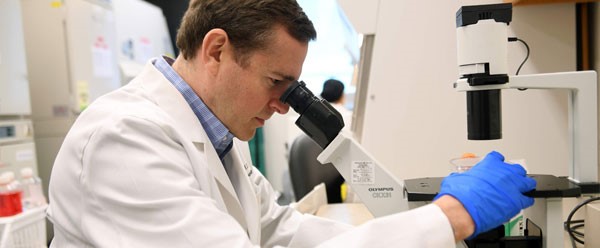
Gregory Friedman, M.D., professor of pediatrics at the University of Alabama at Birmingham (UAB), director of developmental therapeutics for the Alabama Center for Childhood Cancer and Blood Disorders at UAB and Children’s of Alabama

It’s a pretty big deal when your research is published in the New England Journal of Medicine. But it’s just as rewarding when your research holds promise for treating one of the most deadly cancers seen in children: high-grade gliomas.  

“Unfortunately, outcomes are very poor for children with progressive gliomas, and we have not seen a significant improvement in outcomes for this dreadful disease in the last 30 years,” said Gregory Friedman, M.D., professor of pediatrics at the University of Alabama at Birmingham (UAB), director of developmental therapeutics for the Alabama Center for Childhood Cancer and Blood Disorders at UAB and Children’s of Alabama and lead author of the paper, “Oncolytic HSV-1 G207 Immunovirotherapy for Pediatric High-Grade Gliomas.” Dr. Friedman also presented the findings from the phase 1 trial during the virtual American Association for Cancer Research Annual Meeting in April 2021. 

“The toxicities associated with the current standard therapies are unacceptably high,” Dr. Friedman said. “There is, therefore, a great need for effective and less toxic targeted therapies for these children.” 

Dr. Friedman’s team used a genetically engineered cold-sore virus, a herpes simplex virus type-1 (HSV-1), which naturally infects cells of the peripheral and central nervous system. While the modified virus, called “G207,” can’t infect and harm normal cells, it can target tumor cells by directly killing the cells and stimulating the child’s own immune system to attack the tumor.  

Twelve patients between 7 and 18 years old with high-grade gliomas that had progressed on prior treatments received an infusion of G207 through intratumor catheters. Within 24 hours, some also received a single, small radiation dose directed to their tumors, which was designed to enhance virus replication and spread throughout the tumor.  

Treatment response was assessed by imaging, tumor pathology and the patient’s performance status. Eleven of the 12 patients demonstrated a response, with a median overall survival of 12.2 months; a 120 percent increase over the typical overall survival of 5.6 months in this population. To date, 36 percent of patients have survived longer than 18 months, surpassing the median overall survival for newly diagnosed pediatric high-grade glioma.  

To date, immunotherapies have failed to improve outcomes in pediatric brain tumors because the tumors are “cold,” with very few immune cells needed to attack the tumor, Dr. Friedman said. “Importantly, when examining matched pre- and post-treatment tissue from patients, we showed something that has not been seen before with any other therapy: that G207 dramatically increased immune cell trafficking to the tumors and turned the ‘cold’ tumors to ‘hot’ ones. This is a critical step in the development of an effective immunotherapy for children with brain tumors,” he said.   

G207 alone or in combination with radiation therapy was well tolerated, with no dose-limiting toxicities, grade 3/4 treatment-related adverse events, or evidence of virus shedding into the bloodstream, saliva, or conjunctiva.  

“While further investigation in a phase 2 clinical trial is needed, our findings suggest that oncolytic immunovirotherapy using a modified cold-sore virus is a safe and potentially efficacious approach to target pediatric high-grade glioma,” Dr. Friedman said. 

Cardiology, Inside Pediatrics, Pulmonology

Saving Children with Pulmonary Hypertension – One Patient at a Time

Bennett_Pearce_MD_600x284

Children’s of Alabama cardiologist Frank Bennett Pearce, M.D.

When the cardiology team at Children’s of Alabama heard the family history of a 6-year-old boy who presented with an episode of syncope, they knew immediately what was wrong. His father had undergone a double lung transplant at the University of Alabama at Birmingham to cure his pulmonary hypertension (PH). Now his son had been diagnosed with the same thing.  

But that wasn’t the only problem. The boy had also developed a supraventricular tachycardia requiring radiofrequency ablation, which was successful. 

“So we cured that,” said Children’s cardiologist Frank Bennett Pearce, M.D., the boy’s cardiologist. But then the patient continued having episodes of syncope, particularly during exertion. “When that happens in patients with PH, it’s because the blood can’t get through the lungs to the left side of the heart, limiting cardiac output,” said Dr. Pearce. To address that problem, Dr. Pearce and his team performed an atrial septostomy, creating a tiny hole between the atria in the atrial septum. Second problem fixed. 

Discharged on oral medications, the child did well with close follow up for several years, said Dr. Pearce, although he was vulnerable to pneumonia and other infections.  

Then in 2020, at age 13, he took a turn for the worse. “There are three principal metabolic pathways involved in treatment of PH,” said Dr. Pearce. Two—endothelin and phosphodiesterase—have effective oral drugs for treatment. The third, the prostaglandin pathway, is more difficult to address, he said. In the past, it required a central line for IV infusions of treprostinil, a prostaglandin pathway medication. “Most families are very reluctant to go to the central line because it creates major problems in their lifestyle and is a quantum leap in terms of the negative effects on these children,” he said. 

However, treprostinil can also be administered subcutaneously through a small catheter and external pump, much like an insulin pump. Unfortunately, the day the teen was scheduled for cardiac cath and initiation of subcutaneous treprostinil, he became very cyanotic. “We didn’t think it was safe,” Dr. Pearce said. Instead, the boy was admitted to the CVICU on inhaled and oral prostacyclin inhibitors. Despite increasing the dosage, his disease progressed. Finally, the team put him on the intravenous form of treprostinil, and he improved. Eventually, they were able to transition him to the subcutaneous form of the drug via the pump, and he became the first patient at Children’s to be initiated onto subcutaneous treprostinil. 

He’s now home and undergoing evaluation for a lung transplant. “He’s a typical teenage kid but able to deal with all these challenges and keep a pretty good attitude, thanks to support from his family,” said Dr. Pearce. “He just hangs in there.” 

Cardiology, Inside Pediatrics

T3: Clinical Decision Support Platform in the CVICU Improves Monitoring; Reduces Problems

Doctors-Cardiovascular-ICU-Monitoring-Etiometry-Resized

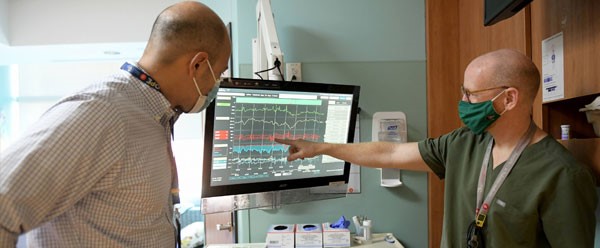
Right, Santiago Borasino, M.D., and left, Hayden J. Zaccagni, M.D.

An enduring issue in pediatrics is that so much of the technology used was developed for adults and must be retrofitted for children. That’s why the new software the cardiovascular ICU (CVICU) at Children’s of Alabama received for its monitoring devices is such a big deal. “It’s unique to the pediatric cardiovascular ICU population because it was developed initially for that population,” said cardiac intensivist Hayden J. Zaccagni, M.D.  

The software, called T3 (trajectory, target and trigger), was developed by ICU software development company Etiometry with input from some of the top children’s hospitals in the country. Dr. Zaccagni calls it a “situational awareness tool,” one that pulls information from the telemetry unit, ventilator and other machines and displays all the data on one screen. It also provides past data and trends and uses algorithms to warn staff of the probability of low oxygen levels in the venous blood (a surrogate of a lower-functioning cardiac pump). 

With 20 beds in the CVICU that are nearly always filled, anything that makes it easier for the team to track potential problems and potentially improve outcomes is a boon. 

The software’s greatest value comes from the historical information it provides, said Dr. Zaccagni. Physicians and nurses can then use objective data to review events and improve their knowledge about what happened and why, he said. For instance, they use the data during extensive reviews of all cardiac arrest occurrences. “It shows the baseline, what happened before the arrest and what happened that led to the physiology failure,” he said. And that can identify opportunities for improvement. 

“It provides two things we didn’t have before,” said cardiac intensivist Santiago Borasino, M.D. “The ability to see multiple vital signs trend at the same time on the same screen and the ability to see trends over time right at the bedside without running a report on a different computer.” 

“Sometimes the vital signs might look normal, but that might be very abnormal compared to what the patient was experiencing six hours ago,” Dr. Borasino said.  

It also improves rounding communication and efficiency, enabling the entire team, including the attending physician, fellow, bedside nurse, dietician, respiratory therapist and pharmacist, to view the patient’s history for the past 12-24 hours at the same time. “We want everyone on the same page,” Dr. Zaccagni said. “The goal is that everyone is aware of patients at risk for having an untoward event.” 

The other advantage is the software’s ability to continually recalculate the algorithm based on the changes in vital signs. “As intensivists, we’ve been trained to put together information from different sources to create a picture of whether the patient is fine or not fine,” Dr. Borasino said. But those mental algorithms are fraught by memory and sometimes wrong. The software, however, provides robust data analyses and assigns a probability of a problem. 

“The ability to view the history, see multiple vital signs at the same time and see data trends, I think, provides better monitoring and helps us find problems when they’re small rather than when they’re big,” said Dr. Borasino. “Everyone knows when the patient is crashing; the algorithm and the way the information is laid out in front of us might help us act before the patient is crashing.” 

Inside Pediatrics, Pulmonology

Pulmonology Telehealth Gets Good Reviews

When the pandemic hit in March 2020, most clinics at Children’s of Alabama pivoted to telehealth visits, including pulmonology. Although things have primarily returned to normal with in-person visits, telehealth still has a presence in the outpatient setting.

Given that, an interprofessional team of Pediatric Pulmonary Trainees at the University of Alabama at Birmingham led by Valerie Tarn, MS, RD, LD, training director of the Pediatric Pulmonary Center (PPC), launched a survey to assess how families and clinicians felt about televisits in the pulmonary clinic. “We wanted to evaluate our services and get feedback from our families since many have children with special healthcare needs that require multiple visits per year,” she said. “We wondered if we could do telehealth for every other visit in some populations.”

They surveyed families that had already had a televisit (most used their phones) and those that hadn’t, as well as clinicians who participated in the televisits, to see what, if any, barriers existed as well as collect demographic information.

Most families who had participated in telehealth said they would like to continue for some, but not all, visits. The greatest advantages were avoiding COVID-19 infection and not having to drive to the hospital. The latter is particularly important, Tarn said, since many families drive an hour or more to the clinic. As one parent commented, “This has been wonderful experience! I don’t have to worry about exposing her to COVID or the flu, which is very dangerous for my child. Hope to be able to continue this service in the future!”

About 90 percent of families that hadn’t had a pulmonary televisit reported having Internet access. When asked about potential disadvantages to such visits, they noted the inability to conduct a physical exam. As one parent wrote,  “Please allow the patient to have a choice as to whether or not the appointment is to be in-person or a telehealth appointment.”

Clinicians agreed that telehealth was probably here to stay, Tarn said, but they wanted a more consistent structure. That included prescreening families and finding ways to incorporate other members of the health care team into the visit. “A lot of our patients need to see other health professionals,” she said. “How do you get them to talk with the pharmacist or social worker or nutritionist?” In the spring, the doctors were typically emailing other clinicians or leaving a message in the patient’s secure medical record about the need for follow up.

In the cystic fibrosis clinic, however, nutritionists, social workers, and other allied health professionals rotatedthrough the visit, each taking turns with the iPad. “That worked fairly smoothly,” Tarn said, and could provide a model for other pulmonary clinics.

In the future, the clinicians noted, it would be helpful if patients had home equipment available, such as spirometers, peak flow meters, and weight scales.

But overall, Tarn said, families and healthcare professionals liked telehealth. Now that the surveys have been collected, the PPC trainees plan to present the research results to an interprofessional audience at a local or regional conference.

Inside Pediatrics, Pulmonology

Study Shows Long-Term Effectiveness of Ivacaftor in Children and Adults with Cystic Fibrosis

The world of cystic fibrosis was radically changed in 2012 with the approval of the first cystic fibrosis transmembrane conductance regulator (CFTR) modulator, ivacaftor, which targets certain genetic mutations responsible for the disease. Now, a recently published study by the Cystic Fibrosis Foundation’s multi-center Observational Study in People with CF with the G551D Mutation (GOAL) trial (conducted through the Therapeutics Development Network and funded through the Cystic Fibrosis Foundation) finds that ivacaftor remains effective for at least 5.5 years. Study investigators included Children’s of Alabama pediatric pulmonologist Jennifer S. Guimbellot, M.D., Ph.D, Scott Sagel, M.D., Ph.D., at the University of Colorado, and Steven M. Rowe M.D., who directs the Gregory Fleming James Cystic Fibrosis Research Center at the University of Alabama Birmingham (UAB), as well as other GOAL investigators,

The study followed patients who participated in the drug’s original six-month study. Although a small study with 96 participants, 81% continued as throughout the study duration. “To follow them over five years is a big feat,” said Guimbellot. But it allowed the team to understand whether ivacaftor is helpful with long-term use.

While the study found the drug remained effective overall, with clinically important improvements in lung function, pulmonary exacerbations, quality of life, weight gain, and P. aeruginosa infection, there were some differences based on age and baseline lung function. Adults and those with lower baseline lung function experienced greater improvements in lung function at 5.5 years than children and those with higher baseline lung function. As might be expected, quality-of-life improvement was greater in and more sustained in adults who had lower baseline quality of life scores. Importantly, this was the first study to show quality-of-life improvement beyond 2 years.

Another important finding is that while the overall cohort maintained an average lung function above the pre-ivacaftor level, some continued to experience lung function decline, particularly children. Some also continued to experience infections and remained underweight.

This suggests that “there’s something going on that we need to understand better,” Guimbellot said. “It doesn’t mean that ivacaftor doesn’t work for children; it definitely does work for children. It’s just something we don’t understand and there’s still room for improving care.”

One interesting observation is that while most participants gained weight (in part because they didn’t spend as much metabolic energy fighting the lung disease and attendant infections), some gained an unhealthy amount of weight. “This is something we have to pay attention to,” Guimbellot said. This may include revising the typical high-calorie, high-protein, high-fat diet recommended for certain people with CF to a more balanced diet.

The study is important not only because it shows the long-term effects of ivacaftor, she said, but because it can, hopefully, be extrapolated to the newest approved CTFR, a combination of elexacaftor, ivacaftor, and tezacaftor. Unlike ivacaftor, which is effective for just 4% or 5% of the CF population, this combination, approved in 2019, works in up to 90% of people with the disease.

“As a physician who helps diagnose newborns with cystic fibrosis, I am often asked what parents can expect the child’s lifespan to be,” Guimbellot said. Today the median age of survival is 47, but that doesn’t take into account the effect of the CTFR modulators. “With the new drugs,” she said, “we may see a population of children who don’t have the typical findings of cystic fibrosis as long as they adhere to their therapies.”

Inside Pediatrics, Neurology & Neurosurgery

Probing the Molecular Underpinnings of Undiagnosed Muscle Disorders

The Jerry Lewis fundraising telethons of yore educated many people about myopathies, the most famous of which – muscular dystrophy – highlights the often-progressive and disabling muscle weakness afflicting these children. But up to 10% of myopathy cases seen by Michael Lopez, M.D., Ph.D., a Children’s of Alabama pediatric neuromuscular physician-scientist, are undiagnosable, despite comprehensive evaluation.

This dilemma has driven Lopez, also an assistant professor of pediatric neurology at the University of Alabama at Birmingham (UAB), to collaborate with colleagues to use whole genome and RNA-Seq sequencing to potentially solve such cases. Lopez has enrolled 10 patients and their families into innovative clinical research aiming to reveal the molecular basis of undiagnosed myopathies in hopes of offering affected patients a prognosis and steering them toward effective treatments.

“In a small sliver of patients, I’m convinced they have a myopathy but am unable to refine their diagnosis and give clarity on what type,” Lopez explained. “In that group of kids, in which I’m pretty sure the cause is genetic and everything else is ruled out, we end up in this diagnostic odyssey.”

To tackle this problem, Lopez joined with UAB’s Liz Worthey, Ph.D., director of the Center for Genomic Data Sciences, and Matthew Alexander, Ph.D., an assistant professor of pediatric neurology. Using simple blood draws from parents and children and next-generation gene sequencing techniques, the trio hope to identify new genes responsible for muscle disorders or previously unreported variants of uncertain significance, dubbed VUS, in genes already known to cause myopathies. These mutations can be inserted into animal models to build evidence that a specific VUS triggers the condition.

“This allows us to get a snapshot of all the mutations possible in the genome, not excluding places that turn genes on and off,” Lopez said. “Data can help us support or refute a disease-causing mechanism for the VUS.”

Lopez is well aware the project won’t produce quick answers, and participating families also understand the findings may not benefit them personally.

“But it is possible to come back with a molecular diagnosis,” he said. “If we find something that’s already well-understood, that would offer them some treatment options if they’re already available.”

 Longer-term, Lopez hopes the research will point toward targeted treatments for these muscle disorders, some of which might be derived by repurposing old drugs in “off-the-shelf libraries.”            

“Treatment is just one goal, a second is resolving the diagnosis and solving the case,” he said. “That’s a huge burden relieved for both family and patient. And another piece is the science – to improve our understanding of how these diseases occur and how the muscle functions.”

Inside Pediatrics, Neurology & Neurosurgery

Pediatric Neurosurgeon Launches Interactive Website Fostering Global Collaboration

Having partnered over the years with neurosurgeons in Vietnam and Ghana, James Johnston, Jr., M.D., a pediatric neurosurgeon at Children’s of Alabama and the University of Alabama at Birmingham (UAB), knew many in his field who craved this type of global collaboration but didn’t know where to start. That’s why he co-founded an interactive website designed to bring specialists and organizations together to improve the care of surgical patients worldwide.

Known as InterSurgeon (https://intersurgeon.org), the effort is the joint vision of Johnston and British pediatric neurosurgeon William Harkness, M.D., who focused on the stark fact that 80% of the world’s population lacks access to safe, timely and affordable surgical care. The pair, with support from multiple international organizations and Dean Vickers at the University of Alabama at Birmingham (UAB), raised funds to build InterSurgeon to help fill this void. It matches surgeons from disparate locations to not only collaborate, but form a supportive global community of like-minded professionals.

Initially launched with pediatric neurosurgeons in mind, InterSurgeon now also includes members from many other surgical specialties. The free service empowers surgeons, anesthesiologists, allied health professionals and equipment providers to partner on training, education and clinical care as well as share equipment and other resources.

“We’ve tried to create a stand-alone nexus for all players in global surgery to be able to join with others to better collaborate,” said Johnston, also an associate professor of pediatric neurosurgery at UAB.

“The World Health Organization passed a resolution in 2016 that put new emphasis on global surgery training as a major priority for global health,” he said. “We focus so much on infectious diseases, but what’s ended up happening is that the annual morbidity and mortality from surgery worldwide dwarfs all of that. It’s stunning.”

Key partnerships between InterSurgeon and other organizations over the past several years have driven opportunities for collaboration as well as access to surgical education with specialized technology. In addition to the United Nations Institute for Training and Research (UNITAR), partners include the G4 Alliance, which advocates for increased access to safe surgical care; and Ohana One, which has sent “smart glasses” loaded with augmented reality software from Birmingham-based HelpLightning to various sites around the world. This enabled mentor surgeons in developed healthcare systems to virtually interact in real time with mentees performing surgery for training purposes.

 With procedural competence integral to the specialty, surgery requires “a certain amount of infrastructure, and a lot of that has lagged worldwide,” Johnston noted. “But even in places with equipment, the quality of surgical training is not always as good as it could be.”

 With more than 600 members in 95 countries and growing, InterSurgeon aims to “shore up” that gap.            

“It’s a very difficult problem, and no one thing will solve it,” Johnston said. “But in surgery, it’s very important to connect experts and institutions with learners to bring them up to speed and improve the quality of the surgery they’re doing.”     

Inside Pediatrics, Nephrology

Improving Renal Transplant Outcomes

Blood pressure is one of the most basic biometrics, taken nearly every time someone visits a health care provider. It’s also one of the most important indicators of kidney problems in both native and transplanted kidneys, with studies suggesting a direct benefit of maintaining normal blood pressures on transplant outcomes.

But taking a child’s blood pressure when they’re seen in clinic provides just a snapshot in time in a non-standard environment that can be associated with high anxiety, said Michael E. Seifert, M.D., a pediatric nephrologist at Children’s of Alabama and the University of Alabama at Birmingham (UAB). That’s why the gold standard for assessing blood pressure control is a 24-hour ambulatory blood pressure monitor, which the Pediatric Kidney Transplant Program strives to perform at least once a year in each eligible patient. The device takes and records blood pressure every 30-60 minutes, providing a slew of important information for clinicians. In fact, studies suggest that ambulatory blood pressures are a better predictor of long-term cardiovascular outcomes than clinic blood pressures.

It can also highlight unique blood pressure patterns in children with transplants that can’t be detected with the occasional clinic visit, such as masked hypertension, when blood pressure is normal in the clinic but high the rest of the day. Or nocturnal hypertension, in which it is only high at night or when the patient is asleep. A normal pattern for blood pressure over a 24-hour period is called nocturnal dipping, where the blood pressure is lower during the nighttime and sleep periods than when patients are awake.

However, when the staff dug into its data, they found that only about 20% to 25% of their eligible patients had had an ambulatory blood pressure monitor in the past year. So they launched a quality improvement project as part of the Improving Renal Outcomes Collaborative (IROC), a learning health system of 32 pediatric kidney transplant centers in the U.S. that share data and best practices in an effort to improve transplant outcomes. The quality improvement project was supported by a Quality Improvement Award from the Kaul Pediatric Research Institute at Children’s of Alabama.

The team already had a weekly pre-visit planning meeting in place that helped prepare for each patient’s needs during the next week of clinics. They used that opportunity to generate lists of patients who had not had the ambulatory blood pressure monitor, and systematically made it a part of the transplant anniversary visits. After just six months, placement rates jumped to over 40%, even throughout the pandemic and telehealth visits.

“We are really proud of our team for being able to improve and sustain that during some pretty challenging conditions,” Seifert said.

Even more important, in about three-fourths of the patients, the ambulatory blood pressures turned up a problem that required intervention.

“We assumed we were doing a great job with this because we’re nephrologists and we have hypertension clinics focused on proper blood pressure measurement and control,” Seifert said. “But until you start looking hard at your data, you can’t presume you’re doing as well as you think you are. We didn’t know we needed to improve until we turned the lens on it.” The project has been so successful other solid organ transplant programs at Children’s are also considering implementing it as part of their cardiovascular risk assessments.

Inside Pediatrics, Nephrology

Managing COVID-19 in the Dialysis Unit

When COVID-19 hit in early March, hospitals, including Children’s of Alabama, pivoted to telehealth appointments and canceled non-urgent procedures. But that’s not an option for children who need dialysis, particularly since Children’s is the only hospital in Alabama providing pediatric dialysis.

“We were running at full staff and operating as usual,” said Suzanne White, dialysis director at Children’s renal care center. That meant seeing hemodialysis patients three times a week, home dialysis patients once a month, and implementing protocols to reduce the risk of infection to patients and staff. It also meant that even if a patient tested positive for COVID-19, they still had to come to the hospital for dialysis. “You can’t reschedule dialysis if you have COVID,” said Sahar Fathallah-Shaykh, M.D., a pediatric nephrologist at Children’s and the University of Alabama at Birmingham (UAB). The task was made more challenging as with kidney transplants on hold, the dialysis center was seeing twice as many patients.

Among the changes the unit implemented:

  • Moving hemodialysis patients to peritoneal (home) dialysis whenever possible to limit visits to the hospital. This posed its own challenges, including training family members and coordinating with surgeons. “We did more peritoneal dialysis surgeries in those early months than we had done in years,” Fathallah-Shaykh said.
  • Limiting visitors in the unit. “We could accommodate eight patients at one time but we couldn’t have people gathering,” White said.” That meant families calling from the parking lot when they arrived, mask wearing, initial screening when they entered the hospital, and more advanced screening before they entered the dialysis unit. We drilled down to avoid screening fatigue,” she said.
  • Extensive education with families about COVID-19 and risk mitigation. “We had to make sure they realized the impact of this illness,” Fathallah-Shaykh said.
  • Treating COVID-positive patients in an isolation room when the unit was empty and implementing a special deep cleaning process.

“We were diligent because we knew what the illness could cause,” White said. The team was particularly concerned about the staff. Dialysis nurses require extensive training, and there are few available if one becomes sick. “If several got sick, it would be a disaster,” Fathallah-Shaykh said. In the end, just four staff and four patients tested positive, all community acquired. And, Fathallah-Shaykh stressed, “We never relaxed our standards. We added COVID to our high standard of care; we didn’t adjust our standard of care for COVID.”