
Browsing Tag

blood disorders

Hematology and Oncology

A New Chapter for Hope and Cope

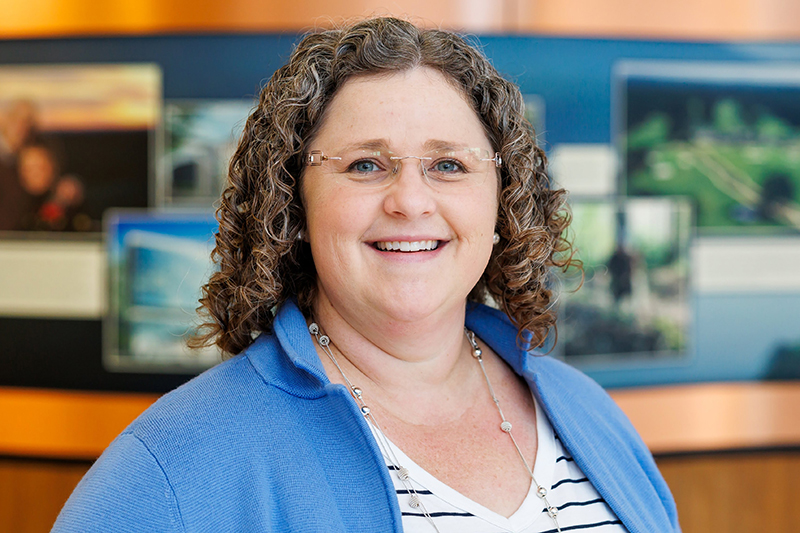
Kristin Canavera, Ph.D., aims to strengthen the Hope and Cope Psychosocial Program as its new director.

As Kristin Canavera, Ph.D., has settled in to her new role at Children’s of Alabama, she’s had a chance to meet with many of the patients her team serves. What she’s seen has not just impressed her—it has reinforced her ideas on how to improve their lives.

Canavera, an associate professor of pediatric hematology-oncology at Children’s and the University of Alabama at Birmingham (UAB), is taking over as the director of the Hope and Cope Psychosocial Program for the Division of Hematology, Oncology and the Blood and Marrow Transplantation Program. She arrived in the fall of 2024, and the patients she’s seen since then have left a mark on her.

“I think our kids are incredibly resilient, and they impress me every day with all they’ve gone through,” she said.

Canavera knows their struggles. A cancer diagnosis can be extremely challenging for both a child and their family—not just physically, but psychologically. “They’re dealing with real stressors,” she said. “There’s just a lot of support these families could benefit from.”

The psychological aspect of their experience is what she hopes to address and improve. It’s been the goal of the program since its inception, and Canavera says she’s lucky to inherit a program that’s robust and multidisciplinary. But she hopes to take it a step further.

“Given that psychosocial care is a critical component of overall health care for our pediatric hematology/oncology patients, my vision is to improve the integration of mental health care into the medical care of these patients,” she said. 

Canavera’s primary goal is to change the model of care from reactive to proactive. To that end, she plans to implement regular mental health screenings for patients diagnosed with cancer and blood disorders. These will take place at various times throughout the patient’s treatment journey.

Canavera plans to create psychoeducational materials designed to help the patients better understand the psychosocial services and interventions the program offers. 

She also wants to expand bereavement support services, including a parent mentor program, where experienced parents whose children have been in the hospital can support those newly navigating the medical system.

“Parents really want to talk to other parents who’ve been through it,” Canavera said. “That’s their best support. Even though I’ve worked with this population for several years, I haven’t walked in their shoes.”

Canavera also plans to expand services to traditionally underserved populations, particularly adolescents, young adults, and patients with sickle cell disease.

In all of her strategies, Canavera aims to take a family-centered approach, which she says will be crucial in strengthening and expanding psychosocial services.   

Hematology and Oncology

Pain Clinic Provides Safe Space for Sickle Cell Patients to Receive Treatment

Raven Myrick, CRNP, right, places a virtual reality headset on patient Olivia Parker in Children’s of Alabama’s Sickle Cell Pain Clinic.

Throbbing. Sharp. Pounding. Dull. Stabbing. Cutting. Gnawing.” That’s how patients describe the pain of sickle cell disease.[1]

While current guidelines call for patients to receive pain medications within an hour of arriving at a treatment center or emergency room (ER), that’s difficult to achieve in a busy emergency department (ED), said Jeffrey Lebensburger, D.O., MSPH, who directs the Cancer and Blood Disorders’ hematology section at Children’s of Alabama. This delay in pain relief allows the pain intensity to increase and may lead to a child requiring hospitalization. In addition, in this era of an opioid epidemic, more families report discrimination when they ask for opioids for pain and are accused of drug-seeking behavior.

That’s why Children’s started its own sickle cell pain clinic, Lebensburger said. It’s not just for patients in crisis. “About half our patients also experience daily, chronic pain,” he said.

Targeting Pain

The clinic has four main goals:

  • Provide care in a familiar setting
  • Reduce the number of hospitalizations
  • Get the patient’s pain under control more quickly
  • Provide non-medicine treatment strategies for pain

The clinic is run out of the regular pediatric hematology clinic with a dedicated nurse practitioner, Raven Myrick, CRNP. Patients can call a hotline or email the hematology team any time and get a same-day or next-day appointment. Eventually, the team would like to offer night hours.

“Our families appreciate being able to go to the clinic versus the ER,” Myrick said. “It’s a familiar, nonjudgmental atmosphere. It’s not our job to say if they are having pain or not. Our job is to make them feel comfortable and to show that we care.”

“It’s not a cure for their disease,” she said, “but the pain clinic gives them hope that someone is working to make them feel better.”

Virtual Reality as Treatment

The clinic uses Starlight Virtual Reality (VR) headsets, donated to Children’s of Alabama by the Starlight Children’s Foundation, to teach kids how to relax and breathe through the pain. Studies have found that VR can reduce pain sensation. When patients come to the clinic, they first spend at least 10 minutes with a VR deep breathing/visualization program. Then they can continue to use other programs as a distraction technique or even just watch movies. “Being able to watch Netflix in the virtual reality environment without cues from other people provides superior distraction to non-virtual reality distraction,” Lebensburger said. Then they go home with a list of relaxation apps to download on their phones.

Patients also receive pain kits to help with distraction, including items like squeezable balls and Silly Putty, as well as their own “tools,” such as action figures and trading cards that they can only play with during a pain crisis.

The clinic has seen more than 30 patients since it opened in Marchand had just three hospitalizations, which is “an amazing outcome for our patients,” Myrick said.

“We know our patients and are familiar with what works for them with use of our Individualized Pain Plans,” Myrick said.

Cancer Fighters

Get more information about the Cancer and Blood Disorders Program at Children’s of Alabama.


[1] Ballas SK, Gupta K, Adams-Graves P. Sickle cell pain: a critical reappraisal. Blood. 2012;120:3647-3656;