
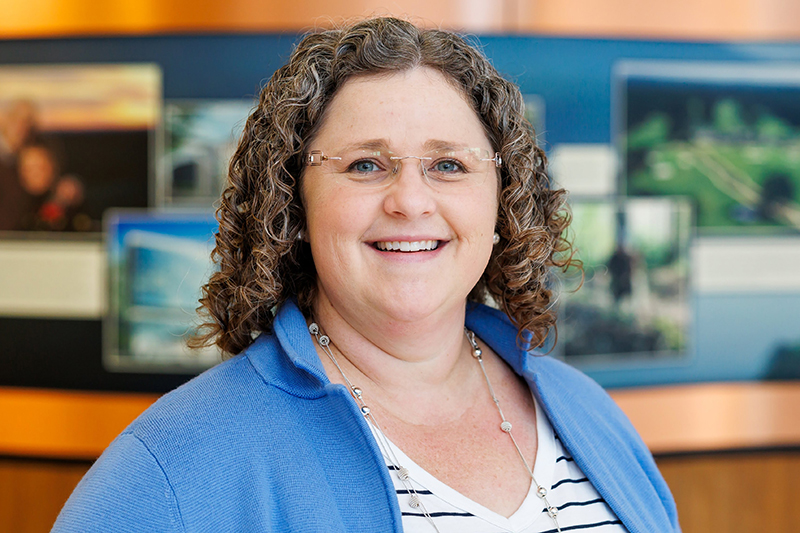
Kristin Canavera, Ph.D., aims to strengthen the Hope and Cope Psychosocial Program as its new director.
As Kristin Canavera, Ph.D., has settled in to her new role at Children’s of Alabama, she’s had a chance to meet with many of the patients her team serves. What she’s seen has not just impressed her—it has reinforced her ideas on how to improve their lives.
Canavera, an associate professor of pediatric hematology-oncology at Children’s and the University of Alabama at Birmingham (UAB), is taking over as the director of the Hope and Cope Psychosocial Program for the Division of Hematology, Oncology and the Blood and Marrow Transplantation Program. She arrived in the fall of 2024, and the patients she’s seen since then have left a mark on her.
“I think our kids are incredibly resilient, and they impress me every day with all they’ve gone through,” she said.
Canavera knows their struggles. A cancer diagnosis can be extremely challenging for both a child and their family—not just physically, but psychologically. “They’re dealing with real stressors,” she said. “There’s just a lot of support these families could benefit from.”
The psychological aspect of their experience is what she hopes to address and improve. It’s been the goal of the program since its inception, and Canavera says she’s lucky to inherit a program that’s robust and multidisciplinary. But she hopes to take it a step further.
“Given that psychosocial care is a critical component of overall health care for our pediatric hematology/oncology patients, my vision is to improve the integration of mental health care into the medical care of these patients,” she said.
Canavera’s primary goal is to change the model of care from reactive to proactive. To that end, she plans to implement regular mental health screenings for patients diagnosed with cancer and blood disorders. These will take place at various times throughout the patient’s treatment journey.
Canavera plans to create psychoeducational materials designed to help the patients better understand the psychosocial services and interventions the program offers.
She also wants to expand bereavement support services, including a parent mentor program, where experienced parents whose children have been in the hospital can support those newly navigating the medical system.
“Parents really want to talk to other parents who’ve been through it,” Canavera said. “That’s their best support. Even though I’ve worked with this population for several years, I haven’t walked in their shoes.”
Canavera also plans to expand services to traditionally underserved populations, particularly adolescents, young adults, and patients with sickle cell disease.
In all of her strategies, Canavera aims to take a family-centered approach, which she says will be crucial in strengthening and expanding psychosocial services.

No Comments