
Browsing Tag

cardiac surgery

Cardiology

A bridge to better outcomes

The bridges that connect UAB and Children’s of Alabama play a key role in the Bridging the Fetus collaboration.

Among the crucial features of Children’s of Alabama’s Benjamin Russell building, which was added to the hospital’s campus in 2012, is a set of bridges that connect Children’s to the University of Alabama at Birmingham (UAB) Hospital. The two institutions have worked in partnership for decades, and the building and adjoining bridges further enhanced the relationship. Specifically, they allowed for patients to be transported efficiently from one hospital to the other when necessary for care. A collaboration called Bridging the Fetus takes advantage of this arrangement to help patients with congenital heart disease. It’s helped save many lives, even in some of the most dire situations.

The collaboration involves the Children’s cardiovascular ICU team, cardiologists, cardiac surgeons, UAB’s Maternal-Fetal Medicine team, and neonatologists. And the bridge, of course, which is perhaps the program’s most unique feature.

“The setup we have with the bridge is a big deal for us because it allows us to best take care of moms but also best take care of babies by being so close,” said Laura Brasseale, MSN, CRNP, chair of the Children’s cardiac fetal team.

Laura Brasseale, CRNP

Proper care for both the mom and baby is vital in these cases because many of the congenital heart diseases the team handles are identified prior to birth. Thus, the team must have a detailed plan in place for delivering the baby at UAB, then getting it to Children’s for care while the mom remains at UAB. Thanks to the bridge that connects the UAB Women and Infants Center to the Children’s Heart Center, the transfer can happen in mere minutes. As a result, Children’s and UAB have taken referrals from other parts of the Southeast in these cases where, in another city, the delivering hospital might be 20 minutes or farther away from the Children’s hospital. “It is very unique to our situation that we have all these resources literally connected to each other,” Brasseale said. Few other hospitals in the Southeast offer this type of setup.

The collaborative effort of Bridging the Fetus begins as soon as a patient is diagnosed with a congenital heart disease. Brasseale follows each case and takes information from the mom’s clinic visits with obstetricians and cardiologists. She uses this info to compile a list with data to help the team plan for the delivery. Before the baby is born, the team provides advice and counseling for the parents. They also arrange logistical services, such as transportation assistance, long-term stay options and other resources. Lactation specialists meet with the mom to discuss feeding options and the importance of breast feeding. Palliative care assists with end-of-life decisions, if necessary.

From the time the diagnosis is made, members of the team meet regularly to discuss details of the case and form a plan of care for the child’s delivery. “It just makes us aware so that we save beds for these neonates,” Brasseale said. “We get them transferred over from [the UAB Regional Neonatal Intensive Care Unit] as soon as possible so that we can plan their next steps after birth.”

Typically, the next steps involve taking the child across the bridge to be seen immediately by the heart team and undergo and operation shortly thereafter. The mother, meanwhile, remains at UAB to be cared for at the Women’s and Infants Center.

Cases like these are highly complex, Brasseale said. And the biggest challenge is the simple fact that no one knows when the baby will arrive. But Bridging the Fetus streamlines that for everyone. “We plan according to your due date, according to whether mom has any pre-existing conditions, whether she’s had other children before, where they live. All of that plays a factor in terms of how we plan for delivery on these babies.”  

Because of the planning, the team will know if the baby needs immediate care or if they can stay in the NICU for a few hours until a bed opens up. “It’s definitely a good heads up and provides a multidisciplinary approach for the family,” Brasseale said, “because Maternal-Fetal Medicine can refer them to genetic counseling and the neonatologist so the family can meet a wide variety of people before having the baby. So it can kind of calm nerves as far as that goes.”

The team also prepares the family by giving them hospital tours beforehand so they’ll get “an up-close look of who is going to be taking care of their baby and what their baby’s future looks like,” Brasseale added.

The most notable success stories owed to Bridging the Fetus involve babies with hypoplastic left heart syndrome with intact atrial septum. Babies with this condition lack intracardiac shunting, so oxygenated blood can’t reach the body. Most require immediate extracorporeal membrane oxygenation (ECMO) cannulation after birth to increase the chance of survival to palliative surgery.

Children’s and UAB have seen four such cases since they started Bridging the Fetus in 2016. Three of the babies were cannulated onto ECMO within 15 minutes of birth. Two had successful heart transplants. The results far exceed those at other centers, Brasseale says, and it’s due to the team’s coordinating and multidisciplinary approach. Just getting everyone on the same page has a complexity of its own, with multiple service lines involved and each one featuring 10-20 people with rotating on-call schedules. “There are so many players. I think that’s the biggest part,” Brasseale said. “So it’s just nice for the information to all be in one place considering there’s so many different people who need to be involved.”

The team also is participating in research related to its work with Bridging the Fetus. One study is taking a look at how delayed cord clamping among neonates with congenital heart disease can effect neurodevelopmental outcomes. Another is a collaboration with the Pediatric Cardiac Critical Care Consortium (PC4) and aims to advance understanding of the maternal-fetal environment and its influence on postoperative outcomes in children with congenital heart disease. “The role of maternal characteristics in postnatal outcomes is a major knowledge gap in the treatment of congenital heart disease,” Brasseale said. “Identifying these prenatal risk factors is the first step toward developing therapeutics to modify them.”

The team hopes these studies will pave the way to a better understanding of these highly complex neonates, which can only help further streamline their care and produce more positive outcomes.

“It’s really cool to see the team come together to provide the best care for the patient, because it’s a lot of different people from a lot of different disciplines and even hospitals,” Brasseale said. “But it’s very exciting to see a baby thrive that was really not destined to have a good outcome. So it’s very exciting to be a part of such a big team.”

Cardiology

Aortic Arch Surgery and Cognitive Development

A Children’s cardiac surgeon is researching the connecting between aortic arch surgery and brain development. (Stock image)

By Charles Buchanan

Parents naturally ask plenty of questions when their newborn needs aortic arch reconstruction, a life-saving surgery for congenital malformations restricting blood flow. Their major concerns involve the procedure’s complex logistics and potential complications, which Hampton Gray, M.D., a Children’s of Alabama cardiac surgeon, can explain in detail. But not every answer comes so easily. He says some of the simplest questions from parents are also the toughest: “How’s my kid going to be when he is 5 years old? Can he go to school, or is he going to be delayed? Is he going to be behind the other kids?”

Their worries arise from a critical component of aortic arch reconstruction—the temporary reduction or shutdown of blood circulation throughout the body and to the brain. And the reason those questions are difficult to answer is that little is known about the surgery’s long-term effects on brain development. “There is limited data currently for us to properly educate parents on how their kid will cognitively develop through infancy, toddler, and school-age years,” Gray said. Now he is spearheading a novel, multiyear research project to fill that knowledge gap. The findings could provide parents with the answers they need and help them understand what to expect as their children grow.

Cardiac Surgery Meets Psychology

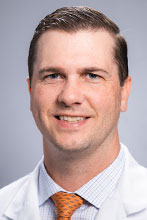
Hampton Gray, M.D.

The trial kicked off in July, funded by an $80,000 grant from the Kaul Pediatric Research Institute, a Children’s/University of Alabama at Birmingham (UAB) program supporting trailblazing work from rising investigators. During the next two years, Gray and his team will follow up with Children’s patients who had major open-heart surgery to repair a congenitally small native aorta in the last 15 years. That cohort includes up to 200 children, though Gray anticipates the study will attract approximately 80 participants ranging in age from infants to school-age children.

To measure the patients’ long-term progress, Gray has forged an innovative collaboration with the clinical psychologists at UAB and Children’s. “They are pros at testing kids about cognitive function, executive function, fine motor skills, and all the things that dictate how your brain is developing as a young child,” Gray explained. UAB already has an established Newborn Clinic, where the clinical psychologists gauge the growth and development of children who spent time in the neonatal intensive care unit (NICU). For the cardiac surgery study, they created a novel algorithm to tailor their tests for the varying age levels of patients following aortic arch surgery. They also will administer the tests to participants and interview parents about their child’s cognitive development.

“It will be very valuable to test these kids at different time points and different age groups,” Gray said. With the cognitive development data in hand, the researchers will evaluate the trajectories of aortic arch patients alongside children who have not experienced heart surgery.

A Tale of Two Strategies

The study also may shed new light on the two cerebral perfusion strategies used to manage blood circulation during aortic arch surgery. The researchers are eager to know if the techniques affect brain development differently, which leads to the inevitable question: Is one option better than the other?

The original cerebral perfusion strategy, deep hypothermic circulatory arrest (DHCA), involves cooling the body to a temperature between 18 and 20 degrees Celsius and turning off the heart-lung machine so that no blood circulates through the body. That gives cardiac surgeons approximately 40 minutes to complete the reconstruction without increasing the risk for brain injury, Gray said. Cardiac surgeons following the newer strategy, antegrade cerebral perfusion (ACP), cool the body to the same low temperatures but also sew a small graft to the innominate artery and keep the heart-lung machine running, selectively perfusing the brain. As a result, about 15 to 20% of the entire cardiac output continues flowing, according to Gray’s estimate. Today, at least 70 to 80% of cardiac surgery centers, including Children’s, have adopted ACP while the rest continue to rely on DHCA, he noted.

“It would make sense, theoretically, that giving the brain a little bit of blood flow would be better than giving it no blood flow,” Gray said. However, in a 2024 study comparing the two cerebral perfusion strategies, he and his research team found no significant differences in short-term hospital outcomes among 165 newborns and infants undergoing aortic arch surgery at Children’s between 2012 and 2023. Both types of patients also experienced a low rate of neurologic events such as stroke and seizure.

Gray’s current project, with its long-term, cognitive development focus, offers a logical next step in identifying any differences that emerge between DHCA and ACP patients as they grow up. The study’s participants will include the two groups, since both cerebral perfusion strategies were in use at Children’s as recently as 2022, giving the researchers ample opportunities to compare outcomes. The team also will gather information about nonsurgical factors that can influence brain development, including the children’s family structures and education, to round out the picture of each child’s growth.

Answers at Last

Gray hopes the research will serve as a stepping stone to a broader exploration of aortic arch patients and their progress. Ultimately, he would like for the findings to serve as pilot data for a larger initiative involving multiple cardiac surgery centers and extramural funding from sources such as the National Institutes of Health. The most useful information would come from a trial that pairs a DHCA-exclusive center with an ACP-exclusive center and follows patients from both over several years, he said.

No matter where his investigation leads, Gray says the goal remains the same: to provide parents with meaningful answers to their simple, yet tough, questions about their child’s future. And if the cardiac surgeons and clinical psychologists make pioneering discoveries about the impact of aortic arch surgery along the way, that’s a bonus. “Children’s supports pushing the envelope to make children’s lives and parents’ lives better,” Gray said.

Nephrology

A New Protocol for Dialysis Catheter Use in Neonates After Cardiac Surgery

Dr. Tennille Webb is a pediatric nephrologist at Children’s of Alabama.

Cardiac surgery-associated acute kidney injury (CS-AKI) is a common complication following heart surgery involving cardiopulmonary bypass (CPB). One multicenter study found it occurred in 54% of neonates after the procedure. One option to reduce negative outcomes is to start prophylactic peritoneal dialysis (PD) immediately after surgery, which numerous studies have found improves outcomes. Children’s of Alabama is one of only a few pediatric hospitals in the country that provides prophylactic PD in this population. However, there is no consensus on the optimal time to initiate it.

To learn more about which neonates are most likely to benefit from prophylactic PD after cardiac surgery involving CPB, Children’s pediatric nephrologists Tennille Webb, M.D., MSPH, and David Askenazi, M.D., MSPH, reviewed four years of data from patients who developed CS-AKI to identify common characteristics. They also collaborated with cardiac intensivists to gain their perspective.

The team collected baseline data, which showed that about 13% of patients who needed PD didn’t receive it in the operating room (OR), while 51% of those who received PD didn’t need it. “This is undesirable,” Webb said, “because having a PD catheter is not without risks, such as infection.”

Based on their findings, Webb and Askenazi identified three risk factors that were independently associated with the need for PD:

  1. Pre-operative serum creatinine levels
  2. Day-of-surgery weight
  3. Having an open chest post-operatively
     

Using that information, they implemented a new prophylactic PD protocol. After implementing the new protocol, all neonates who eventually needed PD had the catheter inserted in the OR. “This is significant in avoiding delays in initiating PD, therefore mitigating worse outcomes,” Webb said. In addition, the number of unnecessary PD catheters fell by half. “This has huge implications in care delivery, including resources used and exposing children to therapies that are not needed,” she said.

Webb attributes the success to the team effort between nephrologists, cardiothoracic surgeons and cardiac intensivists. The team will continue to assess the impact of prophylactic PD on outcomes such as the duration of mechanical ventilation and fluid overload. “We are excited that we were able to develop and implement an evidence-based prophylactic PD protocol that has improved our ability to provide PD to this neonatal population,” Webb said.