

A Children’s cardiac surgeon is researching the connecting between aortic arch surgery and brain development. (Stock image)
By Charles Buchanan
Parents naturally ask plenty of questions when their newborn needs aortic arch reconstruction, a life-saving surgery for congenital malformations restricting blood flow. Their major concerns involve the procedure’s complex logistics and potential complications, which Hampton Gray, M.D., a Children’s of Alabama cardiac surgeon, can explain in detail. But not every answer comes so easily. He says some of the simplest questions from parents are also the toughest: “How’s my kid going to be when he is 5 years old? Can he go to school, or is he going to be delayed? Is he going to be behind the other kids?”
Their worries arise from a critical component of aortic arch reconstruction—the temporary reduction or shutdown of blood circulation throughout the body and to the brain. And the reason those questions are difficult to answer is that little is known about the surgery’s long-term effects on brain development. “There is limited data currently for us to properly educate parents on how their kid will cognitively develop through infancy, toddler, and school-age years,” Gray said. Now he is spearheading a novel, multiyear research project to fill that knowledge gap. The findings could provide parents with the answers they need and help them understand what to expect as their children grow.
Cardiac Surgery Meets Psychology
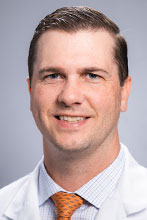
The trial kicked off in July, funded by an $80,000 grant from the Kaul Pediatric Research Institute, a Children’s/University of Alabama at Birmingham (UAB) program supporting trailblazing work from rising investigators. During the next two years, Gray and his team will follow up with Children’s patients who had major open-heart surgery to repair a congenitally small native aorta in the last 15 years. That cohort includes up to 200 children, though Gray anticipates the study will attract approximately 80 participants ranging in age from infants to school-age children.
To measure the patients’ long-term progress, Gray has forged an innovative collaboration with the clinical psychologists at UAB and Children’s. “They are pros at testing kids about cognitive function, executive function, fine motor skills, and all the things that dictate how your brain is developing as a young child,” Gray explained. UAB already has an established Newborn Clinic, where the clinical psychologists gauge the growth and development of children who spent time in the neonatal intensive care unit (NICU). For the cardiac surgery study, they created a novel algorithm to tailor their tests for the varying age levels of patients following aortic arch surgery. They also will administer the tests to participants and interview parents about their child’s cognitive development.
“It will be very valuable to test these kids at different time points and different age groups,” Gray said. With the cognitive development data in hand, the researchers will evaluate the trajectories of aortic arch patients alongside children who have not experienced heart surgery.
A Tale of Two Strategies
The study also may shed new light on the two cerebral perfusion strategies used to manage blood circulation during aortic arch surgery. The researchers are eager to know if the techniques affect brain development differently, which leads to the inevitable question: Is one option better than the other?
The original cerebral perfusion strategy, deep hypothermic circulatory arrest (DHCA), involves cooling the body to a temperature between 18 and 20 degrees Celsius and turning off the heart-lung machine so that no blood circulates through the body. That gives cardiac surgeons approximately 40 minutes to complete the reconstruction without increasing the risk for brain injury, Gray said. Cardiac surgeons following the newer strategy, antegrade cerebral perfusion (ACP), cool the body to the same low temperatures but also sew a small graft to the innominate artery and keep the heart-lung machine running, selectively perfusing the brain. As a result, about 15 to 20% of the entire cardiac output continues flowing, according to Gray’s estimate. Today, at least 70 to 80% of cardiac surgery centers, including Children’s, have adopted ACP while the rest continue to rely on DHCA, he noted.
“It would make sense, theoretically, that giving the brain a little bit of blood flow would be better than giving it no blood flow,” Gray said. However, in a 2024 study comparing the two cerebral perfusion strategies, he and his research team found no significant differences in short-term hospital outcomes among 165 newborns and infants undergoing aortic arch surgery at Children’s between 2012 and 2023. Both types of patients also experienced a low rate of neurologic events such as stroke and seizure.
Gray’s current project, with its long-term, cognitive development focus, offers a logical next step in identifying any differences that emerge between DHCA and ACP patients as they grow up. The study’s participants will include the two groups, since both cerebral perfusion strategies were in use at Children’s as recently as 2022, giving the researchers ample opportunities to compare outcomes. The team also will gather information about nonsurgical factors that can influence brain development, including the children’s family structures and education, to round out the picture of each child’s growth.
Answers at Last
Gray hopes the research will serve as a stepping stone to a broader exploration of aortic arch patients and their progress. Ultimately, he would like for the findings to serve as pilot data for a larger initiative involving multiple cardiac surgery centers and extramural funding from sources such as the National Institutes of Health. The most useful information would come from a trial that pairs a DHCA-exclusive center with an ACP-exclusive center and follows patients from both over several years, he said.
No matter where his investigation leads, Gray says the goal remains the same: to provide parents with meaningful answers to their simple, yet tough, questions about their child’s future. And if the cardiac surgeons and clinical psychologists make pioneering discoveries about the impact of aortic arch surgery along the way, that’s a bonus. “Children’s supports pushing the envelope to make children’s lives and parents’ lives better,” Gray said.

No Comments