Browsing Tag

pediatrics

Cardiology

Pulmonary Vein Stenosis: No Longer a Death Sentence

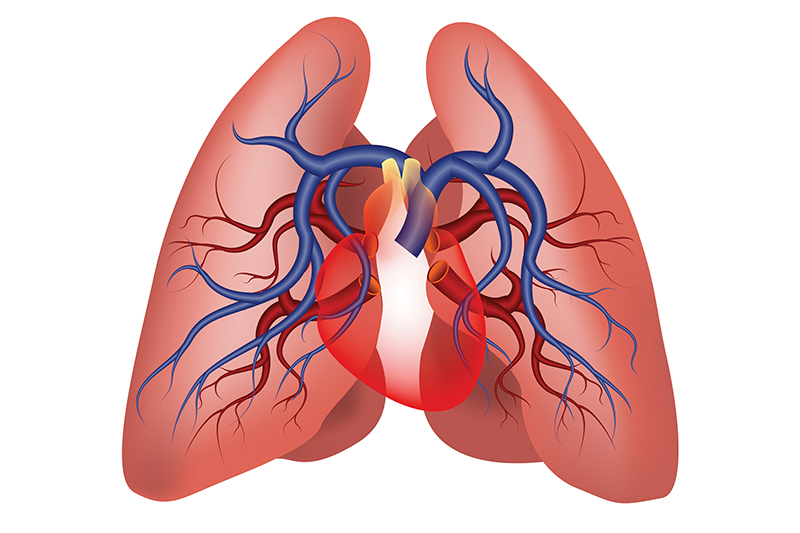
The pulmonary vein and artery system (Stock image)

Pulmonary vein stenosis (PVS) is a rare yet serious cardiovascular condition marked by progressive narrowing of the veins that return oxygenated blood from the lungs to the heart. Until recently, it was usually considered a death sentence. “There’s no two ways about it,” said Children’s of Alabama pediatric cardiologist Matt Clark, M.D. “It only gets worse once it starts.”

“When diagnosed, we would tell families there was nothing more to offer and to transition to end-of-life type care,” added pediatric interventional cardiologist Stephen Clark, M.D. “Until recently, we didn’t have medical therapies that could treat this. Surgical intervention was generally unsuccessful and sometimes accelerated the progression of the disease.”

Indeed, PVS has historically had grim outcomes, with mortality rates as high as 60% or more. Right ventricular pressure elevation—a marker of pulmonary hypertension (PH)—is strongly associated with mortality.

Now, there is hope.

“I think the biggest thing to come along was more data from studies and centers showing if you change the mindset and consider it as a possibly treatable condition, you change outcomes,” Matt Clark said.

That shift in mindset has driven a transformation in how PVS is diagnosed, monitored and treated. Today, children who would not have survived infancy are living into early childhood—and in some cases beyond—because of earlier recognition, aggressive catheter-based interventions and multidisciplinary care.

Earlier Detection, Closer Surveillance

One of the most important changes in PVS care has been earlier diagnosis, Matt Clark said, by recognizing high-risk populations: neonates with chronic lung disease; prolonged ventilation; those with congenital heart disease; and/or those with pulmonary hypertension (PH). The earlier the diagnosis, the more likely interventions are to be effective.

This surveillance-driven approach means clinicians are often identifying milder disease earlier—with regular echocardiograms, CT scans and diagnostic catheterization—and intervening at the first signs of progression.

PVS often exists in the setting of comorbid conditions such as PH, congenital heart disease or complications of prematurity, requiring close coordination between specialists. Thus, the pulmonary vein stenosis team in the Children’s of Alabama Heart Center has brought together a small group of pediatric cardiologists, allowing for shared memory and standardized decision-making.

“We don’t have to spend time reinventing the wheel,” Matt Clark said. “We can collectively remember all our patients” and which approaches approach worked best.

Catheter-Based Intervention as a Strategy, Not a Last Resort

Treatment for PVS has also evolved. Intervention includes balloon angioplasty to widen narrowed vessels or stent placement to hold them open. The stents are coated with sirolimus, a drug designed to prevent restenosis. However, rather than viewing catheter-based intervention to unblock the vessel as a one-time attempt to rescue a sick child, it is now viewed as a repeated, planned strategy.

“Every time you do an intervention,” Matt Clark said, “you’re signing that kid up for another cath at some interval.” That’s because the baby’s heart and lungs keep growing, requiring additional interventions. Multicenter analyses show that repeat catheterizations are associated with improved survival, reflecting a shift away from passive observation to active disease control.

In some children, repeated dilations and stent expansions over time allow pulmonary veins to reach near-adult size within the first few years of life.

Medical Therapy to Slow Disease Progression

Procedural care is now complemented by medical therapy aimed at the underlying biology of PVS.

Because the disease involves aggressive cellular proliferation within the vessel wall, antiproliferative medications such as sirolimus have become an important adjunct to intervention.

Observational studies suggest that children receiving systemic sirolimus have significantly improved survival compared with historical controls. In one widely cited cohort, four-year survival reached 100% in treated patients compared with approximately 45% in those not receiving therapy.

Sirolimus has also been associated with slower in-stent restenosis and longer intervals between interventions. While randomized trials are still lacking, these findings have helped legitimize systemic therapy as part of standard care at experienced centers.

“We’re probably doing more sirolimus-type therapies now than we used to,” Matt Clark said.

Survival Looks Different Now

Even with advances, PVS remains unpredictable. Not every child can be saved. But survival is no longer measured only in weeks or months.

Matt Clark described children who once would have died in the hospital now going home, growing and returning for planned interventions.

“One of the earlier ones was pretty impactful,” he said, recalling a child who lived long enough to spend two Christmases at home. “That was enough to make us keep going and keep pushing.”

“We know we’re helping,” he said. “So we’re more likely to intervene, to follow closely and to keep trying.”
Cardiology

Building a Team Around Pulmonary Hypertension

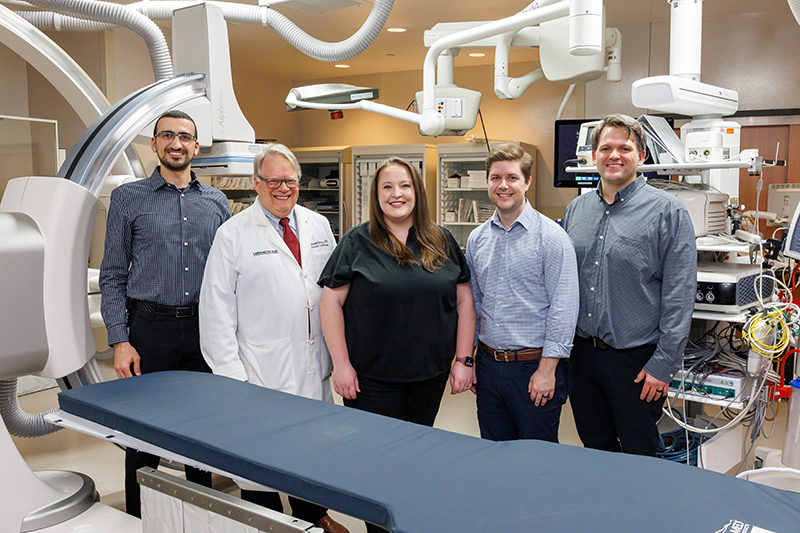
The Children’s PH team (L to R): Ahmad Khalil, Frank Bennett Pearce, Jodie Kanaday, Kevin Wall and Matthew Clark.

Pulmonary hypertension (PH) is a heterogenous condition stemming from numerous underlying causes, including extreme prematurity, congenital heart disease and systemic diseases like lupus. It causes dangerous increases in blood pressure in the lungs, straining the heart’s pumping ability and potentially leading to heart failure.

Care for children with PH has typically existed across silos: cardiology, pulmonology, neonatology and intensive care, said Frank Bennett Pearce, M.D., a pediatric cardiologist at Children’s of Alabama. Each discipline did its part. But clinicians increasingly recognized that the complexity of the condition and the fragility of the patients required greater coordination.

Today, a formal PH team of Pearce, pediatric cardiac critical care specialists Ahmad Khalil, M.D., and Matthew Clark, M.D., and pediatric cardiology fellow Kevin Wall, M.D., together with pediatric cardiology nurse specialist Jodie Kanaday, RN, round weekly on patients with PH to determine the best course of action for this rare but complex condition.

“We wanted to improve communication by having us all together saying the same thing to the consultant teams and to the families,” Pearce said.

That consistency matters, especially when care unfolds over weeks or months.

From a cardiology standpoint, PH has always been part of the landscape, Pearce said. “A lot of the treatment and diagnostic procedures like catheterizations and echocardiograms come through cardiology anyway,” he said. “So we end up being the treating doctors in lots of cases, or at least consultants.”

At the same time, many of the sickest patients are in neonatal and pediatric intensive care units and managed by critical care specialists.

PH is typically treated with medications like pulmonary vasodilators regardless of cause, but timing and diagnosis matter. That’s why it’s so important to have a precise anatomic diagnosis before starting medication, Pearce said. In babies with bronchopulmonary dysplasia, for instance, PH may be driven by acquired pulmonary vein stenosis—a condition that requires catheter-based or surgical intervention before medication.

Previously, decisions like these might have been made in parallel by different services. Now, they are made together.  

The team manages about a dozen inpatient pulmonary hypertension cases each month on inpatients at Children’s and the University of Alabama Birmingham (UAB). But inpatient care is only part of the story.

PH does not end at discharge. Medication management, insurance approvals, symptom monitoring and urgent questions follow families home. That’s where Kanaday, who is the Pulmonary Hypertension Clinic care coordinator, shines.

“We literally couldn’t do it without her,” Pearce said. She allows the team to see more patients, stay more organized and keep up with the paperwork/regulatory side of things in the PH world, he said.

Kanaday sees herself as a conduit to the physician. “Our patients know they can contact me directly for questions about medications, symptoms or side effects. I’m able to pass those concerns along quickly, which usually means they get help faster than they otherwise would.”

Her role, she said, is “making sure the doctors have all the information that they need to best take care of the patients.”

While the team is not formally tracking outcomes yet, Pearce says he’s seen a difference. “The patients are staying on their medications more consistently. The doses are more consistent. Some of these medications require a lot of paperwork—that’s getting handled quicker.”

In addition, the improved coordination means patients get to the cath lab sooner for pulmonary vein interventions. The team is also closely tied to newer catheter-based procedures, such as closing a patent ductus arteriosus or atrial septal defects in extremely small infants.

“I think it’s really been an asset to our cardiology team in general, taking this burden off of the general cardiologists and putting these patients with a provider who readily understands the disease process, available treatment options and possible complications. I think it makes our consult service much more efficient,” Kanaday said. “It has really made an impact on the patients, their continuity of care as an inpatient, and their follow-up in the outpatient clinic. I feel like we’re really making a difference and giving these kids the best chance to have positive outcomes long term.”

Urology

In New Role, Hopson Working to Address Sexuality in Patients With Spina Bifida

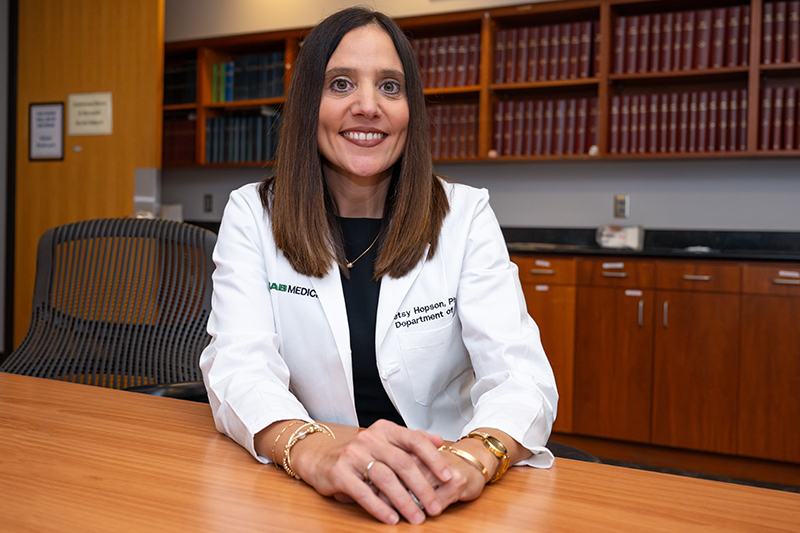
Betsy Hopson, Ph.D., MSHA, recently moved into a new role within the Division of Pediatric Urology.

Betsy Hopson, Ph.D., MSHA, describes her philosophy in one word: listen.

“Early in my career, I adopted this principle that if I heard the same story from two or more patients then it was either a research question or a quality improvement opportunity,” she said.

That mindset has shaped nearly two decades of work at Children’s of Alabama and the University of Alabama at Birmingham (UAB) and now underpins her new role as an assistant professor and health scientist in the Division of Pediatric Urology. There, she will direct a clinic dedicated to helping children with congenital urologic conditions transition to the adult health care setting.

Hopson began her career at Children’s in 2006 as coordinator of the Spina Bifida Program in the Division of Pediatric Neurosurgery. Yet she spent nearly as much time interacting with urology, she said, which plays a central role in bladder management for patients with the disease.

Her early work focused on helping patients make the difficult transition from pediatric to adult care. After realizing that young adults with spina bifida were aging out of pediatric clinics without clear adult pathways, she returned to school to earn a master’s degree in health care administration and then built an internationally recognized transition model.

It was listening to her patients, however, that led to the next chapter in her life.

In one case, a 15-year-old adolescent asked her about her research. When she told him it was sexual and reproductive health, “He whispered, ‘Betsy, I can’t do that, can I?”’

“Can’t do what, buddy?” she asked. “Date or have sex,” he answered. “That’s not for me, is it?”

Or the newly engaged, college-educated young woman with spina bifida who burst into tears when Hopson started discussing birth control with her. “You mean I can get pregnant?” she said. “I had no idea.”

“If this young woman who is very educated had no idea,” Hopson said, “what is this like for the rest of the population?”

And a light bulb went off. “We’re telling them we want them to be independent, that we want them to take care of themselves, but we’re not giving them any carrot or showing them what’s possible and helping them paint that picture of what adult life could look like.”

Her “eureka” moment led her back to school to obtain her Ph.D. in Rehabilitation Science and a certificate in Mixed Methods Research. Her goal was to understand gaps in sexual health education for people with congenital diseases like spina bifida. What she uncovered was far more troubling.

“Because these patients are prescribed catheterization for bladder management early in life,” she said, “they’re taught the technical skills of catheterization but not taught about personal boundaries and appropriate touches.”

Her research found that 46% of adults with spina bifida reported a history of sexual abuse. For her dissertation, she validated a clinical screening tool to identify abuse risk and gaps in sexual health knowledge.

In her new role with the urology team, she sees her goal as twofold: “One is to help support normal development,” she said. “I want to normalize sexual and reproductive health conversations so patients can see what’s possible and give them space to imagine a full adult life.”

The other involves educating patients, parents and clinicians about the increased risks vulnerable patients face and developing tools for clinicians and families to identify and talk openly about those risks.

It’s important, she noted, to bring the parents into the discussion. “When you bring [sexuality] up in the clinical setting in front of their child, they might be initially hesitant.” Her solution is the same approach that has guided her career: listen first. That means holding focus groups with patients and parents to shape new curricula and ensure the content reflects lived experience rather than clinician assumptions.

“If there’s one thing my career has taught me,” she said, “it’s to never stop learning and never stop looking for ways to make a difference.”

Cardiology, Inside Pediatrics

Lau shares vision as new Physician-in-Chief

Yung Lau, M.D. was named physician-in-chief at Children’s of Alabama and chair of the UAB Dept. of Pediatrics in March 2025.

After serving as interim chair for five months, Yung Lau, M.D., was officially named chair of the University of Alabama at Birmingham (UAB) Department of Pediatrics and physician-in-chief at Children’s of Alabama in March 2025. The only real change, Lau said, was that he could now formally begin planning for the future. His vision for the department is expansive—centered on collaboration and faculty support. But he believes the path to those big goals lies in the small things everyone does every day.

Lau stepped into the interim chair role in November 2024, following the announcement that then-chair Mitch Cohen, M.D., would be departing at year’s end to join Stanford. “Dr. Cohen led for a decade and helped build this department into a strong and vibrant group,” Lau said. “It has consistently thrived, and I’ve considered it a privilege to be a part of the department as a faculty member for over three decades. Now, it’s an awesome responsibility to carry on this tradition of excellence.”

The role requires close collaboration between two major institutions: Children’s of Alabama and the University of Alabama at Birmingham. With more than 30 years of experience across both organizations—including in leadership roles—Lau understands their individual missions and how they intersect.

That understanding came into sharp focus in 2007, when Lau led the UAB group in a major collaborative effort between the two institutions. At the time, UAB housed the pediatric cardiac program. But as Children’s leaders planned to build a new hospital tower, they wanted to bring the program under their roof. Over the next five years, Lau played a significant role in bringing physicians and other clinical staff to assist in the design of the cardiac intensive care units, operating rooms, catheterization labs, step-down units and cardiovascular perioperative areas. He then worked closely with Children’s leadership on staffing and operations planning. On October 14, 2012, the program moved into the new building—seamlessly.

The success of the move laid the foundation for a quantum leap in the ability of the Pediatric and Congenital Heart Center of Alabama to provide state-of-the-art care. Today, the program consistently ranks among the top performing pediatric and congenital heart centers in the nation by numerous metrics, and the Society of Thoracic Surgery has classified the program as an overperforming center—one of 12 in the country. For Lau, who served as the division director of pediatric cardiology from 2012 until his appointment as chair in 2025, the experience left a lasting impression about what’s possible when Children’s and UAB work together.

“The opening of the Heart Center marked one of the most satisfying periods of my career,” he said. As he steps into his new role, he hopes to lead more collaborative efforts with similarly meaningful impact.

The Heart Center’s success is a powerful example of the synergy between Children’s and UAB—a synergy Lau believes can grow even stronger. “What I’ve seen is a real willingness among leadership across both institutions to reduce barriers and connect silos,” he said.

Lau has outlined three key priorities to strengthen that collaboration: maximizing current resources in clinical care, education and research; strategically recruiting and developing faculty; and building a resilient foundation of financial stability and physician well-being.

Education and research are crucial parts of his strategy, and UAB and Children’s have a history of successful collaboration on both. From an education perspective, Children’s serves as the teaching hospital for the UAB pediatric medicine, surgery, psychiatry, research and residency programs. “There’s this deep core of understanding between Children’s and the department that we are really training the future physicians for the state,” Lau said. And that’s a crucial role in a state that, Lau says, needs more physicians and pediatricians. “Part of our duty here is in our obligation to do that,” he added.

On the research side, the two institutions work together to “advance knowledge for the children of Alabama and beyond for the future,” Lau said. This benefits both entities, sometimes leads to advancements and breakthroughs that influence the broader world of medicine, and enhances the reputation of both.

“When we collaborate more extensively and continue to strengthen those ties of collaboration, two important things happen,” he said. “First, children receive better care, now and in the future. Second, our faculty experience significantly greater job satisfaction.”

Faculty support is another central pillar of Lau’s vision. Since becoming chair, he has met with many faculty members—some he’s long known, others he’s come to know better through these conversations. What stands out most, he says, is their passion and the profound impact they have on children’s lives. His goal is to listen, support and help them succeed.

Lau also acknowledges the tension between moral obligation and financial reality. “That’s just medicine in America today,” he said. But he’s confident the department can thrive within that framework.

“I think both institutions understand that we need to maximize our resources—our people and infrastructure—to provide the best possible care, to train the next generation of pediatricians, and to innovate through research,” he said.

Though there are multiple facets to Lau’s vision, everything is focused around the patient.

“The patients in front of us are the cornerstone of everything we do,” he said. “And while our goals may be big, the real progress happens in the small steps we take every day.”

“Yes, having a goal is important,” he continued. “But sometimes if we focus only on the goal, we risk losing sight of what’s happening in the moment—and that can distort the work being done on the ground. Sometimes the things that matter most get sidelined in the name of progress.”

With a strong focus on the patient—and through strong collaboration and faculty support—Lau believes UAB and Children’s will continue to deliver exceptional care to every child they serve.

Gastroenterology

New technology eases management of liver disease

Children’s of Alabama is using FibroScan to help patients with liver disease. (Stock photo)

With obesity in children steadily rising, more young patients are coming to Children’s of Alabama with a form of fatty liver disease that can greatly imperil their health. But determining the progression of liver disease can be a thorny process. To smooth that path, Children’s recently invested in an increasingly popular technology called FibroScan, helping University of Alabama at Birmingham (UAB) pediatric physicians to deftly and comprehensively manage children’s care.

Using a technique known as transient elastography, FibroScan was the first FDA-approved device of its kind and is considered an aid to managing liver disease. Quick, noninvasive and painless, it uses an enhanced form of ultrasound to send vibrations into the liver to measure its stiffness, which typically indicates fibrosis or scarring. “The more quickly the wave passes through the liver, the more stiff the liver is,” Children’s transplant hepatologist David Willcutts, M.D., explained.

By assessing the severity of scarring—and the potential for cirrhosis—FibroScan can help diagnose or monitor the progression of various liver conditions. These range from less-common cystic fibrosis-associated liver disease to more-prevalent autoimmune liver diseases and metabolic dysfunction-associated steatotic liver disease (MASLD). The latter—which can also result from genetic predisposition—essentially makes the liver unable to process the high amounts of extra calories a person is consuming, spurring inflammation.

David Willcutts, M.D.

About one-third of the patients in Children’s Hepatology Clinic, which serves about 500 ongoing patients each year, have suspected or confirmed fatty liver disease.

“We will be using this for almost every patient with confirmed fatty liver disease, so we can measure the baseline stiffness of the liver when they first see us,” said Willcutts, who’s also an assistant professor of pediatrics at UAB. “The machine also provides a CAP (controlled attenuation parameter) score as a surrogate of fat content of the liver, which is useful for the growing numbers of adults—and unfortunately, children—in our country with fatty liver disease. It’s one of the rising conditions leading to adult liver transplants.”

FibroScan is a welcome alternative to invasive liver biopsies and other forms of elastography that require a separate radiology appointment. A FibroScan exam takes just minutes, offering little disruption for young patients and faster treatment decisions for physicians. The new equipment arrived in the summer of 2025.  

“One of the big selling points of this technology is it makes the patient experience much easier because it can be done within a clinic visit and will save them a visit with radiology, which involves a separate appointment elsewhere in the hospital or even at another Children’s facility,” Willcutts said. “It’s a one-stop kind of assessment.”

By keeping close tabs on a patient’s liver stiffness, FibroScan offers Children’s specialists the ability to understand “how much runway we have before we need to do potentially invasive assessments and other therapies,” Willcutts said.

While the goal is always to avert lasting damage to the liver, the presence of cirrhosis is generally thought to be irreversible. FibroScan can help doctors pinpoint “how close we’re getting to that and if the patient needs a biopsy—or a repeat biopsy—to evaluate scarring at the microscopic level and make sure we’re not missing something before it’s too late to act upon it,” he explained.

FibroScan results can also help physicians tailor treatments to patients’ precise stage of liver damage, including certain medications that can be tricky for the liver to process.

“Children’s is a referral center for pediatric liver disease in Alabama because we’re the only liver transplant center in the state,” Willcutts said. “Being able to offer FibroScan helps us elevate our level of care and offer smoother visits and a convenient assessment of liver disease that we didn’t have before.”

Nephrology

Leading-Edge Technology May Change Kidney Transplant Monitoring and Help Other Specialties

In the UAB Spatial Core Lab, researchers are using spatial transcriptomics to examine specific regions within tissue samples.

A breakthrough technology that allows doctors to study the precise regions of a kidney transplant that are involved in rejection could transform how doctors learn about kidney transplant biology, potentially leading to new diagnostic tests or treatments for children.

The technology, called spatial transcriptomics, is a leading-edge technique that lets researchers see which genes or proteins are active in very specific regions of tissue samples, such as those from a kidney biopsy. Unlike traditional methods that study tissue samples as a whole without regard for the location of important signals from the tissue, this technique allows researchers to examine custom-shaped regions of interest containing just a few cells in their natural environment.

Think of it as having a detailed map that shows not just what’s happening in a city, but precisely in which neighborhoods each activity occurs.

“There’s been decades now of data showing that gene expression patterns coming from a transplant are a little bit more sensitive for problems coming from a kidney transplant,” said Michael Seifert, M.D., director of the University of Alabama at Birmingham (UAB) Spatial Core and medical director of pediatric renal transplantation at Children’s of Alabama. “The problem is that we’ve never exactly known where those signals are coming from. Are they coming from cells in the kidney that we care about or are they coming from cells in the kidney that may not be as relevant?”

For instance, signals from immune system cells would be extremely relevant, he said, but could be distinct from those coming from the endothelial cells lining blood vessels.

With this technique, “we can look at a picture of a kidney biopsy on our instrument screen and take your mouse and draw a shape around it, and it will profile everything in that shape while ignoring everything else around it,” he said. It can even profile a certain cell type within the shape.

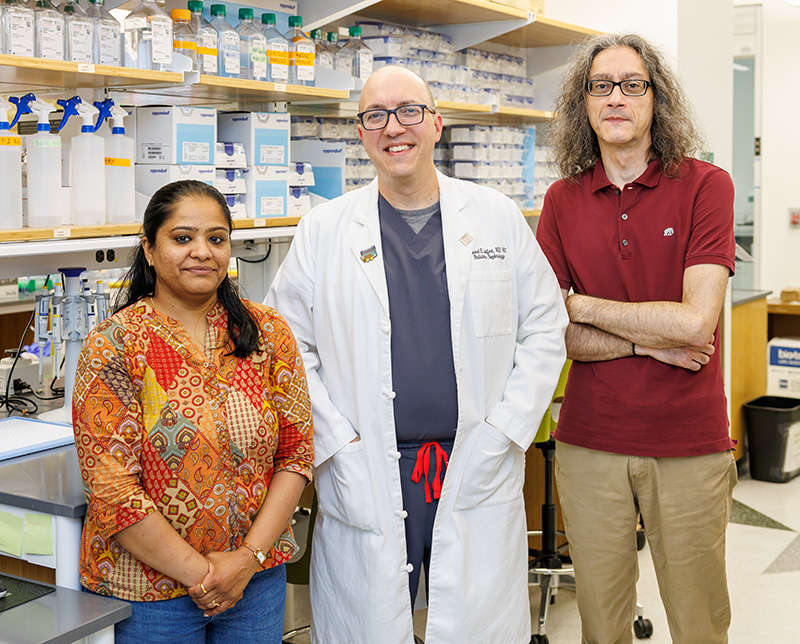
The Spatial Core team (from left): Pooja Nagaraj, MS, CCRP, Michael Seifert, M.D., Miguel Melendez-Ferro, Ph.D.

The technology itself isn’t destined for routine clinical use, Seifert said. “I can’t foresee a scenario where I would do a biopsy and then use spatial transcriptomics to make a diagnosis, because it’s a very labor-intensive, time-intensive and cost-intensive technique.”

Instead, he said, “my hope is that this will allow us to have a deeper understanding of the processes involved in transplants doing well but also transplants doing poorly. That will help us design better management programs, whether that’s using existing medicines in different ways or designing new medicines that can be more targeted and more effective than what we currently have available.”

Understanding exactly which parts of the kidney are affected by rejection also opens the door to personalized transplant care.

“Every cell in the kidney behaves differently depending on where it sits,” Seifert said. “This technology lets us uncover the heterogeneity—that is, the differences—within the tissue,” including if the problem lies in the blood vessels or the tubules or the parts of the kidney that generates urine. “I hope that’ll allow us to understand the signals that vary from person to person so we can really apply that more personalized technique.”

Thus, rather than treating all kidney transplant patients the same way, doctors could tailor anti-rejection treatments based on what is happening in an individual child’s kidney. This would, however, require advances in the spatial transcriptomics technology to make it faster and less expensive.

Spatial biology is not limited to the study of kidney transplant diseases. Seifert and his team in the UAB Spatial Core are working with specialists in other disciplines throughout Children’s and UAB, including ophthalmology, oncology and pulmonology. “We’re open to collaborating with any investigator with a good question that spatial biology can answer,” he said.

In fact, he sees spatial biology as an important technique for understanding all diseases in children. “I think what’s come out of this is an appreciation that the spatial context is incredibly important in so many of the diseases that we study.”

Orthopedics

How Dogs Are Transforming Pediatric Orthopedic Procedures

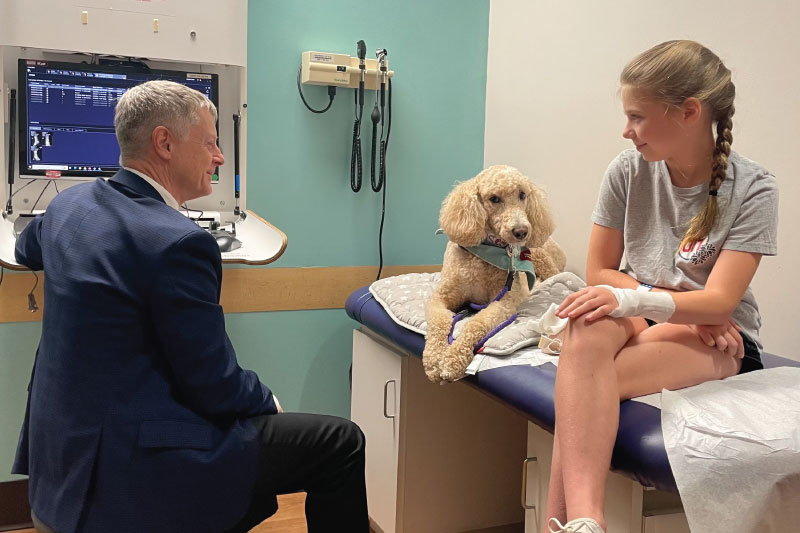
Dr. Michael Conklin and Shelby with a patient. (Photo courtesy of Judith Thomason)

What goes in must come out—including the metal pins used to hold bones together while fractures heal. “It probably takes 15 seconds to remove three pins,” Children’s of Alabama pediatric orthopedist Michael Conklin, M.D., said. “But, of course, kids are very scared about that.”

Enter Shelby. The 50-pound standard poodle is trained to sit on the examining table and cuddle with children while Conklin grasps the pins with a tool resembling a needle-nosed plier and pulls them out.

Basically, Shelby serves as a distraction, he says. “We tell the child to pet the dog and look toward the dog and not look at me on the other side of them, not worry about what I’m doing.”

Shelby remains calm no matter what, even with a screaming child. “She just sits there calmly and doesn’t do all the dog things that you and I know and love about our dogs,” Conklin said. “She’s trained to just be there for comfort.”

And it works. Well, for about two-thirds of patients. The rest “freak out no matter what,” Conklin said, but even then, Shelby has an effect. “It seems as if they return back to their baseline calm quicker after the procedure.”

Shelby also helps parents. “There’s a lot of value in the parents seeing that we’re trying to do our best for their child,” Conklin said. “Even though they know their child’s having to go through a procedure . . . it keeps us in good stead with them.”

Shelby’s brother, Foster, works with his sister at the Children’s South location as part of the Pups Unleashing Patient Smiles (PUPS) program, which is one of three branches of Children’s of Alabama’s animal-assisted program, PetsRX. Another branch involves longtime Children’s partner, Hand-in-Paw, which provides therapy dogs at Children’s of Alabama’s main hospital to provide comfort and distraction. The third is a hospital-based medical dog program which includes golden retrievers Wanda and Sydney to assist with scary or painful procedures. Meanwhile, suspected victims of child abuse—who are served by the Children’s Hospital Intervention and Prevention Services Center (CHIPS)—are assisted by dogs from the Help Empower Restore Overcome (HERO) Program with the Alabama Office of Prosecution Services.

The dogs aren’t just a cute addition. There is good science behind their use in the pediatric setting, with studies finding that animal-assisted therapy (AAT) can help children recover more quickly after surgery by improving mood and alertness, reducing perceived pain, and contributing to lower heart rates and blood pressure readings.[1],[2],[3] 

Animal-assisted therapy is also safe for the dogs, with studies showing no signs of stress or fatigue in therapy dogs when the programs are properly managed.[4] At Children’s, the dogs are overseen by a staff handler and rotated to ensure their well-being.

Soon, Shelby and Foster may be part of the scientific literature. Conklin and his team are conducting a randomized trial to evaluate the dogs’ effectiveness, comparing outcomes between patients who receive the therapy dog intervention and those who receive standard care. They are monitoring the child’s heart rate before, during and after the procedure to track how quickly they return to baseline and using a standardized anxiety scale that assesses facial expression, leg movement, activity, crying and consolability.

The goal is to, hopefully, show positive data that will pave the way for broader adoption of such programs.


[1] Calcaterra, V, Veggiotti, P, Palestrini, C, et al. Post-Operative Benefits of Animal-Assisted Therapy in Pediatric Surgery: A Randomised Study. PLoS ONE. 2015; 10.

[2] Braun C, Stangler T, Narveson J, Pettingell S. Animal-assisted therapy as a pain relief intervention for children. Complement Ther Clin Pract. 2009;15(2):105-109.

[3] López-Fernández, E., Palacios-Cuesta, A., Rodríguez-Martínez, A. et al. Implementation feasibility of animal-assisted therapy in a pediatric intensive care unit: effectiveness on reduction of pain, fear, and anxiety. Eur J Pediatr 183, 843–851 (2024). https://doi.org/10.1007/s00431-023-05284-7

[4] Palestrini C, Calcaterra V, Cannas S, et al.  Stress level evaluation in a dog during animal‐assisted therapy in pediatric surgery. Journal of Veterinary Behavior: Clinical Applications and Research. 2017; 17. https://doi.org/10.1016/j.jveb.2016.09.003.

Pulmonology

Bringing Asthma Care Closer to Home in Alabama’s Black Belt

Dr. Isabel L. Virella-Lowell with a patient.

Dallas, Marengo, Perry and Wilcox counties, part of the Black Belt (so named for its rich, dark soil), are four of the poorest counties in Alabama. They also have some of the highest rates of childhood asthma—nearly 12% compared to the state’s 8%—and are severely underserved when it comes to medical care. Two of the counties don’t even have a pediatrician.

Yet just 4% of the more than 5,000 patients seen at Children’s of Alabama’s Specialty Asthma Clinic hail from those areas. “We realized these kids weren’t getting to us for help,” pediatric pulmonologist Isabel L. Virella-Lowell, M.D., said. “But Medicaid data showed a high number of asthma-related claims from the area. So we knew there was a gap.”

One reason is distance, with families having to drive up to three hours to reach Birmingham. Thus, many children receive care only during asthma flare-ups at urgent care clinics or emergency rooms rather than ongoing, preventive treatment, said Children’s and University of Alabama at Birmingham (UAB) Pediatric Asthma Program Director Teresa G. Magruder, M.D. Without a primary care physician overseeing their child’s asthma, families find themselves caught in a cycle of crisis-driven care.

So instead of hoping kids will come to Birmingham, Virella-Lowell and Magruder are bringing their expertise to the Black Belt. Their mission: improve those dismal asthma statistics by engaging the community at a grass-roots level.

The initiative began when Children’s and UAB infectious disease specialist Claudette Poole, M.D., spent time in the area studying water sanitation and parasites. She kept hearing about an asthma crisis and recruited Virella-Lowell and Magruder.

The three applied for and received a Health Resources and Services Administration (HRSA) grant, which provides salary support for the core team and local community and health care partners. It also helps fund the virtual continuing medication education (CME) Project ECHO sessions, health fairs and supplies—such as spirometers and educational materials.

Magruder and Virella-Lowell stress the community-based approach of their efforts rather than having Children’s swoop in for just a few months. “We are really trying to improve the capacity of the community and their understanding of delivering asthma care in their own communities,” said Magruder. That means educating the front-line people caring for children, including school nurses, teachers, daycare workers and parents, while providing access to subspecialty care for the severe high-risk patients.

“If the community doesn’t buy in, if they are not engaged, if they’re not supportive, then there’s a limited amount of good we can do,” Lowell said.

“There’s some fatigue in these communities from programs that come and go,” Magruder added. “We know it takes time to build trust.”

The two doctors are also partnering with local physicians at Selma Pediatrics and Whitfield Regional Hospital in Demopolis. They hope to open a monthly clinic in 2026 in a space provided by Selma Pediatrics, so families don’t have to travel so far for specialty care.

They are also educating clinicians and others who see children with asthma through the aforementioned CME approach Project ECHO (which stands for Extension of Community Healthcare Outcomes), an interactive program that helps clinicians address their own cases. “It’s incredibly important that local physicians are comfortable managing asthma. And asthma care has changed a lot through the years,” said Lowell, who noted the recent release of new guidelines for diagnosing and treating the disease. The program, which is virtual, is available to any clinician throughout the state and beyond who’s interested in maintaining their expertise in pediatric asthma.

The Alabama State Asthma Coalition, a statewide group with a diverse mix of experts including environmental experts and respiratory educators, is also playing a role. The coalition helped train the first group of community health workers and hopes to continue that work.

Given that asthma affects one out of 10 children, it must be managed locally, Lowell said. “There’s no way that we will ever be able to manage all the really sick asthmatics here at Children’s. So it’s incredibly important that local pediatricians and family doctors are comfortable managing asthma.”

“Our goal is to raise the level of asthma care across the state,” Magruder said, “not just at Children’s, but everywhere kids need it.”

Endocrinology

Long-Term Effects of Gestational Diabetes on Kids

A new study from Children’s of Alabama shows the lasting impact of gestational diabetes on the child. (Stock photo)

New findings from a follow-up study at Children’s of Alabama and the University of Alabama at Birmingham (UAB) shed light on how a mother’s health during pregnancy may influence her child’s body weight well into adolescence—especially if that pregnancy was complicated by gestational diabetes. Led by pediatric endocrinology fellow Mary Margaret Barr, M.D., the new analysis builds on the foundational HAPi (Health After Pregnancy) study, conducted by  Paula Chandler-Laney, Ph.D., who directs UAB’s Ph.D. program in nutrition.

That original study assessed the health of 219 children ages 4 to 10. Mothers were divided into three groups based on her health during pregnancy: normal weight mothers without gestational diabetes (group 1); overweight or obese mothers without gestational diabetes (group 2); and overweight or obese mothers with gestational diabetes (group 3). Health-related data collected on the children included body mass index (BMI), waist-to-hip ratios, blood pressure and metabolic markers like glucose and cholesterol levels.

Barr’s research, which she presented at the Pediatric Endocrine Society annual meeting in May, went a step further. She reviewed electronic health records of 139 of the original study group to see how each group’s BMI Z-score—a metric that adjusts BMI for a child’s age and sex—changed as they entered adolescence.

As anticipated, children in group 3 (whose mothers had gestational diabetes and obesity) started off with higher BMI Z-scores that continued to trend upward through adolescence. “These were kids exposed to higher sugars while they were growing inside mom,” Barr said. Another key finding: Of all the children who had normal BMI Z-scores at the time of the original HAPi study (ages 4-10), those exposed to gestational diabetes (group 3) were significantly more likely to become overweight in adolescence.

Group 1—the control group—maintained healthy BMI levels over time, with only a slight rise in average BMI Z-score, which is often seen at adolescence.

The surprise came with group 2. These children, born to mothers with overweight or obesity but no gestational diabetes, initially had higher BMI Z-scores—even higher than group 3 at the study’s start. But over time, most of these children saw improvements in their BMI. “They started off big and then they got better,” Barr said. “Eventually, they ended up in the same range as the children born to normal weight mothers.”

This unexpected trend persisted even after adjusting for factors like maternal BMI, maternal education, household income and the number of children in the home. “These moms were of lower income, most of them below the poverty line, and had a lower education status,” she said. “You would have expected them to parallel group 3 and get worse over time. But they didn’t.”

The reason for the disconnect isn’t clear. “Nothing else stood out except for the child’s BMI during the HAPi study,” she said. “If you were heavier during the HAPi study, you were more likely to wind up heavier in adolescence. But it wasn’t a super strong correlation.”

Although none of the children developed diabetes during the follow-up period, Barr found a handful of prediabetes cases in groups 2 and 3.

The research provides a clue for pediatricians to intervene early in children with a high risk of obesity and/or diabetes. If the pediatrician knows the mother’s pregnancy weight and gestational diabetes history, they can be aware that the child may have a higher risk for obesity in the future. “So it’s probably more important to start earlier with healthy habits, a varied diet with less fried food, more vegetables, reasonable expectations of portion sizes, and exercise and movement,” Barr said.

While gestational diabetes and maternal obesity both increase a child’s risk for obesity, Barr’s findings suggest that gestational diabetes carries a more lasting impact than exposure to obesity alone. “We don’t fully understand the relationship between genetics, environment and exposures” on childhood obesity, she said. “But this data gives us another piece of the puzzle.” Her next step after publication is to expand the dataset to include maternal weight and metabolic health since the original study ended.

Urology

A new protocol for kidney tests in spina bifida patients

A new study shows that ultrasound is not enough to monitor kidney health in children with spina bifida. (Stock photo)

For decades, doctors have relied heavily on ultrasound scans to monitor kidney health in children with spina bifida, the most common permanently disabling birth defect in the U.S. People with spina bifida tend to develop end-stage renal disease up to 20 years earlier than the general population, so keeping a close watch on kidney health from a young age is important, says Children’s of Alabama pediatric urologist Stacy Tanaka, M.D. “Then if there’s a concern, it can be acted upon early and not ignored.”

Current guidelines from the Spina Bifida Association (SBA) recommend annual screening with ultrasound to look for hydronephrosis—a condition in which the urine backs up into one or more kidneys—as a sign of kidney function, and blood tests like serum creatinine, to measure overall kidney health. But with kids, Tanaka says, “the practice pattern was that a lot of people were only doing renal ultrasound.”

Now a new study from Tanaka and her Children’s colleague David Joseph, M.D., as well as other kidney experts from around the country, shows that ultrasound alone is not enough to assess kidney health. “We basically use ultrasonography as a reflection of renal function,” Joseph said, but few, if any, studies assessed its accuracy in determining renal function.

Stacy Tanaka, M.D.

The study’s genesis came during a multidisciplinary meeting in 2003 of specialists who treat children with spina bifida. “The bottom line from all disciplines at that time was that nobody was really treating this population with evidence-based care,” Joseph said.

To change that, the Centers for Disease Control and Prevention and the SBA established the National Spinal Bifida Patient Registry (NSBPR), to which 20 spina bifida clinics submit data to help develop evidence-based care. In addition, nine clinics established a urologic protocol to manage and preserve initial renal function in young children with spina bifida (UMPIRE). The NSBPR and UMPIRE provided the data set Joseph and Tanaka used to determine the effectiveness of renal ultrasound vs. blood test to assess renal function.

The two registries included data on 2,500 children ages 1-18 with myelomeningocele, the most severe form of spina bifida. All had had an ultrasound and blood test within six months to determine estimated glomerular filtration rate (eGFR), a marker of kidney health.

The results were striking: ultrasound-based detection of hydronephrosis had only about a 25% sensitivity for identifying children with signs of chronic kidney disease in the UMPIRE study and 24% in the NSBPR cohort. That means kidney damage in three out of four children was going undetected. The poor sensitivity held even when researchers looked only at severe hydronephrosis, which had an even worse sensitivity rate–just 6% to 11%. “The renal ultrasound by itself wasn’t all that good,” Joseph said, “but that didn’t surprise us.”

David Joseph, M.D.

The findings challenge current practice and suggest that blood tests measuring kidney function should be routinely performed alongside ultrasound, not just when ultrasound results look concerning, as some clinicians practice. The team at Children’s prefers testing for cystatin C rather than creatinine because of the test’s improved and more accurate ability to obtain an eGFR.

One reason clinicians may eschew blood tests is that it involves needles, Tanaka said, which be traumatizing for children. Ultrasound, on the other hand, is noninvasive, easily available, and can be performed by technicians.

“The ultrasound is very helpful and important,” Joseph said, “but you need to recognize that it may not be telling you about renal function or injury to the kidney.” The findings have already changed practice at Children’s, where all kids with spina bifida now receive both tests during kidney health screening.

Ideally, the next study would randomize kids to either double testing or ultrasound alone, but that requires significant funding, particularly since the children would need to be followed for years.

This study was conducted with very little financial support, Tanaka said. “It represents a labor of love for everyone at all nine UMPRIE centers who have been involved in this project,” Joseph added.