Browsing Tag

pediatrics

Hematology and Oncology

Leading with a focus on the patient

Katie Metrock, M.D., manages one of the nation’s largest pediatric neuro-oncology programs at Children’s of Alabama.

According to data from the CDC, brain and spinal tumors are the leading cause of death among childhood cancer patients. Katie Metrock, M.D., director of the pediatric neuro-oncology program at Children’s of Alabama, says being diagnosed with one of these cancers is “one of the scariest things that can happen to a family.”

The program, which is part of the Alabama Center for Childhood Cancers and Blood Disorders at Children’s, is one of the largest in the U.S. It offers a focus on treating children and adolescents with brain and spinal cord tumors as well as neurofibromatosis, a genetic condition that predisposes children to tumors. It is a leading center for clinical studies and basic research into these conditions, and it offers a neuro-oncology fellowship. Metrock took over as director of the program in October 2023.

“It is my goal that every patient that comes through this door feels like they have a team of people that are fighting for them,” she said. “I don’t want any patient to ever feel like they’re alone or any family to feel like they needed more.”

For Metrock, the battle has a personal element to it. When she was young, her aunt developed a brain tumor, and Metrock remembers visiting her in the hospital. “I was very fascinated by all that was happening,” she said. Her aunt “did quite well,” she added, and the experience sparked her interest in the treatment of brain tumors. In college, that interest grew when she worked at a camp for children with cancer and met a young patient with a brain tumor.

“So when I went to medical school and residency, I tried to keep an open mind and looked at all the different types of fields,” Metrock said. “But I think ultimately I knew this is the space I wanted to be in—to help these children and to improve their treatment options.”

Now, that’s her daily goal. As the program’s director, she leads a team that includes four pediatric neuro-oncologists, three pediatric nurse practitioners, child life specialists, chaplains, social workers, neuropsychologists and researchers. They collaborate closely with neurosurgeons, neurologists, advanced/palliative care physicians and radiation oncologists to provide comprehensive care tailored to each patient’s needs.

“It takes all of us working together to help patients and their families through this entire process,” Metrock said. “Ever since coming here to Children’s, I have been blown away with the teamwork approach.”

The center’s mission extends to research, which is desperately needed, Metrock added. “We have to do better for these kids,” she said. “Making research at the forefront of our mission is huge.”

To that end, the program participates in several clinical trial research consortia, including the Children’s Oncology Group, the Pediatric Neuro-Oncology Consortium (PNOC), and the Sunshine Project. The partnerships allow Children’s to offer leading-edge clinical trials to patients while contributing to the broader advancement of the field.

For instance, researchers are investigating methods to deliver medications more effectively across the blood-brain barrier, which remains one of the greatest challenges to improving survival. They also are conducting clinical trials into less invasive, safer and more effective treatments for tumors like medulloblastoma, craniopharyngioma and germ-cell tumors. Additionally, they’re exploring vaccines to target high-grade gliomas.

The program is also expanding its educational reach globally. A new partnership with St. Jude Children’s Research Hospital aims to develop educational programs in neurofibromatosis for areas with limited expertise in treating neurofibromatosis-related tumors. The team also has a partnership with Washington University School of Medicine in St. Louis for a global neuro-oncology fellowship.

The primary focus, however, remains the child. “When a child comes in, the first thing we need to know is what type of tumor do they have and how do we treat it,” Metrock said. “But I think you can get tunnel vision with that. You really have to see that this is a child, and they have their whole life around them and then the life that they’re going to move forward with after this. So how do we meet them where they’re at and how do we help them move forward with the best success possible?” Those are the questions she aims to answer for each patient.

Urology

A new model for testicular torsion detection

Residents practicing testicular torsion detection using a new model created by the Children’s Pediatric Simulation Center

Testicular torsion is a serious medical emergency that requires immediate surgical intervention. It occurs when the spermatic cord twists, cutting off blood flow to the testicle. If not treated promptly, the condition can lead to permanent damage or loss of the affected testicle.

“Time is testicle,” said Carmen Tong, D.O., a pediatric urologist at Children’s of Alabama. “Pretty much every minute counts when it comes to testicular torsion.” Indeed, the so-called “golden window” to salvage testicular function after symptom onset is between four and eight hours. Any longer not only affects long-term testicular function but increases the risk of orchiectomy, or the removal of one or both testicles. “That can be devastating,” Tong added.

So prompt diagnosis is crucial. Yet the condition may present with vague symptoms such as abdominal pain and nausea. To improve diagnosis, Tong turned to pediatric intensivist Nick Rockwell, M.D., and advanced nurse educator Autumn Layton, MSN, RN, in the hospital’s Pediatric Simulation Center. Together, they created a testicular torsion model that provides hands-on training for residents.

The initiative came about after a teenaged boy’s torsion was missed. That begged the question: “Is there a way we can work with our trainees to give them a better understanding of something that’s a rare event, but when it happens, is a high-stakes situation,” Rockwell said.

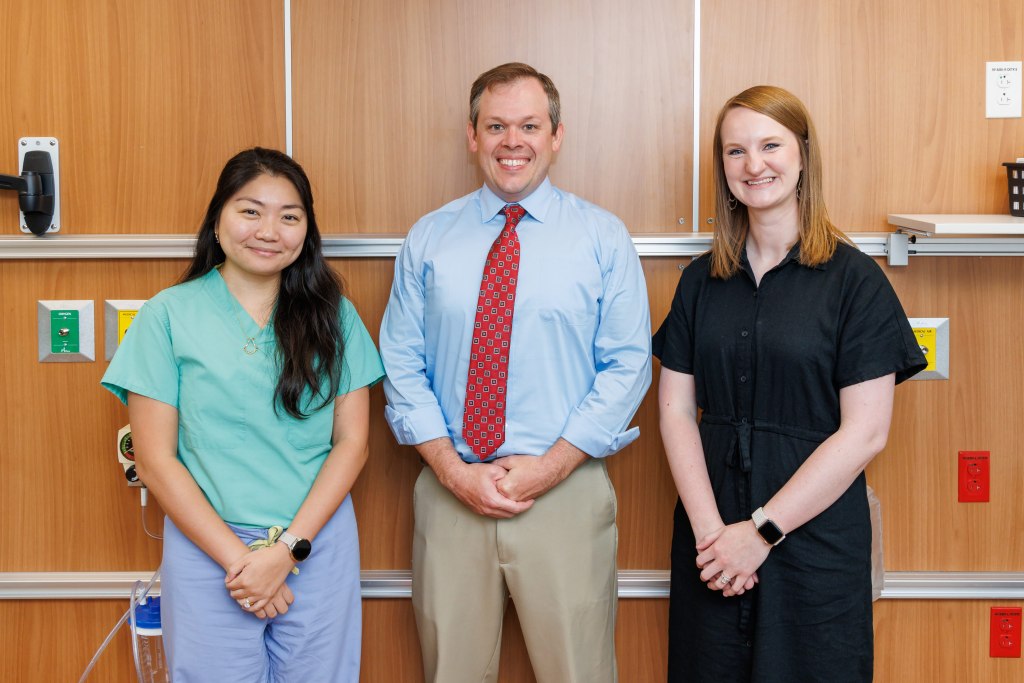
From left: Carmen Tong, D.O.; Nick Rockwell, M.D.; Autumn Layton, MSN, RN

Rockwell, Layton and their team used Play-Doh-covered Styrofoam balls to simulate a torsed testicle, while a stress ball represents a normal testicle. These are enclosed in balloons to mimic scrotal skin and attached to a mannequin. Residents can then practice palpating the model to distinguish between normal and torsed testicles, providing a “full, immersive experience,” Rockwell said.

The students are told the mannequin is a 15-year-old boy admitted the night before for abdominal pain that is getting worse. Rockwell “plays” the patient, responding to questions. He can also adjust the mannequin’s vital signs, such as increasing heart rate if the trainees do something painful during the exam.

Next up for the training is a series of mannequins: one is normal while three others depict the disease at different stages. This helps learners distinguish which testicle is torsed, or if the testicle is inflamed (epididymitis). Through this exercise, trainees learn the Testicular Workup for Ischemia and Suspected Torsion (TWIST) score, which identifies children at risk of testicular torsion. The higher the score, the more urgent the need for immediate treatment.

The response to the training been overwhelmingly positive, Tong said. In addition, “what’s super impressive about this model is that it’s easily replicable. So once we publish this, other institutions can take what we did and create the same model. It doesn’t cost thousands of dollars.”

Endocrinology

On the Front Lines of the Pediatric Obesity Crisis

In the Children’s of Alabama SHINE clinic, a multidisciplinary team take a holistic approach to helping patients with obesity.

About one in five children and adolescents in the U.S., representing nearly 15 million individuals, have obesity.[i] That puts the multidisciplinary Strategies for Health, Interventions, Nutrition, and Exercise (SHINE), clinic at Children’s of Alabama on the front lines of this complex issue. “It’s not just about weight loss,” pediatric endocrinologist Christy Foster, M.D., said. “We address the root causes of obesity and the various comorbidities associated with it. This holistic approach is vital for the long-term success of our patients.”

The clinic is run by adolescent medicine specialist Stephenie B. Wallace, M.D. In addition to Foster, the team includes a registered dietician, a physical therapist, an exercise physiologist and a social worker. Together, they create individualized plans for each patient focused on achievable goals.

Soon after starting in the clinic, Foster cared for a teenaged girl with obesity. The patient’s mother had type 2 diabetes, and the teenager had pre-diabetes. “Mom was just very worried and concerned for her,” Foster said. “But the girl was just very defeated. She felt it was her fault.” That’s not unusual, she said. “That’s one of the things that is tough around this condition. There’s a lot of shame and guilt.”

Christy Foster, M.D.

Foster assured the girl that her weight did not define who she was. She asked her to pick a goal to work toward. “She wanted to be a nurse,” she said. “So that became her motivation. I told her that if you want to take care of your patients, you have to take care of yourself first.”

When the teen returned for her next appointment, “she had such a light,” Foster said, and she’d started going to the gym. “There wasn’t a huge change all at once,” she said. “But she found the motivation. And that was one of the things she needed.”

The clinic’s philosophy is that obesity is a chronic disease, not a personal failing. “There are genetic, environmental, and psychological factors at play,” Foster said. “What I appreciate most about this clinic is our collective willingness to find creative solutions. We meet families where they are and tailor our recommendations to their unique circumstances. This adaptability is crucial for making a real difference in our patients’ lives.”

The clinic also emphasizes early intervention, encouraging primary care clinicians to refer patients before they develop the metabolic diseases of obesity, such as type 2 diabetes. “We now see that type 2 diabetes constitutes most of our new onset diabetes cases in children. This is a stark increase from a few decades ago,” Foster said.

New guidelines on childhood obesity from the American Academy of Pediatrics call for an aggressive approach to treatment, including pharmacotherapy and, in some situations, bariatric surgery. “We’re navigating these new recommendations carefully,” Foster said, “always weighing the benefits and potential risks. Cost is also a consideration, as insurance coverage varies.” In addition, the two newest weight-loss drugs, semaglutide and terzepatide, are only approved for use in adults, although they may be used off-label for children.


[i] Centers for Disease Control and Prevention. https://www.cdc.gov/obesity/php/data-research/childhood-obesity-facts.html.

Orthopedics

Improving practices for elbow fracture treatment

Children’s of Alabama orthopedic surgeons hope to streamline the process and reduce costs of elbow fracture treatment.

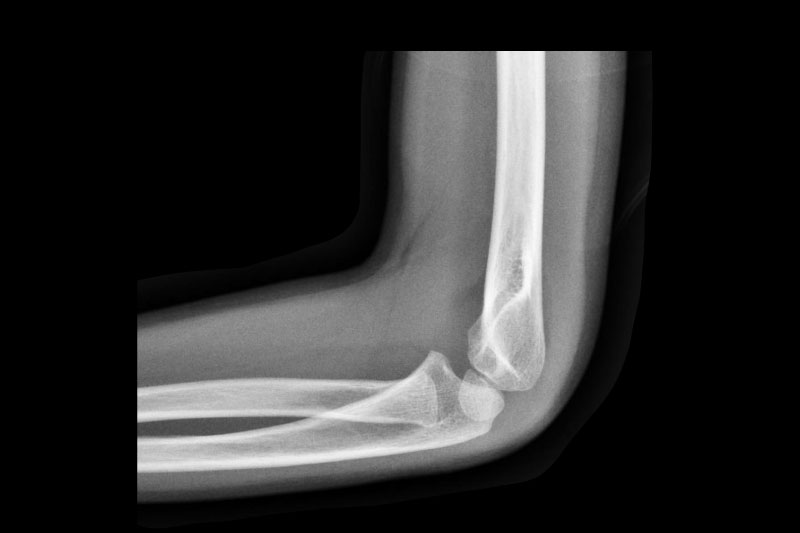
Elbow fractures are among the most common childhood injuries, accounting for about 10% of all childhood fractures. But according to a study led by Children’s of Alabama orthopedic surgeon Kevin Williams, M.D., the process for treating them isn’t as efficient or cost-effective as it can be.

Recently, Williams and his team evaluated a year’s worth—170 total—of supracondylar humerus fractures, a type of displaced break that occurs just above the elbow joint at the end of the humerus bone and needs to be put back in place and sometimes stabilized, often operatively. They found that surgeons at Children’s treated one of these fractures operatively every other day, but only 30–40% of patients were first seen at Children’s. The rest were transported from other areas of the state, with some coming from as far as Mississippi and Georgia. This means more time had elapsed before surgery, which is potentially problematic because prolonged displacement can increase swelling or compress nerves and blood vessels. This, in turn, increases the risk of compartment syndrome, a painful and debilitating condition that occurs when pressure within the muscles builds to dangerous levels, decreasing blood flow to nerve and muscle cells.

On average, transfers among cases in the study required almost three hours and came from about 70 miles away.

The study also assessed transportation methods, finding that children arrived faster when transported in private vehicles than ambulances. Patients often arrived unprepared for the immediate surgery required, and often, additional X-ray views were required to determine treatment.

Given the findings, Williams and his team are now investigating ways to streamline the transfer process and ensure patients arrive from other institutions ready for surgery.

They are also examining standard practices for non-displaced breaks, which can generally be managed with immobilization and usually don’t require surgery. Such patients often undergo repeated X-rays, which cost about $700 and expose the child to radiation. Williams’ findings indicate that obtaining repeated X-rays for such stable cases is unnecessary and too costly considering that the results don’t change the treatment modality.

Williams hopes to collaborate with other institutions to identify and develop best practices for managing elbow fractures. “Collaborative research allows updating approaches to continually provide the best, most up-to-date care for every child,” he said.

In the meantime, he advises prompt specialist referral for elbow fractures with rapid swelling, noticeable deformities, and impaired mobility. “It’s important to make sure that these children are seen as quickly as possible so we can give the care necessary,” he said.

Elbow fractures typically occur during play or sports when the child reaches out with their hands to block their fall. Proper and timely treatment is crucial to avoid long-term disabilities and complications.

“It’s very important for us to treat patients with displaced elbows operatively if the fracture is fairly displaced or angulated to make sure that the elbow heals and functions properly in the future,” Williams said.

“In this location, the bone doesn’t grow as much as other bones, such as those near the shoulder or wrist,” Williams said. “So, it’s imperative that we have these bones put back into place exactly where they were, or they could grow aberrantly with some type of angulation, causing some dysfunction in the future and potentially even resulting in nerve or muscle damage.”

Behavioral Health

Bridging the mental health gap for children in Alabama

The PATHS program at Children’s of Alabama is helping connect patients with mental health providers more quickly.

The United States is experiencing a crisis regarding children’s mental health, with many emergency rooms overwhelmed with urgent mental health visits.1 Adding to the crisis, said Children’s of Alabama child psychiatrist Vinita Yalamanchili, M.D., is a severe shortage of pediatric psychiatrists and other mental health providers, particularly in rural areas.

“The mental health needs of children have increased exponentially,” she said. “There’s just no way we can match those needs.”

Pediatric Access to Telemental Health Services (PATHS) at Children’s is designed to address both issues. The program is dedicated to increasing primary care providers’ ability to diagnose, treat and manage mild-to-moderate behavioral health conditions in children and adolescents.

Vinita Yalamanchili, M.D.

“It can take three to six months to see a therapist or psychiatrist,” Yalamanchili said. But waiting that long for treatment means kids in crisis are at risk of self-harm. With PATHS, they can get expert care from their primary care provider, often within 24 hours.

Primary care practices enroll with the program and receive access to the PATHS team, which includes child/adolescent psychiatrists and psychologists, psychiatric nurse practitioners, licensed clinical social workers and licensed professional counselors. In return, they agree to start behavioral health screenings for well-child visits and report results to PATHS; participate in one-hour, bi-weekly educational sessions on pediatric and adolescent mental health issues; and maintain ongoing responsibility for their patients’ behavioral health care and treatment.

Providers call PATHS when they have a patient who needs additional assistance. After an initial consult with a social worker, they are directed to the most appropriate team member to help. Yalamanchili, for instance, is usually the point person for medications. “I will tell the provider exactly how to prescribe the medicine and give them different options,” she said. For children who don’t need medication, the provider may talk to an early development specialist or a psychologist for information about topics like sleep training or behavioral management.

“You’re providing a consult for the provider to assist them in helping this child,” Yalamanchili said.

If the child needs more intensive care, they can interact directly with one of the PATHS specialists from their primary care office via telehealth. “This allows a patient not to have to come to Birmingham to see us,” she said. “It’s a really nice bridge until a local psychiatrist can see them.”

Initially founded to help rural practitioners, PATHS now works with providers throughout the state, even those just a few miles away. “They have the same waiting time of three to six months for psychiatric care,” Yalamanchili said. PATHS can continually extend its reach, she said, because as providers gain more education and confidence, they need fewer consults, freeing space for more practices.

“Because we also provide education, I think a pediatrician may not call me for a while because they’ll say, ‘Well, you’ve taught me enough that now I feel comfortable doing this on my own,’ ” she said.

The PATHS team also provides information about mental health specialists in the practice’s area.

“It’s actually one of my favorite jobs, because I am providing care very quickly to children,” Yalamanchili said. “And the pediatricians are just so grateful for these services.”

  1. Sorter M, Stark LJ, Glauser T, McClure J, Pestian J, Junger K, Cheng TL. Addressing the Pediatric Mental Health Crisis: Moving from a Reactive to a Proactive System of Care. J Pediatr. 2023 May 13:113479. ↩︎
Nephrology

New Leadership on Dialysis Unit

Kaci Caradine and Dr. Daniel Feig took on new leadership roles on the Children’s of Alabama Pediatric Dialysis Unit in the fall of 2023.

As more children requiring kidney dialysis survive and thrive—able to leave the hospital and return for treatment on an outpatient basis—the Pediatric Dialysis Unit at Children’s of Alabama has needed to adapt and grow. New leadership is poised to tackle this shift with aplomb, planning to increase staffing, expand education for team members and boost current programs for patients and families.

As of fall 2023, the unit is headed by medical director Daniel Feig, M.D., Ph.D., MPH, medical director of pediatric nephrology at Children’s, along with nursing director Kaci Caradine, BSN, RN, CNML. The pair replace the outstanding former medical director Sahar Fathallah, M.D., who is pursuing other professional opportunities at Children’s, and former nursing director Suzanne White, RN, who retired.

Within the last several years, the dialysis unit’s patient load doubled. It now includes about 20 patients who undergo outpatient hemodialysis treatments three times weekly, along with another 15 who receive home-based, nightly peritoneal dialysis and visit the unit about once a month. Most commonly, pediatric dialysis patients are affected by congenital abnormalities of the kidneys or urinary tract that lead to irreversible kidney failure, Feig said. Others require dialysis due to problems such as sepsis, solid organ transplantation, autoimmune diseases and other chronic issues.

“As we continue to make great improvements in the care we deliver, more kids are able to leave the hospital and lead full lives,” said Caradine, previously the director of nursing for Children’s Cardiovascular ICU.

Feig agreed, noting that referrals to the Children’s dialysis unit have also increased, both from the Southeast and around the nation. “We’ve gotten better at treating kidney failure in the Neonatal ICU and the very youngest patients, so kids who didn’t use to survive are now growing up with kidney failure,” said Feig, who’s also a professor of pediatrics and director of the Division of Pediatric Nephrology at the University of Alabama at Birmingham (UAB). “Now, the average age in the dialysis population is dropping from young teenager to about 5 to 7 years old.”

To keep pace, Feig and Caradine intend to quickly add to the dialysis team, which currently consists of 17 nurses, three nurse practitioners, nine attending physicians, and other roles that include a social worker, a dietitian and a counselor.

But many new clinicians to the unit don’t have experience in dialysis, making it crucial to “develop education and career development programs that get new staff up to speed,” Feig said. “We’re pulling together a didactic program involving the physicians and nurse practitioners who care for these patients, so they have a greater understanding of kidney disease and the challenges these kids face.”

“We want to develop a comprehensive educational program and onboarding curriculum for our new nurses,” Caradine agreed, “as well as ensure our current nurses are able to grow their knowledge base to continue to provide state-of-the-art care for our patients.”

Additional priorities include enhancing the Food as Medicine program, which provides packages of ingredients to patients’ families to assist them in preparing dialysis-safe meals. “This program is associated with huge improvements in patients’ quality of life and lab testing, and they’re much more able to stick to a prescription diet,” Feig said. “Expanding the program to a larger portion of the unit is a goal that will allow us to help all of our families.”

Endocrinology

Hypothalamic obesity – a potential breakthrough

Setmelanotide provides hope for patients with hypothalamic obesity.

Acquired hypothalamic obesity has long presented a complex challenge in healthcare, leaving pediatric patients struggling to lose weight. An innovative study involving a medication called setmelanotide aims to address this problem. Hussein Abdul-Latif, M.D., shed light on this groundbreaking research, offering insights into its origin, mechanism and potential impact.

Often arising from injuries or conditions affecting the hypothalamus, such as craniopharyngioma, acquired hypothalamic obesity makes it very difficult for pediatric patients to lose weight. There is also some evidence that slower metabolic rates and potential hormone deficiencies contribute to the problem in this specific patient population, along with other factors not fully understood yet.

Setmelanotide targets melanocortin receptors, which are crucial in regulating the body’s satiety signals. Abdul-Latif noted the medication’s impact on correcting the disrupted signals that lead to continuous hunger and reduced metabolism—two key factors contributing to this form of obesity.

“Our study is an extension of studies looking at the various genetic components to acquired hypothalamic obesity,” Abdul-Latif said. “We knew this medication was effective in treating obesity related to certain genetic conditions, so the next natural step was to consider whether it could be used for hypothalamic obesity resulting from injury to the hypothalamus.”

The ongoing phase three trial involves multiple sites, including Children’s of Alabama, enrolling patients up to 30 years old. So far, Children’s has recruited five patients to test the medication.

This trial utilizes a double-blinded method, where some participants receive the medication while others receive a placebo. Throughout the study period, researchers monitor each patient’s weight, satiety and skin pigmentation changes over a designated period. To date, only minor adverse events have been noted, including darkening of the skin and injection site issues.

Abdul-Latif also stressed the significance of this research in offering hope to those struggling with acquired hypothalamic obesity. He highlighted that this condition, previously perceived as challenging to treat effectively, now has a potential breakthrough. The medication provides promise for a segment of the population in need of more personalized solutions, hinting at a positive outlook for the future of treating this condition.

The clinical trial should end in April 2025. “At the end of the study, we give the medication to everybody regardless of their study cohort. That’s a nice incentive for prospective participants who may be desperate for something to help them lose weight,” Abdul-Latif said.

While the medication shows promise, Abdul-Latif emphasized the importance of exercise and hormone supplementation in conjunction with the treatment. The goal is to not only aid weight loss but also improve overall health and optimize the medication’s efficacy.

This groundbreaking research signifies a critical step forward in addressing acquired hypothalamic obesity. For participating patients, setmelanotide offers a newfound sense of hope. The ongoing clinical trial and subsequent FDA approval could signal a transformative breakthrough, marking a significant milestone in health care. As the study progresses, continued enrollment, diligent monitoring, and analysis of results will pave the way for a deeper understanding of setmelanotide’s efficacy and its potential to revolutionize the treatment of acquired hypothalamic obesity.

Neonatology

Link Between Infant Mortality and Insurance Type

A study shows that the the infant mortality rate is higher for pregnant people insured by Medicaid compared to private insurance.

A new study published in JAMA Network Open suggests that the type of health insurance pregnant people have may impact infant mortality rates. The research, led by Children’s of Alabama neonatologist Colm P. Travers, M.D., found that pregnant people with private health insurance had lower rates of infant deaths compared to those insured by Medicaid.

“The type of health insurance you have has been associated with adverse outcomes in adults and pediatric populations and differences in access to care, including prenatal care,” Travers said. “But few studies showed a difference in infant outcomes, particularly infant mortality rates, when comparing private health insurance to Medicaid public health insurance.”

The study analyzed data on more than 13 million births that occurred in the U.S. from 2017 to 2020. Overall, 46% of the pregnant people in the study had Medicaid insurance, while 54% had private insurance.

The infant mortality rate—defined as the number of deaths in the first year of life per 1,000 live births—was 2.75 deaths per 1,000 live births for those with private insurance compared to 5.30 deaths per 1,000 live births for those covered by Medicaid.

Those with private insurance also had a 43% lower risk of postneonatal mortality (from 28 days to one year after birth); a 10% lower risk of a low-birthweight infant; a 20% lower risk of vaginal breech delivery; and an 8% lower risk of preterm birth. They were 24% more likely to have received first-trimester prenatal care than those with Medicaid.

Travers said the difference may result from the onerous application process for Medicaid, which delays access to early prenatal care. Previous research shows such delays are associated with worse infant health outcomes.[1],[2]

To address this issue, Travers suggested exploring policies around presumed eligibility for pregnant Medicaid beneficiaries. “The idea there would be that once you’re pregnant, you would automatically have access to prenatal care appointments while waiting on Medicaid approval,” he said.

Travers also suggested more help for Medicaid beneficiaries with navigating the healthcare system and scheduling essential prenatal appointments. “Community health workers or healthcare navigators could have a role,” he said. Peer coaches, known as doulas, could also provide valuable emotional and informational support throughout pregnancy and childbirth.

“From a holistic perspective, infants should have good health outcomes, irrespective of their parents’ socioeconomic status,” he said. “Babies shouldn’t die because of the kind of health insurance their mother has.”

[1] Swartz JJ, Hainmueller J, Lawrence D, Rodriguez MI. Expanding prenatal care to unauthorized immigrant women and the effects on infant health. Obstet Gynecol. 2017;130(5):938-945.

[2] 22. Taylor YJ, Liu TL, Howell EA. Insurance differences in preventive care use and adverse birth outcomes among pregnant women in a Medicaid nonexpansion state: a retrospective cohort study. JWomens Health (Larchmt). 2020;29(1):29-37.

Urology

Improving Kidney Stone Intervention Follow-up Care

Many patients skip follow-up visits after kidney stone surgery. A QI project aims to change that.

The incidence and prevalence of pediatric kidney stones have been rising rapidly in the United States, particularly in the South. A Children’s of Alabama study found an increase of 84.4% over 15 years, with an average increase of 16.1% every three years.1 Recurrence rates are also high, with about half of children experiencing a recurrence within five years.2

The economic costs are significant, noted Children’s of Alabama pediatric urologist Carmen Tong, D.O. One study found overall costs for 8,498 patients of $117.1 million.3 Medical costs, however, don’t take into consideration the intangible human capital loss such as lost workdays for caregivers and extra childcare costs, Tong said.

Carmen Tong, D.O.

Some of this cost is due to high recurrence rates, she said, but also to issues relating to pain and infections after intervention.

Current guidelines call for follow-up imaging four to six weeks after surgery to confirm all stones are gone and discuss preventive measures. However, Tong’s review of 130 patient charts found that nearly half didn’t return for that follow-up visit. Those findings echo other studies in larger populations.4

That prompted a new quality improvement project to identify socioeconomic factors that could predict adherence with postoperative follow-up, she said. “We’ve noted that parents come back with their patients because of pain, poor pain control or issues with infection,” but not for routine follow-up if the child is doing well, Tong said.

The project will examine barriers and boost resources and education for families. “Enhanced communication can hopefully limit complications like inadequate pain control and infections, which currently prompt some visits,” Tong said. Her team will partner with Nationwide Children’s Hospital in Columbus, Ohio, to examine the influence of a multi-institutional, incentivized study on follow-up adherence versus no incentive.

“We want to improve our communication and education to this population so they’re better equipped to provide the follow-up care their child needs,” she said.

  1. [1] Zhang SY, Collingwood JD, Fujihashi A, He K, Oliver LA, Dangle P. Incidence of Emergency Department Presentations of Symptomatic Stone Disease in Pediatric Patients: A Southeastern Study. Cureus. 2022;14(11):e30979. Published 2022 Nov 1. doi:10.7759/cureus.30979 ↩︎
  2. [1] Tasian GE, Kabarriti AE, Kalmus A, Furth SL. Kidney Stone Recurrence among Children and Adolescents. J Urol. 2017;197(1):246-252 ↩︎
  3. [1] Sturgis MR, Becerra AZ, Khusid JA, et al. The monetary costs of pediatric upper urinary tract stone disease: Analysis in a contemporary United States cohort. J Pediatr Urol. 2022;18(3):311.e1-311.e8. doi:https://doi.org/10.1016/j.jpurol.2022.02.019 [1] Ellison JS, Merguerian PA, Fu BC, et al. Postoperative Imaging Patterns of Pediatric Nephrolithiasis: Opportunities for Improvement. J Urol. 2019;201(4):794-801. doi:10.1016/j.juro.2018.10.002 ↩︎
  4. Ellison JS, Merguerian PA, Fu BC, et al. Postoperative Imaging Patterns of Pediatric Nephrolithiasis: Opportunities for Improvement. J Urol. 2019;201(4):794-801. doi:10.1016/j.juro.2018.10.002 ↩︎
Urology

How Games Help With Surgical Robot Training

Children’s of Alabama residents practice using the urology team’s surgical robot by playing games like Hasbro’s Perfection.

When the Children’s of Alabama urology department acquired its first Da Vinci surgical robot in January 2023, Carmen Tong, D.O., pediatric urologist at Children’s of Alabama, developed a training curriculum that brings in classic children’s games to help residents develop their skills with the new technology.
 
“There’s a movement in urology to ‘gamify’ the robot,” Tong said. “Such training is vital to the safety of our patients.”
 
Surgeons are very competitive, she said. “Gamification taps into our competitive side and allows us to push and encourage each other to improve. It helps with camaraderie.”
 
Indeed, studies show that gamification, whether with actual games like Tong is using or embedding competitions and rewards into skill development, enhances resident engagement.[i]
 
The curriculum is not, however, all fun and games. Residents and any interested ancillary medical staff learn the robot from the inside out. “The surgeon who’s using that technology should be the most knowledgeable person of that technology,” Tong said. “We have to be prepared to troubleshoot to figure out what’s happening if the components of the robot are not responding the way we want.”
 
The residents complete online modules and practice surgeries via a video game-type simulator. Then, every two months, Tong brings in the actual games, and the residents compete against each other using the robotic arm in place of their own hands. For instance, they used the Hasbro Perfection game, designed for kids ages 5 and up, to work on wrist articulation. The fast-paced puzzle involves fitting shapes into their matching holes before time is up and the pieces pop out.
 
“We’re sitting at the robot using real instruments,” Tong said. “They may have perfected those simulator games. But when you’re actually holding the needle with the robotic instrument, it’s very different.” Ultimately, she said, “when they’re ready to perform those skills on an actual patient, it’s not their first time.”
 
Even though the gaming sessions aren’t mandatory, “almost all residents participate.” That, she said, “says a lot about the program’s success.”
 
The residents aren’t the only ones playing with ‘Tater Bot,’ which the surgical robot was named following a hospital-wide naming contest. Two patients, who underwent surgery with the device, have also had a chance to play the games. Tong brought in some hospital administrators to play with the new equipment, as well.
 
The two most challenging skills to learn are spatial awareness and manipulating tissue so it doesn’t tear. “One of the harder things to grasp with the robot is tactile feedback,” Tong said. “You just don’t know how hard you’re pulling because it isn’t the same as having your hand in there. But with practice, you learn how to be gentler. But that takes a really long time to master.”
 
Most residents won’t complete their first robotic surgery on a real patient until the end of the five-year program. “They have to prove that they understand the advantages and the shortcomings of the robot in order to be a safe and competent surgeon,” Tong said. “It’s essentially practice, practice, practice.”

[i] Nakamoto K, Jones DB, Adra SW. Gamification of robotic simulation to train general surgery residents. Surg Endosc. 2023 Apr;37(4):3136-3144. doi: 10.1007/s00464-022-09520-3. Epub 2022 Aug 10. PMID: 35947198.