Browsing Tag

spina bifida

Urology

In New Role, Hopson Working to Address Sexuality in Patients With Spina Bifida

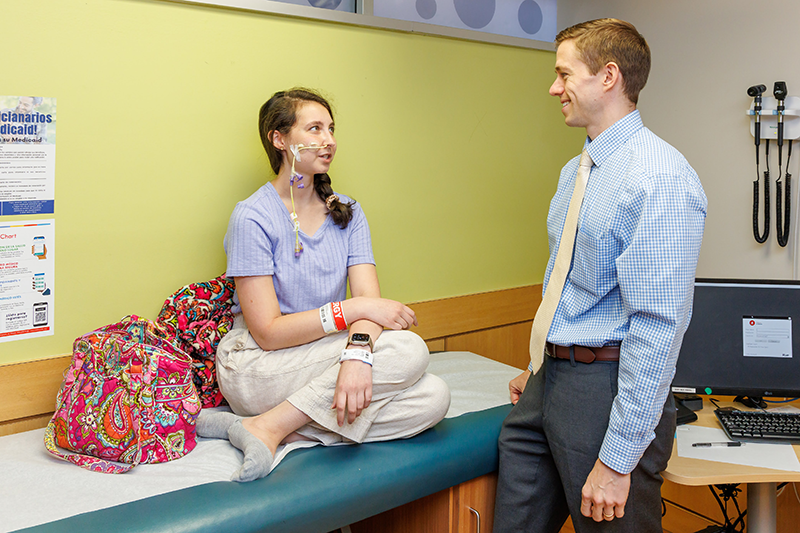
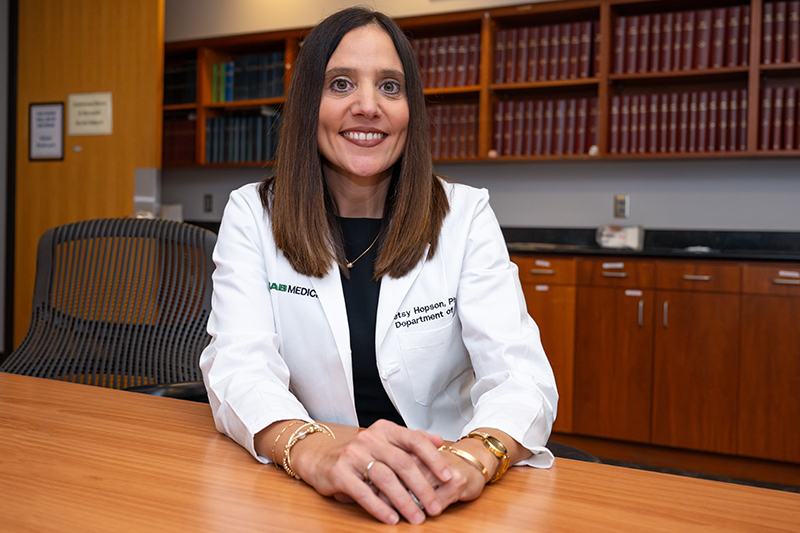
Betsy Hopson, Ph.D., MSHA, recently moved into a new role within the Division of Pediatric Urology.

Betsy Hopson, Ph.D., MSHA, describes her philosophy in one word: listen.

“Early in my career, I adopted this principle that if I heard the same story from two or more patients then it was either a research question or a quality improvement opportunity,” she said.

That mindset has shaped nearly two decades of work at Children’s of Alabama and the University of Alabama at Birmingham (UAB) and now underpins her new role as an assistant professor and health scientist in the Division of Pediatric Urology. There, she will direct a clinic dedicated to helping children with congenital urologic conditions transition to the adult health care setting.

Hopson began her career at Children’s in 2006 as coordinator of the Spina Bifida Program in the Division of Pediatric Neurosurgery. Yet she spent nearly as much time interacting with urology, she said, which plays a central role in bladder management for patients with the disease.

Her early work focused on helping patients make the difficult transition from pediatric to adult care. After realizing that young adults with spina bifida were aging out of pediatric clinics without clear adult pathways, she returned to school to earn a master’s degree in health care administration and then built an internationally recognized transition model.

It was listening to her patients, however, that led to the next chapter in her life.

In one case, a 15-year-old adolescent asked her about her research. When she told him it was sexual and reproductive health, “He whispered, ‘Betsy, I can’t do that, can I?”’

“Can’t do what, buddy?” she asked. “Date or have sex,” he answered. “That’s not for me, is it?”

Or the newly engaged, college-educated young woman with spina bifida who burst into tears when Hopson started discussing birth control with her. “You mean I can get pregnant?” she said. “I had no idea.”

“If this young woman who is very educated had no idea,” Hopson said, “what is this like for the rest of the population?”

And a light bulb went off. “We’re telling them we want them to be independent, that we want them to take care of themselves, but we’re not giving them any carrot or showing them what’s possible and helping them paint that picture of what adult life could look like.”

Her “eureka” moment led her back to school to obtain her Ph.D. in Rehabilitation Science and a certificate in Mixed Methods Research. Her goal was to understand gaps in sexual health education for people with congenital diseases like spina bifida. What she uncovered was far more troubling.

“Because these patients are prescribed catheterization for bladder management early in life,” she said, “they’re taught the technical skills of catheterization but not taught about personal boundaries and appropriate touches.”

Her research found that 46% of adults with spina bifida reported a history of sexual abuse. For her dissertation, she validated a clinical screening tool to identify abuse risk and gaps in sexual health knowledge.

In her new role with the urology team, she sees her goal as twofold: “One is to help support normal development,” she said. “I want to normalize sexual and reproductive health conversations so patients can see what’s possible and give them space to imagine a full adult life.”

The other involves educating patients, parents and clinicians about the increased risks vulnerable patients face and developing tools for clinicians and families to identify and talk openly about those risks.

It’s important, she noted, to bring the parents into the discussion. “When you bring [sexuality] up in the clinical setting in front of their child, they might be initially hesitant.” Her solution is the same approach that has guided her career: listen first. That means holding focus groups with patients and parents to shape new curricula and ensure the content reflects lived experience rather than clinician assumptions.

“If there’s one thing my career has taught me,” she said, “it’s to never stop learning and never stop looking for ways to make a difference.”

Urology

A new protocol for kidney tests in spina bifida patients

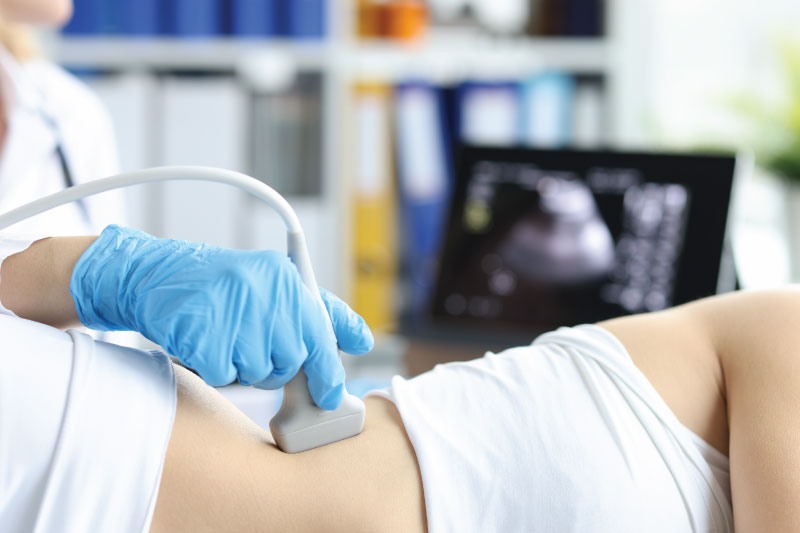
A new study shows that ultrasound is not enough to monitor kidney health in children with spina bifida. (Stock photo)

For decades, doctors have relied heavily on ultrasound scans to monitor kidney health in children with spina bifida, the most common permanently disabling birth defect in the U.S. People with spina bifida tend to develop end-stage renal disease up to 20 years earlier than the general population, so keeping a close watch on kidney health from a young age is important, says Children’s of Alabama pediatric urologist Stacy Tanaka, M.D. “Then if there’s a concern, it can be acted upon early and not ignored.”

Current guidelines from the Spina Bifida Association (SBA) recommend annual screening with ultrasound to look for hydronephrosis—a condition in which the urine backs up into one or more kidneys—as a sign of kidney function, and blood tests like serum creatinine, to measure overall kidney health. But with kids, Tanaka says, “the practice pattern was that a lot of people were only doing renal ultrasound.”

Now a new study from Tanaka and her Children’s colleague David Joseph, M.D., as well as other kidney experts from around the country, shows that ultrasound alone is not enough to assess kidney health. “We basically use ultrasonography as a reflection of renal function,” Joseph said, but few, if any, studies assessed its accuracy in determining renal function.

Stacy Tanaka, M.D.

The study’s genesis came during a multidisciplinary meeting in 2003 of specialists who treat children with spina bifida. “The bottom line from all disciplines at that time was that nobody was really treating this population with evidence-based care,” Joseph said.

To change that, the Centers for Disease Control and Prevention and the SBA established the National Spinal Bifida Patient Registry (NSBPR), to which 20 spina bifida clinics submit data to help develop evidence-based care. In addition, nine clinics established a urologic protocol to manage and preserve initial renal function in young children with spina bifida (UMPIRE). The NSBPR and UMPIRE provided the data set Joseph and Tanaka used to determine the effectiveness of renal ultrasound vs. blood test to assess renal function.

The two registries included data on 2,500 children ages 1-18 with myelomeningocele, the most severe form of spina bifida. All had had an ultrasound and blood test within six months to determine estimated glomerular filtration rate (eGFR), a marker of kidney health.

The results were striking: ultrasound-based detection of hydronephrosis had only about a 25% sensitivity for identifying children with signs of chronic kidney disease in the UMPIRE study and 24% in the NSBPR cohort. That means kidney damage in three out of four children was going undetected. The poor sensitivity held even when researchers looked only at severe hydronephrosis, which had an even worse sensitivity rate–just 6% to 11%. “The renal ultrasound by itself wasn’t all that good,” Joseph said, “but that didn’t surprise us.”

David Joseph, M.D.

The findings challenge current practice and suggest that blood tests measuring kidney function should be routinely performed alongside ultrasound, not just when ultrasound results look concerning, as some clinicians practice. The team at Children’s prefers testing for cystatin C rather than creatinine because of the test’s improved and more accurate ability to obtain an eGFR.

One reason clinicians may eschew blood tests is that it involves needles, Tanaka said, which be traumatizing for children. Ultrasound, on the other hand, is noninvasive, easily available, and can be performed by technicians.

“The ultrasound is very helpful and important,” Joseph said, “but you need to recognize that it may not be telling you about renal function or injury to the kidney.” The findings have already changed practice at Children’s, where all kids with spina bifida now receive both tests during kidney health screening.

Ideally, the next study would randomize kids to either double testing or ultrasound alone, but that requires significant funding, particularly since the children would need to be followed for years.

This study was conducted with very little financial support, Tanaka said. “It represents a labor of love for everyone at all nine UMPRIE centers who have been involved in this project,” Joseph added.

Urology

Improving the transition of care

Urologist Timothy Boswell, M.D., speaks with a patient at Children’s of Alabama.

For children who grow up coping with congenital urologic conditions, there’s no standard process guiding their transition to an adult urology program—meaning these patients can feel adrift at a critical point in their care. But Children’s of Alabama pediatric urologist Timothy Boswell, M.D., is setting out to change that in hopes of smoothing their path forward.

Boswell recently received a University of Alabama at Birmingham (UAB) faculty development grant to examine how to improve care for patients with congenital urology problems, who face a lifelong need for follow-up. He plans to use the funds to tap into the wealth of knowledge these patients can share, reimbursing them for their time being interviewed or filling out surveys asking them about their experiences as they age through care.

“There’s no set way of doing this around the country—every hospital has its own way,” explained Boswell, who’s also an assistant professor of pediatric urology at UAB. “We want to figure out what’s going to work best for our system, but we also want to catalog this scientifically to help others down the road. It has become more evident that these young adult patients with congenital anomalies can fall through the cracks.”

Urologic problems in children that persist through adulthood aren’t common, but those that do can have pervasive and often treatable effects on quality of life, Boswell says. “That brings the challenge of having enough patients to learn from, but it also makes it more feasible to manage the whole population of them,” he said. “That’s our goal. Since we’re the main pediatric offering in the region, we have many of these patients, so we’re poised to learn from them.”

The most prevalent congenital urologic condition persisting through adulthood is spina bifida, Boswell notes, followed by conditions such as posterior urethral valves or major urologic reconstruction after cancer or for another reason. Standing on the shoulders of a well-structured pediatric spina bifida clinic, UAB and Children’s providers recently established an adult spina bifida clinic that is paving the way in serving these specific pediatric urologic patients as they transition to adult care.

Research on spina bifida patients in the general population indicates they often don’t establish regular adult care after leaving a pediatric setting. “They end up coming into the ER with urinary tract infections, kidney stones or bladder stones, and the assumption is that this is because they haven’t gotten good enough regular outpatient care,” Boswell said. “But those types of analyses haven’t been done as much in patients with other urologic diagnoses to know what problems or challenges those patients have.”

“The progress the UAB adult spina bifida clinic is making for spina bifida patients serves as a good representation of the improvement that can be made in this patient population with a focused effort to improve their transition,” he added. “I’ll be interviewing some patients with spina bifida to learn what they’re experiencing and compare and contrast that with other groups of congenital urology patients who don’t have a structured transition process.” As part of his research, Boswell hopes to also reach out to patients with congenital urologic problems who aren’t receiving regular care, giving Children’s the opportunity “to potentially plug them back in and prevent complications,” he said. “The project has fluidity to it in trying to determine what the major issues are, and my strategy is to adjust as we go with the goal of improving their care, and all those to follow them.”

Neurology & Neurosurgery

Global Alliance Co-Founded by Children’s Neurosurgeon Affecting Change in Spina Bifida Prevention Effort

Spina bifida is the most frequently occurring permanently disabling birth defect to affect the nervous system.

Jeffrey Blount, M.D., MPH, knows the struggles of patients with spina bifida (SB). He and his colleagues in the Division of Pediatric Neurosurgery at Children’s of Alabama and the University of Alabama at Birmingham (UAB) have seen them firsthand—hydrocephalus, lower extremity paralysis, sleep apnea, pressure sores, variable incontinence, and the frequent need for multiple surgeries. Other doctors providing SB care see urologic, musculoskeletal, orthotic and ambulatory problems. A few years ago, the desire to address these issues led Blount to a big idea—one that would help not only his patients, but others around the world. In 2019, he co-founded the Global Alliance for the Prevention of Spina Bifida, or GAPSBiF, an organization dedicated to increasing awareness and advocating for the prevention of SB through large-scale food fortification with folic acid (FA). It’s already affecting change.

Blount is the medical director of the Pediatric Spina Bifida Clinic at Children’s of Alabama—one of the largest clinics of its kind in North America, following about 450 children. The medical professionals in the clinic work with those at the Adult Spina Bifida Clinic at UAB, which follows about 250 adults. In founding GAPSBiF, Blount partnered with Gail Rosseau, M.D., an international leader in global neurosurgery; Adrian Caceres, M.D., a Costa Rican neurosurgeon who accomplished widespread fortification of FA in Costa Rica; and Colombian neurosurgeon Kemel A. Ghotme, M.D., Ph.D., who had just completed a Ph.D. in Global Health Policy with a focus on FA fortification. One of the GAPSBiF’s major strategies for preventing SB was working with other neurosurgical and nutrition directed organizations in putting together a resolution that called upon all World Health Assembly (WHA) member states to embrace micronutrient fortification including FA to prevent SB. Resolution 76.19 was introduced by the Colombian government and 37 other member states and went through a rigorous process of vetting. In May, the WHA adopted it.

“This has real potential to favorably and fundamentally impact the global prevalence of SB and other micronutrient dependent diseases,” Blount said. “It is an essential step toward overcoming the stalled progress on the prevention of spina bifida.”

Spina bifida and folic acid

SB is the most frequently occurring permanently disabling birth defect to affect the nervous system. It results from the spine’s failure to close properly during the first month of pregnancy. The cause of SB is not fully understood, but it is thought to be associated with both genetic and environmental factors. The most important environmental factor is maternal intake of dietary FA, a B vitamin that is critically important in development and has long been known to reduce the risk of neural tube defects (NTDs), such as SB.

Nutritional shortage of FA in women of childbearing age is the most important contributor to SB prevalence worldwide. Many women supplement FA in their diet by taking 400 micrograms of FA while pregnant. But, in some cases, that’s not soon enough. “This problem of spina bifida occurs so early on in development that it has already occurred before most women even realize they’re pregnant,” Blount said. “So, it’s not like they can realize they’re pregnant, change their nutritional strategy and put up an effective barrier for this problem. Once they realize they’re pregnant, if they have the problem, it’s already occurred.” Fortifying widely consumed foods such as corn, grain or rice is more effective, which is why GAPSBiF works so hard to promote this strategy.

Evidence that fortification helps

In the U.S., mandatory fortification of enriched cereal grain products with FA was authorized in 1996 and fully implemented in 1998. Here, NTDs, including SB, affect approximately seven out of every 10,000 births. The rates in other regions that fortify are similar. In regions that don’t fortify, NTDs affect up to 150 births per 10,000.

But some countries—even advanced Western European nations—still are not practicing fortification, and, in many cases, are focused more on detection. But that approach can be problematic, Blount says. “Some places are very aggressive at terminating those pregnancies, which of course is a very difficult, very challenging, whole approach to problems. But it’s surprisingly widespread.”

GAPSBiF’s approach is centered around prevention. “Let’s keep these little children from getting this terribly difficult disease,” Blount said, “because it’s lifelong.”

The role of GAPSBiF

When Blount and his colleagues were forming GAPSBiF, they spoke with neurosurgeons from around the world. Even in North America, where fortification is already commonplace, SB takes an exhausting toll on patients, families, the health care system and the neurosurgical infrastructure. In many other countries, it’s much worse—due not only to the lack of fortification, but also because there are far fewer neurosurgeons per person. “A big part of their life and their world is taken up caring for these children,” Blount said. “And it prevents them from being able to do other things, such as taking care of people with strokes, taking care of people with trauma, things like that. So, it overloads an already challenged workforce.

“We saw this, we came together as a group, and we said, ‘Neurosurgery sees this. Neurosurgery knows this disease. We have a front-row seat to all these problems. So, why don’t we try to organize in such a way that we work with other agencies to try and attain this goal of universal fortification?’ ” Blount said.

“We know that if we can get folic acid into population food supplies, that up to 90% [of the SB cases worldwide] can be profoundly reduced,” Blount said. “Right now, the best studies suggest that we are collectively preventing less than one quarter of the global burden of SB.”

Fortification is not perfect, though. Blount emphasizes that while it can markedly reduce the prevalence rate of SB, it cannot completely eliminate the disease. That’s why he says that women and families who live in regions that fortify should not blame themselves for their child’s SB due to insufficient FA intake. “No woman should ever say to herself, ‘If only I had taken more folic acid, my child would not be affected,’ ” he said. Regulations for mandatory fortification of wheat flour with FA are currently in place in 60 countries, although in many cases, these regulations have not been implemented. Moving forward, Blount and his colleagues with GAPSBiF will remain active and invested in monitoring the resolution’s progress and working one-on-one with countries, guiding them in their national and regional implementation plans.

Urology

Children’s of Alabama Leads Practice-Changing Spina Bifida Study

Dr. David Joseph is a pediatric urologist at Children’s of Alabama.

Spina bifida, a condition in which the neural tube doesn’t completely close, is one of the most common congenital malformations, affecting approximately one out of every 2,700 births. While neurosurgeons provide immediate care, it isn’t long before urologists and nephrologists get involved. That’s because damage to the spinal cord and nerves may keep brain signals from reaching the bladder. If that happens, urine can back up into the kidneys, possibly causing kidney damage. “Yet nearly all newborns with spina bifida show normal kidney function at birth,” Children’s of Alabama pediatric urologist David Joseph, M.D., said. “But over time, at least half will deteriorate to some degree.”

Which begs the question: How do you manage these children? A 10-year, nine-center initiative at Children’s of Alabama has been trying to answer that question. Called Urologic Management to Preserve Initial Renal Function Protocol for Young Children with Spina Bifida (UMPIRE), the initiative is designed to provide an evidence-based protocol for testing and monitoring kids with spina bifida to identify early kidney injury. The Centers for Disease Control and Prevention (CDC) funds the study, which is now following more than 500 children with the most severe form of spinal bifida, myelomeningocele, in which a sac of fluid containing part of the spinal cord and nerves protrudes through an opening in the baby’s back.

Unlike most clinical trials, where the outcomes are evaluated at the end, the UMPIRE investigators review the data every quarter and tweak the protocol accordingly. “Obviously, this is not as clean as a randomized control trial,” Joseph said. “But it’s an effective way to manage a small population without a control group.”

This approach has led to some important revelations. For example, the team learned that bringing newborns in for imaging every three months for the first year as they’d been doing had no benefit at the nine-month visit. They also recognized that prophylactic antibiotics to prevent infection weren’t needed in newborns. Children’s chief of pediatric urology Stacy Tanaka, M.D., discovered that each center assessed urodynamics (lower urinary tract function) differently, which was a serious problem given the reliance on those tests to classify a patient’s level of damage and determine treatment.

Finding participants for the study hasn’t been a problem, Joseph said. “I don’t think we’ve had a family in the past seven years that has turned down the opportunity to be in the study,”—something he attributes to Betsy Hopson, MSHA, coordinator of the Children’s of Alabama Comprehensive Spina Bifida Program. The goal is to follow the children for at least 10 years or for as long as the CDC continues to fund the study.

“The urologic community looks to the UMPIRE program for the protocol in anticipation that it will help direct future management,” Joseph said.

Inside Pediatrics, Neurology & Neurosurgery

At Children’s of Alabama, Transitioning Spina Bifida Patients to Adult Care Begins at Age 13

Spina Bifida_WEB

Professional heavyweight boxer Deontay Wilder greets a patient while touring Children’s of Alabama’s Comprehensive Spina Bifida Program space in this 2015 photo. The multidisciplinary program treats about 500 patients a year.

Before the 1970s, about one in four infants born with spina bifida died. Today, thanks to advances in neurosurgery, genitourinary surgery, gastroenterology and physical medicine and rehabilitation, between 75 and 80 percent now survive into adulthood.[1]

But surviving doesn’t mean thriving. That’s what clinicians from Children’s of Alabama’s multidisciplinary Comprehensive Spina Bifida Program, which treats about 500 patients a year, learned when they joined specialists at the University of Alabama at Birmingham (UAB) to develop an adult spina bifida clinic. While there is a greater awareness in the pediatric community about the overall need for transitional programs, said Jeffrey P. Blount, M.D., FAANS, chief of pediatric neurosurgery at Children’s of Alabama, more is needed than simply transferring a patient’s medical records.

“Our patients were arriving unprepared not just for adult health care, but for adult life in general,” said Spina Bifida Program Coordinator Betsy Hopson, MSHA, who assists patients in the transition from pediatric to adult care.  “We’d watch them grow up and hear about their dreams but every year it seemed like the light inside them was becoming dimmer and their opportunities fading away.” By the time they arrived at the adult clinic, she said, many patients were depressed and their childhood dreams seemed to have disappeared.

“We thought, ‘We’ve got to do better with this next generation,’” Hopson said.

They, along with Children’s of Alabama neurosurgeon Brandon Rocque M.D., MS, FAANS, started with data, surveying 188 patients in the adult clinic about their perceptions of their own disability. More than half (56.4 percent) identified as permanently disabled, with the most important predictors of disability being poor bowel continence and low education.[2]

They also found that 70 percent of those surveyed were not working and, again, poor bowel continence and low education were determining factors, as well as diagnosis (open versus closed spinal dysraphism). Rocque emphasized that patients with daily bowel accidents were six times more likely to be unemployed, while those with weekly accidents were three times more likely to be unemployed.

Thus was born the Individualized Transitional Plan (ITP), which starts at age 13. The objective is to ready the child for adulthood by developing and achieving five goals, including bowel management and educational achievement. Goals also include transitional readiness (ie, do they know their medical history, can they make their own appointments and see the doctor without a parent present); meeting a parent-initiated goal (ie, showering without being told or learning how to cook); and a personal goal, such as learning to eat healthier. Hopson individualizes care to transform each goal into a measurable task and the results become a contract and framework for the next few years.

They also receive a transition binder that includes a career interest survey. “They complete it before they see me and then I help guide them,” Hopson said. She also ensures their career  goals are realistic. For instance, one patient said he wanted to be the Marines, which she knew wasn’t possible. Instead, she suggested a meeting with a recruiter to discuss civilian jobs in the military.

About 45 percent of patients fall into the age group for the ITP, which is part of the clinic’s Lifetime Care Model (LCM). The LCM begins prenatally and continues throughout the adult years.[3] Hopson developed the ITP, which has generated great interest from other clinics in North America who are struggling with the challenges of implementing a meaningful transition program.

Since starting the program, Blount said, clinicians from throughout the country have contacted the team at Children’s to learn how to start their own program. “There’s such a need for a supportive multidisciplinary clinic to support these patients,” he said.

“This model could be replicated for other children with chronic conditions,” Hopson said. “If we’re doing our jobs well, our children are going to be adults. So we have some obligation to get them there in a way that provides a good quality of life.”

Bowel Management Program

Children with spina bifida are born with neurogenic bladder and bowel issues. While urination can be managed through catheterization, with children as young as 3 years old learning to catheterize themselves, “bowel management is much trickier,” Hopson said. Gastrointestinal motility slows and constipation becomes a chronic issue. Unfortunately, she said, many families prefer constipation to regular movements because it’s easier to handle. But “once you set up that pattern it’s hard to break,” she said.  And bowel management, she said, “becomes the most important issue in whether they are able to get a job.”

Today, the children in the spina bifida clinic benefit from working with pediatric gastroenterologist Mitchell B. Cohen, M.D., and members of the Division of Physical Medicine and Rehabilitation. Cohen chairs the UAB Department of Pediatrics and is physician-in-chief at Children’s of Alabama. He became interested in the program after hearing Hopson speak. He developed a protocol beginning at age 4 to help families understand the importance of a bowel management program and try to end their reliance on constipation.

Nonetheless, it remains an “extraordinarily difficult problem,” Roque said. “There is no magic bullet.” Still, “with Cohen’s help we’re making inroads on this extraordinarily difficult problem that has profound impact that echoes through rest of a child’s care, including issues of self-image and self-worth.”


[1] Talamonti G, D’Aliberti G, Collice M. Myelomeningocele: Long-term neurosurgical treatment and follow-up in 202 patients. J Neurosurg 2007; 107: 368-86.

[2] Davis MC, Hopson BD, Blount J, et al. Predictors of permanent disability among adults with spinal dysraphism. J Neurosurg Spine. 2017 August ; 27(2): 169–177.

[3] Hopson B, Rocque BG, Joseph DB, et al. The development of a lifetime care model in comprehensive spina bifida care. J Ped Rehab Med. 2018; 11:323–334