

A device developed by Children’s of Alabama neonatologists is showing promise at measuring lung function in premature babies.
One of the most important parameters of a premature baby’s health status is respiratory health. How well are their lungs working? What long-term respiratory complications might occur from the premature birth? Yet assessing lung function in these fragile newborns has long been a complex and invasive process.
“Right now, we diagnose lung disease based on whether a baby needs oxygen or not,” Children’s of Alabama neonatologist Colm P. Travers, M.D., said. “But we don’t know how severe their lung disease is and what type of lung disease they have.”
Measuring lung function in children and adults is as simple as having them blow hard into a plastic tube. Pulmonary function testing in neonates, however, requires complicated equipment as well as sedation or anesthesia, limiting its use outside of research studies.
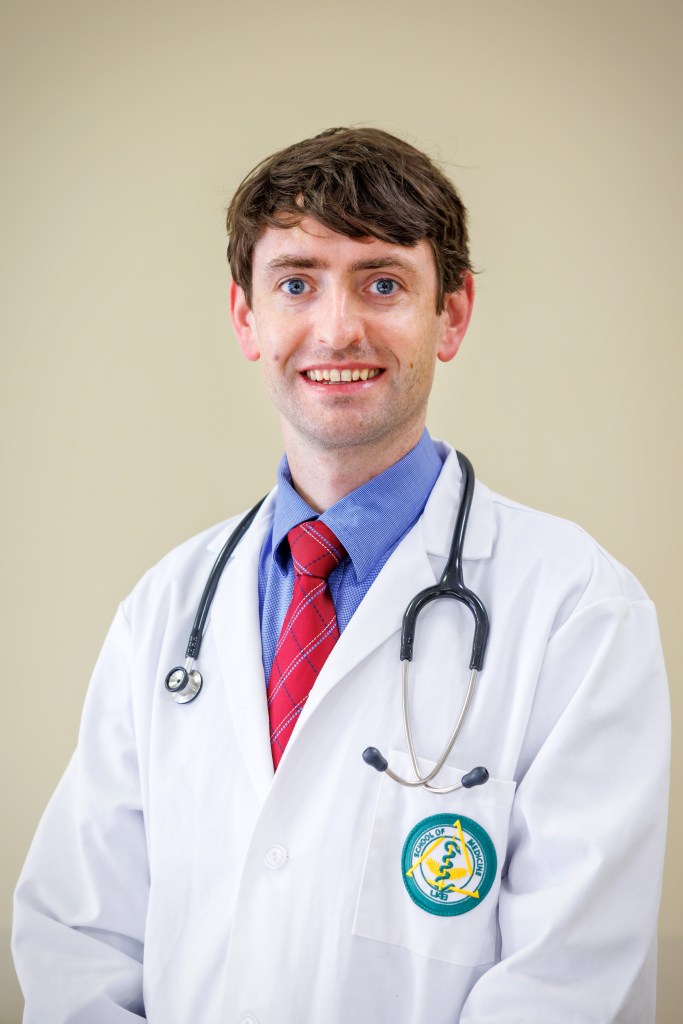
So, Travers and his team have brought a decades-old technology used in adults called forced oscillation technique (FOT) to the NICUs at the University of Alabama at Birmingham (UAB) and Children’s. They worked with the device manufacturer to develop a machine designed for small babies. It sends sound waves into the lungs while the infant is sleeping and breathing naturally. The sound waves then bounce off the lungs, providing information on stiffness and resistance in the airways. It can be performed in less than 30 seconds, non-invasively, without sedation and repeated over time. It typically takes just a few minutes to set up and can be used soon after birth.
“It’s well suited to neonates because it doesn’t need any effort on behalf of the baby,” Travers said. “Oscillometry is also able to tell you the severity and the type of lung disease a baby has.” In addition, he said, it’s an ideal tool to use in research because of its simplicity and accuracy.
The Children’s team has already used the device in more than 600 neonates. They published the first results of their work in 2020, which demonstrated the feasibility of using oscillometry in healthy newborns and those with respiratory disorders. Now, they’re in the midst of a larger study funded by the National Heart, Lung, and Blood Institute involving 550 babies with the goal of establishing normative data for infant lung function and tracking outcomes, such as asthma and wheezing, in early childhood.
“We’re also using it in our NICU to see whether babies respond to certain medications,” Travers said. This approach could help doctors quickly determine if a treatment is effective or if they need to pursue alternative options.
The use of FOT at Children’s is still only in the research phase. Travers says he and his team are still following the infants until they are 2 years old. “In the future, we hope to see the infants back around the time they are starting school so we can see how they are doing in terms of exercise capacity and lung function,” he said.
Eventually, Travers hopes FOT will become standard of care not only in his NICU, but in hospitals everywhere.

No Comments