
Browsing Category

Neonatology

Neonatology, Nephrology

New hope for neonates with severe congenital kidney disease

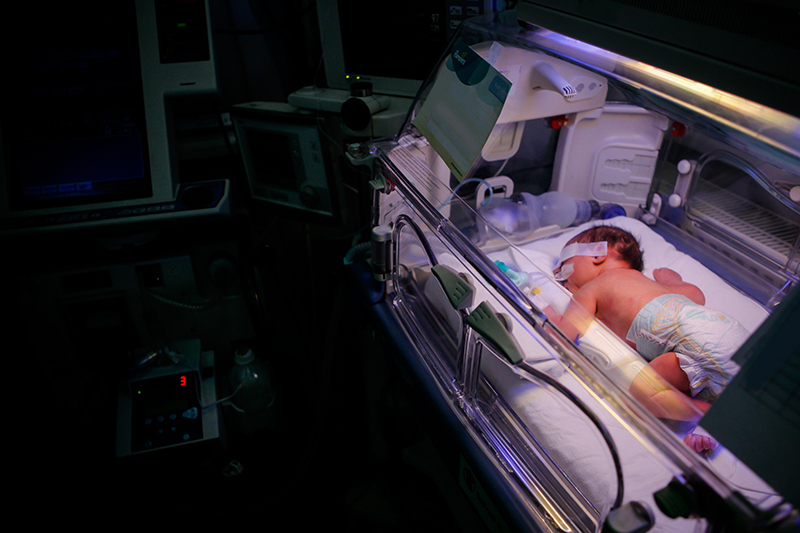
ECMO in use at Children’s of Alabama (file photo)

Almost a decade ago, Nephrology specialists at Children’s of Alabama embarked on a journey to improve outcomes in neonates with severe congenital kidney disease by adapting the Aquadex machine, a small extracorporeal circuit used for adults with heart failure. Traditionally, extracorporeal membrane oxygenation (ECMO) was deemed unsuitable for this population due to perceived nonviability. In 2016, at the family’s request, a baby with severe congenital kidney failure and severe respiratory failure was placed on ECMO to be given a chance at life. The baby also required kidney support therapy (KST) to survive. After receiving a kidney transplant at age 2, the child now goes to school, plays sports, sings and dances. 

Since 2016, of the 31 neonates with congenital kidney failure who were admitted to the Children’s neonatal intensive care unit (NICU), five required ECMO support and KST in the first two weeks of life. In February 2024, Kara Short, MSN, CRNP, CPNP-PC, David Askenazi, M.D., MSPH, and others published a case report in Pediatrics, highlighting the complex treatment of the five babies and the journey to NICU discharge for the four survivors. This study challenges the previous norms and conventions that these babies had no chance at life. 

Kara Short, MSN

Congenital kidney failure poses unique challenges to neonates, affecting not only renal homeostasis but also respiratory integrity. Diagnoses among the five patients in the study included posterior urethral valves, bilateral renal dysplasia and autosomal recessive polycystic kidney disease. Despite gestational age ranging from 35.6 to 37.1 weeks and birth weight from 2,740 grams to 3,140 grams, all five patients received KST by postnatal day seven. Additionally, they were all placed on ECMO within the first nine postnatal days due to severe respiratory distress after being unresponsive to conventional interventions.

Four of the five patients survived and are thriving today. Pulmonary hypertension resolved in each survivor, with three requiring no oxygen support and one needing only nocturnal oxygen. Three survivors underwent successful kidney transplants, while one awaits transplant evaluation. This challenges the traditional notion of reflexively assigning nonviability to neonates with congenital kidney failure and severe pulmonary complications.

This research highlights the significance of ECMO and kidney support therapy in mitigating the adverse effects of pulmonary edema, uremia and electrolyte complications. The use of a filter through the ECMO circuit—to perform continuous venovenous hemodialysis (CVVHD), continuous venovenous hemofiltration (CVVH) with the Aquadex machine, peritoneal dialysis and intermittent hemodialysis—showcases the synergism and need for different approaches to manage these complex cases.

David Askenazi, M.D.

Managing congenital kidney failure requires a multidisciplinary approach involving neonatology, nephrology, surgery and multiple ancillary divisions. “As healthcare providers, we all bring something to the table,” Askenazi said. “The families need clear, concise information so they can understand their options when making treatment decisions. Our job is to develop programs, systems and plans to help those kids have the best chance at life.”

The families of the neonates faced challenging decisions, including the choice of full medical support or palliative care. Despite the complexity and potential extended NICU stay, all five families opted for full medical support. Clear communication, counseling and informed decision-making were instrumental when families made medical decisions about their baby’s care.

The successful outcomes of neonates with congenital kidney failure undergoing ECMO challenge previous assumptions of nonviability. Meticulous ECMO, respiratory, nutritional and kidney support therapies are essential to favorable long-term results. Further investigation is needed to define the optimal strategies to improve outcomes in severe congenital kidney disease cases. “We want to share this information with other programs to let them know that these kids have a chance at life; what we learned in this very small cohort is that these lungs can develop and grow if given a chance,” Short said.

“When thinking about the future, we’re asking ourselves: How can we get the very best technology to care for these babies? How can we help other programs improve so they can better care for their kids? How do we ensure that families are counseled with all viable options in an honest and comprehensive way?” Askenazi said. “We will continue to make progress. We have recently received a grant from the National Institutes of Health (NIH) to partner with industry to make a better device for neonates. We recognize that we must continue to educate our colleagues across the U.S. and the world about what we have learned from these miracle babies.”

Neonatology

Link Between Infant Mortality and Insurance Type

A study shows that the the infant mortality rate is higher for pregnant people insured by Medicaid compared to private insurance.

A new study published in JAMA Network Open suggests that the type of health insurance pregnant people have may impact infant mortality rates. The research, led by Children’s of Alabama neonatologist Colm P. Travers, M.D., found that pregnant people with private health insurance had lower rates of infant deaths compared to those insured by Medicaid.

“The type of health insurance you have has been associated with adverse outcomes in adults and pediatric populations and differences in access to care, including prenatal care,” Travers said. “But few studies showed a difference in infant outcomes, particularly infant mortality rates, when comparing private health insurance to Medicaid public health insurance.”

The study analyzed data on more than 13 million births that occurred in the U.S. from 2017 to 2020. Overall, 46% of the pregnant people in the study had Medicaid insurance, while 54% had private insurance.

The infant mortality rate—defined as the number of deaths in the first year of life per 1,000 live births—was 2.75 deaths per 1,000 live births for those with private insurance compared to 5.30 deaths per 1,000 live births for those covered by Medicaid.

Those with private insurance also had a 43% lower risk of postneonatal mortality (from 28 days to one year after birth); a 10% lower risk of a low-birthweight infant; a 20% lower risk of vaginal breech delivery; and an 8% lower risk of preterm birth. They were 24% more likely to have received first-trimester prenatal care than those with Medicaid.

Travers said the difference may result from the onerous application process for Medicaid, which delays access to early prenatal care. Previous research shows such delays are associated with worse infant health outcomes.[1],[2]

To address this issue, Travers suggested exploring policies around presumed eligibility for pregnant Medicaid beneficiaries. “The idea there would be that once you’re pregnant, you would automatically have access to prenatal care appointments while waiting on Medicaid approval,” he said.

Travers also suggested more help for Medicaid beneficiaries with navigating the healthcare system and scheduling essential prenatal appointments. “Community health workers or healthcare navigators could have a role,” he said. Peer coaches, known as doulas, could also provide valuable emotional and informational support throughout pregnancy and childbirth.

“From a holistic perspective, infants should have good health outcomes, irrespective of their parents’ socioeconomic status,” he said. “Babies shouldn’t die because of the kind of health insurance their mother has.”

[1] Swartz JJ, Hainmueller J, Lawrence D, Rodriguez MI. Expanding prenatal care to unauthorized immigrant women and the effects on infant health. Obstet Gynecol. 2017;130(5):938-945.

[2] 22. Taylor YJ, Liu TL, Howell EA. Insurance differences in preventive care use and adverse birth outcomes among pregnant women in a Medicaid nonexpansion state: a retrospective cohort study. JWomens Health (Larchmt). 2020;29(1):29-37.

Neonatology

The Benefits of Early Breast Milk Fortification

A study led by Ariel Salas, M.D., suggests that early breast milk fortification may boost growth in extremely preterm infants.

A new study led by Children’s of Alabama neonatologist Ariel A. Salas, M.D., suggests that feeding extremely premature infants—those born at 28 weeks of gestation or less—with breast milk fortified with human-derived nutrients shortly after birth could help boost growth and, possibly, cognitive and neurological development.

The first two weeks of life are critical for the growth and development of these neonates. While older infants are fed bovine-fortified breast milk soon after birth, there has long been a reluctance to feed it to these fragile neonates, Salas said.

“Starting fortification early has always been a challenge for clinicians because we always get worried about introducing bovine-derived nutrients too early in infants’ diet,” given the risk of necrotizing enterocolitis, he said. “So, there was a lot of pushback about doing this study.” Using a human-derived product, however, provided reassurance, and the study was approved.

The study randomized 150 extremely preterm infants with a mean birth weight of 795±250 grams and a median gestational age of 26 weeks to receive either fortified breast milk starting on day two after birth or unfortified breast milk. After two weeks, all babies transitioned to standard breast milk with bovine fortification. Eleven infants died during the observation period. The outcome was assessed in 105.

Those receiving the human-derived, fortified breast milk early on gained weight faster from birth to 36 weeks and had lower head circumference-for-age declines than the control group. Head circumference correlates with brain size, which is vital for cognitive and motor development.

Although there was no overall change in fat-free mass, Salas attributes that to the fact that the team could not measure fat mass in the sickest babies, given the invasive method used for measurement.

“The ones that would benefit the most from this early intervention were not being scanned for that outcome,” he said. However, they still showed benefits in terms of body length and head circumference. His team is now testing a non-invasive urine analysis technique to measure body fat.

The study also found no difference in outcomes in babies fed donor milk versus milk from their own mothers, but Salas hypothesizes that less fortification might be needed in maternal milk, which is already higher in protein than donor milk.

Salas said that few feeding interventions have been shown to improve head growth in preemies.
“We might be one of the few studies that show that effect,” he said. His team plans to follow the babies to see if the head circumference growth correlates with cognitive and neurological outcomes at two years of age.

“If the positive effects on length and head circumference translate into potential benefits for neurodevelopment at two years of age, early human milk fortification could be justified” despite its higher cost, he said.

The results were so significant that “we decided to change our practice,” Salas said. Now, all extremely preterm infants at Children’s receive human-derived, protein-fortified donor milk for the first two weeks of life.

“I’ve been doing clinical trials for almost eight years and always wondered how impactful they will be in common practice. And this one, I think, will be very impactful,” Salas said.

Neonatology

Developmental Research Program Making a Difference for Multiple Specialties

Dr. Namasivayam Ambalavanan looks through a microscope in a lab at UAB. Ambalavanan leads the TReNDD research program at Children’s.

Much research in pediatrics focuses on disorders related to specific organ systems such as the brain, liver or kidneys, without an emphasis on the developmental time period that influences how those disorders may unfold in babies and young children. But a 15-year-old program at Children’s of Alabama bridges that gap, connecting investigators from a bevy of disciplines and supporting basic and translational research efforts that have paid off in better outcomes for patients.

Established in 2008, the Translational Research in Normal and Disordered Development (TReNDD) program is run by the Division of Neonatal Research. Namasivayam Ambalavanan, M.D., has been at the helm since its inception, directing TReNDD and neonatal research as well as co-directing the Division of Neonatology at Children’s.

“Our focus is on normal and abnormal development from late fetal life through early childhood—not so much on one disease or organ system, but the entire time period,” Ambalavanan said. “Ours is a highly collaborative network, bringing together people interested in disorders that occur during this time period. It’s relevant to all pediatrics, rather than one subspecialty.”

Faculty members from pediatric specialties such as neonatology, nephrology, pulmonology and critical care participate in TReNDD and typically approach the program with a certain research priority in mind, Ambalavanan explained. Ongoing basic science and clinical research projects, for example, are examining a wide variety of problems affecting neonates and other infants, from ventilator-induced lung injury to acute kidney injury to vitamin D supplementation in preterm babies.

Investigators can also rely on TReNDD facilities to help advance these projects, including core facilities able to run a wide variety of assays and a repository of pediatric biospecimens and model systems.

“Investigators come in with an area of interest, and we help them develop an animal model or assay to meet that interest,” Ambalavanan said. “We also put them in touch with additional people who can help, whether here or off campus.”

Over its history, the TReNDD program has produced research breakthroughs that have benefited children far and wide. Evaluating multiple signaling pathways during lung development, for example, led to key insights about lung impairments in preterm infants and tests determining who’s most vulnerable to certain breathing problems from their first day of life. Other lung research on the microbiome of tracheal aspirates of preterm babies led to the development of probiotics that can benefit lung health.

“I think TReNDD has a vital role because there are many people who want to do pediatric research but don’t know how to get started,” said Ambalavanan. “We’re a way of enabling people to both get their research done and find mentorship in research in the Department of Pediatrics.”

Neonatology

BRAIN Protocol Reduces Brain Bleeds in Very Preterm Babies

Dr. Vivek Shukla is a neonatologist at Children’s of Alabama.

After implementing new measures to protect the brain health of preterm babies, a multidisciplinary team at Children’s of Alabama at the University of Alabama at Birmingham (UAB) saw promising results that suggest a new protocol could prevent brain bleeds in preterm neonates.

More and more infants born before 29 weeks, 6 days are surviving, bringing greater attention to their long-term outcomes, particularly their neurological health. In their first few weeks of life outside the womb, these babies have a high risk of intraventricular hemorrhage (IVH), a type of bleeding in the brain. To reduce the risk of IVH and other brain bleeds, Children’s of Alabama neonatologists Vivek Shukla, M.D., and Maran Ramani, M.D., led a multidisciplinary team from the level IV regional neonatal intensive care unit (NICU) at the University of Alabama at Birmingham (UAB) in the development of a quality-improvement and management program for infants at high risk of IVH or other neurological complications. The team implemented the program, called BRAIN, in April 2018 with the goal of improving long-term neurological outcomes for these babies.

The interventions begin at birth and continue through the first week of life, which is considered the highest-risk period for IVH and other brain bleeds. Components of BRAIN include:

  • Using more sophisticated monitoring such as near-infrared spectroscopy
  • Protocolizing routine medication use within six hours of birth for most of babies—such as initiating IV indomethacin prophylaxis, which can reduce the risk of IVH—and limiting the use of saline boluses and bicarbonate
  • Reducing noise levels by carefully handling equipment and the incubator, minimizing incubator

door opening, reducing the intensity of alarms and promptly responding to them, avoiding conversations at the bedside as much as possible and using a soft voice if needed.

  • Standardizing infant positioning with an elevated head of the bed, avoiding putting the baby flat on the bed and getting help when turning the baby to ensure a neutral head position.

Of 127 babies tracked after implementing the neuroprotective protocol, none experienced a brain bleed or early death in the first week of life compared to 11 out of 99 (11%) prior to the intervention. The results were published in the Journal of Perinatology in July 2022. The work isn’t finished, however, with several additional approaches planned, including using machine learning and artificial intelligence to identify features that predict worse outcomes.

“All the congratulations go to my wonderful team, my wonderful mentors and my excellent colleagues here,” Shukla said. “This is not a single-person show. A lot needs to be done to ensure that preterm infants reach their best potential development.”

Neonatology

Study Identifies Noninvasive Marker for Risk of Acute Kidney Injury

Dr. Christine Stoops is a neonatologist and the leader of the Baby NINJA team at Children’s of Alabama.

The leaders of an innovative project at Children’s of Alabama are looking to add a strategy that could help them identify an acute kidney injury (AKI) earlier.

The Baby Nephrotoxic Injury Negated by Just-in-Time Action, or Baby NINJA, project at Children’s of Alabama was established in 2015 to reduce the use of nephrotoxic medications and monitor neonates for early signs of AKI, which is a common complication in the Neonatal Intensive Care Unit (NICU) because very low birthweight infants are typically exposed to nephrotoxic medications during their stay.  In Baby NINJA’s first 18 months, this first-of-its-kind program—which has now been validated at other major children’s hospitals—led to a 42% drop in nephrotoxic medication exposure and a 78% drop in AKI prevalence, according to Baby NINJA team leader Christine Stoops, D.O., M.P.H. The improvements have continued through 2022.

Stoops, a neonatologist at Children’s, hopes recent research will lead to even better outcomes for Children’s patients. In 2019 and 2020, Stoops worked with investigators at Cincinnati Children’s Hospital to see if a noninvasive urinary marker, neutrophil gelatinase-associated lipocalin (NGAL), could provide an earlier warning sign of AKI. The results of the study, which was funded by the National Institutes of Health, were strong, and Stoops hopes Children’s will ultimately be able to incorporate NGAL into its Baby NINJA program.

NGAL can provide a timely way to predict which babies are at risk of AKI because it accumulates in the kidney tubules and urine after an injury, such as those caused by nephrotoxic medications. Studies in other settings show that NGAL elevations occur a couple of days before changes in serum creatinine, which is the traditional method of screening for AKI. But serum creatinine involves a needle stick and waiting for lab results. By the time babies show high levels of creatinine, they are already far along in the AKI. NGAL, in addition to being an earlier marker of AKI, is noninvasive, requiring just a few drops of urine. “The benefits of a noninvasive marker for kidney injury are a win all around for our babies, their families and the caregivers,” Stoops said.

In the NGAL study, researchers obtained daily creatinine and urine samples from 148 NICU babies for up to seven days after they were exposed to nephrotoxic medication, plus two days after they stopped the medication and/or when their AKI resolved. They identified the positive and negative predictive values of NGAL for AKI, confirming the results with the creatinine test. Stoops hopes the study and others like it will lead to FDA approval of NGAL as a test for AKI so Children’s of Alabama can incorporate its use into their Baby NINJA program and the very tiny babies in the NICU will receive far fewer blood draws.

Neonatology

New Research May Lead to Changes in the Care of Nano-preterm Infants

Researchers at Children’s of Alabama are studying the best ways to care for some of the smallest neonates.

Preliminary research conducted by neonatologists at Children’s of Alabama and the University of Alabama at Birmingham (UAB) could pave the way for new standards of care for extremely preterm babies.

Today, some babies with a gestational age between 22 weeks and 23 weeks, 6 days (previously considered inviable) may survive. However, very little is known about what increases the likelihood of survival and reduces the risk of long-term complications in these babies. In fact, until Children’s of Alabama and UAB neonatologists published a large series showing feasibility and outcome differences in infants who receive invasive and non-invasive respiratory support at birth, there wasn’t even a formal nomenclature for them.

“We coined the term ‘nano-preterm,’” Children’s of Alabama neonatologist Vivek Shukla, M.D., said. He is the lead author of a paper published in the journal JAMA Network that provides some of the first data on the best way to manage these neonates just after birth. UAB neonatologist Charitharth Vivek Lal, M.D., is also the senior author of the paper.

Non-invasive respiratory support at birth—rather than immediate intubation and delivery of lung surfactant—has been shown to improve short-term respiratory outcomes in extremely premature infants, defined as those born at gestational age 24 weeks to 27 weeks, 6 days. But it was assumed that non-invasive respiratory support was not feasible in those born between 22 weeks and 23 weeks, 6 days (now known as nano-preterm infants). The problem was that it had not been studied.

Shukla, Lal and their co-authors reviewed data on 230 nano-preterm infants treated at UAB’s level IV neonatal intensive care unit (NICU) between January 2014 and June 2021 to see if non-invasive respiratory support was best for these babies. Eighty-eight of the infants (whose average weight was 1 pound, 4.4 ounces) received non-invasive respiratory support in the first 10 minutes after birth; the rest (whose average weight was 1 pound, 2.4 ounces) received invasive respiratory support.

There was no difference in the combined primary outcomes of death or the complication of bronchopulmonary dysplasia at 36 weeks postmenstrual age between the two groups, but there was a higher risk of severe brain hemorrhageand deathin those who received non-invasive respiratory support. Shukla and Lal are planning a large, multicenter study to confirm the findings and provide data needed for professional societies to develop guidelines of care for nano-preterm infants.

“This could be practice-changing,” Shukla said. “It is also particularly important data given the increasing number of nano-premature babies who are surviving today.”

Neonatology

Initiative Aims to Send Low Birthweight Babies Home on Human Milk

Dr. Allison Black is a neonatologist at Children’s of Alabama.

Children’s of Alabama neonatologist Allison Black, M.D., is spearheading a project with the Children’s Hospital Neonatal Consortium to improve the percentage of babies in the neonatal intensive care unit (NICU) receiving human milk at 120 days of life or at discharge. More than 30 of the best level IV NICUs throughout the country are participating in the Project HOME (Home On Milk Every time) quality improvement project and sharing best practices to increase their success rates.

Breast milk has a host of benefits for babies, but for very low birthweight (VLBW) babies in the NICU, it can be lifesaving. The unique composition of human milk can reduce morbidity and mortality while conveying long-term cognitive and behavioral benefits.[1] Human milk that comes from an infant’s own mother is ideal because it includes antibodies to fight infection and a composition specific for each baby. But even donated breast milk can be beneficial. Despite these benefits, only about half of VLBW infants throughout the U.S. are discharged home on human milk. That rate is even lower among babies born in the South.[2]

The Project HOME initiative is built on research showing that a multidisciplinary approach is the most successful way to increase rates of human-milk feeding. “It’s not just one team member who makes a difference,” Black said. “Every caretaker who encounters patients and their families should provide the same messaging and education about the importance of human-milk feeding. We need to ensure that every staff member has the resources and knowledge to give this support to our families.” To that end, Black is assembling a team of NICU providers including bedside nurses, lactation consultants, speech and occupational therapists, nursing educators and even a mother of a NICU baby to identify and address barriers to providing the support needed for human-milk feeding.

The message is that human milk is a medicine that only you can provide for your baby.

One major barrier to getting mothers’ milk to babies at Children’s of Alabama is that the babies are born at hospitals throughout the state, some more than 100 miles away, then moved to Children’s via critical care transport teams. “We don’t see the mother until she’s discharged,” Black said, “and many times she’s too ill to speak by phone.” Yet studies find that expressing milk within the first six to 12 hours after delivery is associated with the highest success rates for initiating human-milk feedings.

Black says the transfer challenge requires them to think outside the box, such as including referring centers and the transport team in efforts to provide education about human-milk feeding before mothers arrive at Children’s.

“Another huge barrier is the physical and emotional distance a mother feels when her child has to be transferred to another facility,” Black said. This separation combined with the fact that many mothers are ill themselves can make it quite challenging for mothers to provide milk. Other barriers include access to electric pumps, support from someone who is knowledgeable about the benefits of human milk and a family and community support system. “These challenges continue as mothers have huge amounts of physical and emotional stress when their babies have prolonged hospitalizations, not to mention the different logistical challenges for mothers providing milk when they are back in the workplace and dealing with life outside of the NICU,” she said.

But Black sees numerous opportunities to overcome these obstacles, including educating mothers while they’re still in the hospital; outreach to high-referral centers to begin the education pre-delivery; giving brochures to families as early as possible; and forming a community support system.

While Black says the percentage of pre-term babies at Children’s who are still on human milk at 120 days or discharge is higher than the national average, she believes there is still room for improvement. She’d like to see the rate increased by at least 10 percent and is confident they’ll meet that goal. “All members of our team are passionate about working together to improve the care of our patients.”


[1] Vohr BR, Poindexter BB, Dusick AM, et al. Beneficial effects of breast milk in the neonatal intensive care unit on the developmental outcome of extremely low birth weight infants at 18 months of age. Pediatrics. 2006;118(1):e115-e123. doi:10.1542/peds.2005-2382

[2] Parker MG, Greenberg LT, Edwards EM, Ehret D, Belfort MB, Horbar JD. National Trends in the Provision of Human Milk at Hospital Discharge Among Very Low-Birth-Weight Infants. JAMA Pediatr. 2019;173(10):961–968. doi:10.1001/jamapediatrics.2019.2645

Inside Pediatrics, Neonatology

Neonatal Consortium Advances Care for Patients with Rare Diagnoses

The Children’s Hospitals Neonatal Consortium (CHNC) works to improve patient outcomes. 

If you’re trying to make quality improvements, a good place to start is in the past. Historical data can hold the key to understanding what works, what doesn’t and what holds promise. But searching for answers in a small sample can be like panning for gold in a puddle. You need a stream of data to draw out the nuggets.

Prior to 2006, Children’s of Alabama was similar to most freestanding Children’s Hospitals: treating some of the sickest patients with unique conditions that didn’t always have textbook answers. Children’s neonatologist Tim Coghill, MD, was in the same position as his peers across North America; they knew there could be knowledge in numbers. With colleagues at 16 other Children’s Hospitals, he co-founded the Children’s Hospitals Neonatal Consortium (CHNC), an international group of level IV neonatal intensive care units (NICUs) that work together to improve patient outcomes. 

Now in its 16th year, the group consists of more than 40 top-rated Children’s Hospitals in the U.S. and Canada. All contribute to the Children’s Hospitals Neonatal Database, which allows them to compare a larger number of outcomes for complex patients and rare diagnoses and find the “gold” in their shared data.

Children’s neonatologist Allison Black, MD observes that, “We receive patients with rare diagnoses that you may only take care of once every 10 years. When you can pool the data on these patients with other centers, you can see if certain treatments and characteristics are associated with better outcomes and help formulate the best practices.”

One of the primary ways the CHNC establishes those best practices is through Collaborative Initiatives for Quality Improvement (CIQI) projects, such as STEPP-IN, a program aimed at improving neonatal surgical outcomes. The STEPP-IN initiative developed a standardized handoff and workflow process for patients being transported to and from the operating room. Through this process, the stability of infants during the time surrounding surgical procedures was greatly improved. Another quality improvement initiative, Erase Post-Op Pain, included an algorithm for managing and preventing pain after surgery in neonates. After initiation of these algorithms, the frequence of uncontrolled post-operative pain episodes following procedures decreased to less than 6% at Children’s of Alabama, a best in class outcome.  The CIQI projects often include clinicians, caregivers and specialists from various departments and disciplines throughout the hospital. Through the collaborations in these initiatives, there have been other permanent interdisciplinary teams established, such as the neurodevelopment care team, palliative care and infant feeding teams at Children’s. “Our involvement with the CHNC has helped foster a culture of collaboration, and this has helped us strive for a more well-rounded, multidisciplinary model when caring for our patients and supporting their families,” Black said.

Children’s involvement in the CHNC has provided the opportunity to help others seeking to improve care and create a collaborative environment in their units, as well. Hannah Hightower, M.D., presented at a national seminar highlighting her success with improving communications during high-stakes situations through a project involving debriefing after code events. In the past year and a half, Coghill and Black participated in two national workshops providing education to pediatric providers on difficult discussions and end-of-life decision making with families in the NICU. All three of these physicians have contributed to published manuscripts in the past year and have more in production through their involvement and collaborations in the CHNC. 

Outside of the QI projects, CHNC members also participate in an ever-expanding list of focus groups. Focus groups Children’s of Alabama participates in include:

  • Resuscitation
  • Discharge planning
  • Gastroschisis
  • Palliative Care and Ethics (PACE)
  • Neurosurgery
  • Micrognathia
  • Kidney and Urology
  • Necrotizing Enterocolitis
  • Genomics

These focus groups, said Black, “allow us to work together to develop the best practices for specific diseases.”  The greatest benefit of the CHNC is that patients get access to care that is constantly improving. “Through our involvement with the CHNC, we are lucky to be on the forefront of deciding how to best care for complex patients,” said Black. “We are constantly striving to gain knowledge and improve the care of our unique patient population, and in turn, our patients all benefit from this collective knowledge.”

Inside Pediatrics, Neonatology

Quality Improvement Significantly Improves Outcomes for the Tiniest Babies

Left, Colm Travers, M.D., and right, C. Vivek Lal, M.D., are neonatologists at Children's of Alabama and faculty in the Division of Neonatology in the University of Alabama at Birmingham Department of Pediatrics.

Left, Colm Travers, M.D., and right, C. Vivek Lal, M.D., are neonatologists at Children’s of Alabama and faculty in the Division of Neonatology in the University of Alabama at Birmingham Department of Pediatrics.

In 2014, when neonatologists C. Vivek Lal, M.D., and Colm Travers, M.D., began digging into the data on extremely preterm infants (those born before 28 weeks), they found that Children’s of Alabama and the University of Alabama at Birmingham had some of the best outcomes in the country. But there was still room for improvement.

Infants born so early are at high risk of death and intracranial hemorrhage, or brain bleeds, the most devastating outcomes in the first week after birth.

“We saw a tremendous opportunity to improve mortality and other outcomes,” said Dr. Lal. “We saw this as a chance to fine-tune our practices, and not only be the best in outcomes, but also create a narrative for others to follow.”

“Our goal was to reduce the rates of brain bleeds or deaths in the first week,” said Dr. Travers. “There’s some evidence that non-adherence to certain practices and a lack of standardization can lead to worse outcomes in the smallest babies. We felt that by standardizing care to the best available evidence we could improve those outcomes.”

That’s exactly what they did with the Golden Week™ program, a multidisciplinary, evidence-based, standardized quality-improvement plan to improve the care and outcomes of the micro-preemies. It incorporates a variety of changes in how care is provided, with detailed protocols for the first hour of life, the first 72 hours, and days four to seven.

When the initiative began in 2016, the rate of severe brain bleeds or death was 27.4 percent. Today it’s less than 10 percent and continuing to fall.

The team involves neonatologists and neonatal fellows, as well as respiratory therapists, nurses, residents, and other stakeholders who care for the tiny babies at the bedside.

The initiative began with a comprehensive literature search of every clinical trial or observational study related to mortality or brain bleeds in these babies, identifying successful interventions and then integrating them into the care pathway.

These include ensuring that the mother receives corticosteroids before delivery to help the fetus mature; delayed cord clamping after delivery; putting the baby into a certain position once they’re admitted; initiating evidence-based order sets; and limiting fluid and bicarbonate boluses and the use of inotrope drugs as well as blood transfusions.

Some of the changes were tiny, but with big payoffs, including how the nurses change the babies’ diapers. “We make sure they don’t move the head too much or lift the body too much. Anything that might cause a change in the blood flow going to the brain,” Dr. Travers said. Overall, the team made 24 changes in the care provided during the first week.

The key was not one change, but the changes as a whole, said Dr. Travers. “It was when we put all of these small changes together that we saw the impact,” he said.

The results are being published in the journal Pediatrics this spring.