Browsing Category

Inside Pediatrics

Neonatology

Gut fungi can predict BPD, study shows

Research shows that the gut composition of fungi in the second week of life predicts the later development of BPD.

By Jeff Hansen (UAB)

Extremely preterm newborns who weigh less than 3.3 pounds have immature lungs that often require high levels of ventilation oxygen in the hospital. This contributes to the chronic lung disease bronchopulmonary dysplasia, or BPD, the most common cause of death for these tiny infants. BPD exacts a devastating toll on the immature lung.

In one of the most extensive studies of the microorganisms in the intestines of very preterm infants, University of Alabama at Birmingham (UAB) and University of Tennessee Health Science Center researchers show that the gut composition of fungi in the second week of life predicts the later development of BPD, weeks to months before diagnosis of that disease. They analyzed gut fungi in the first true non-meconium stool produced before two weeks of life and found that the fungal intestinal microbiome—known as the mycobiome—of infants who later developed BPD differed in community diversity, composition and interconnectivity from the infants who never got BPD, as measured by the most up-to-date bioinformatic techniques. The researchers did not find significant differences in the bacterial microbiome in those first true stools.

To show causality, researchers transferred samples of the first true stool that predicts BPD or the first true stool of newborns who did not get BPD into female mice to give them a pseudo-humanized gut microflora. In a mouse model of BPD, newborn pups from those BPD dams showed an increased in the severity of lung injury compared with newborn pups from the no-BPD dams. In loss-of-function experiments, when the female mice with the BPD-predictive stool transplant were treated with an antifungal agent before birth, that inhibition of perinatal fungal colonization reduced lung injury in the newborn pups. In contrast, a gain-of-function experiment, where the perinatal fungal colonization of dams was augmented with a species of Candida fungus common in mice, amplified BPD severity in the newborn pups.
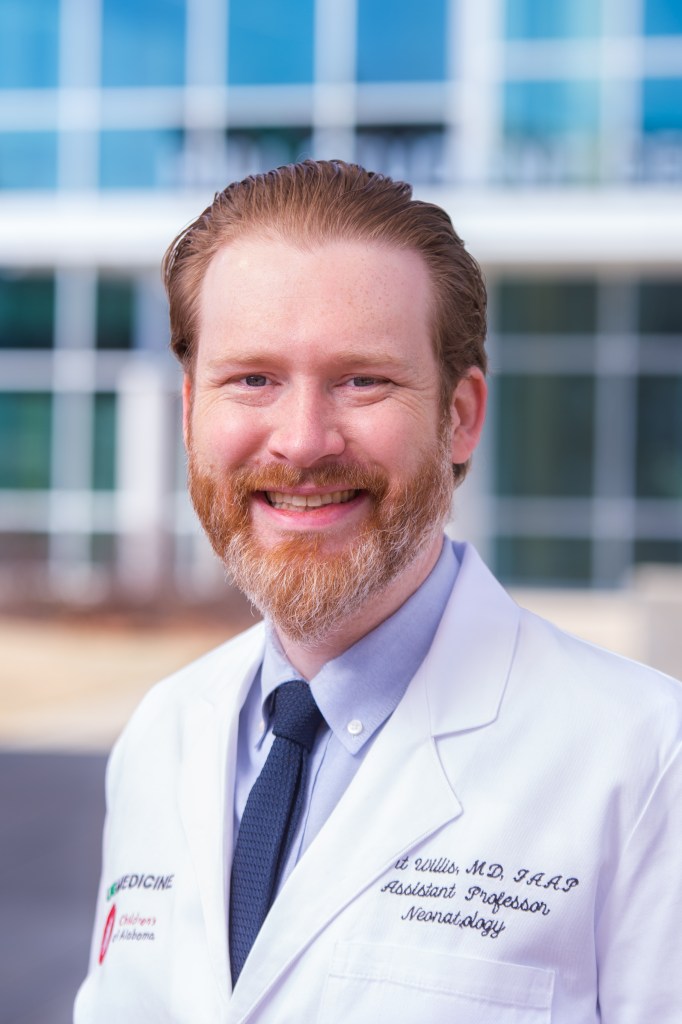
Kent Willis, M.D.

“These findings demonstrate that features of the initial intestinal fungal microbiome are associated with the later development of BPD in premature neonates and exert a microbiome-driven effect that is transferable and modifiable in mouse models,” said Children’s of Alabama neonatologist Kent Willis, M.D., who’s also an assistant professor in the UAB Department of Pediatrics Division of Neonatology. “This suggests causality, and it suggests that the gut fungi may represent a therapeutic target in newborn lung disease.”

Willis and Ajay J. Talati, M.D., University of Tennessee Health Science Center, Memphis, Tennessee, co-led the study, published in Microbiome.

“Collectively, our analyses demonstrate that the composition of the intestinal mycobiome of infants who did not develop BPD was more uniform,” Willis said. “In contrast, those who eventually developed BPD had more disparate mycobiomes. This suggests that a particular pattern of mycobiome development may be necessary to impart resistance to the development of BPD, and failure to do so in various ways is associated with disease development.”

The first defecations of newborn infants are meconium, composed from materials ingested while in the uterus. The first true stools in the second week, the ones analyzed by Willis and Talati, are digested milk. It is known, Willis and Talati say, that fungi in adults are vital members of the human microbiota; but compared to bacteria, their non-pathological and non-parasitic functions are still poorly understood, especially in newborns.

This prospective observational cohort study included newborn stool samples collected over six years from 2017-2020 in Memphis and 2021-2022 in Birmingham. The 64 very-preterm infants in the study who did not develop BPD had an average birthweight of 2.5 pounds, and the 38 very-preterm infants who did develop BPD had an average birthweight of 1.6 pounds. Only one of the 64 no-BPD infants in the study died, while six of the 38 BPD infants died.

Neonatology

A closer look at the effects of chorioamnionitis on premature babies

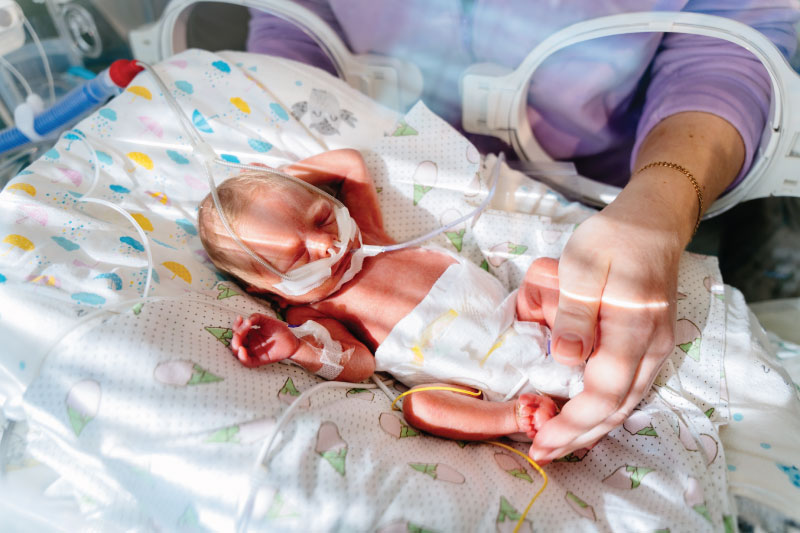
The majority of preterm births stem from chorioamnionitis. (Stock photo)

The vast majority of preterm births—especially “micro-preemies” born at 22 or 23 weeks’ gestation—stem from a single cause: chorioamnionitis, an inflammation of the placenta and membranes surrounding the fetus. But Children’s of Alabama neonatologist Viral Jain, M.D., is on a mission to determine why this insidious condition occurs, the ways it affects babies’ health, and how to stop it.

Occurring in an estimated 1% to 5% of births in the United States, chorioamnionitis—often shortened to chorio—can be hard to spot. It’s typically diagnosed using clinical signs of inflammation such as fever or elevated heart rates in either the mother or the baby. But chorio often eludes clinical diagnosis, silently causing damage to the placenta and triggering preterm birth, says Jain, also an assistant professor in the Division of Neonatology at the University of Alabama at Birmingham (UAB).

Viral Jain, M.D.

“It’s a huge reason why neonatology exists, as such,” he explained. “It’s the body’s reaction when there’s inflammation to deliver the baby preterm, and all the complications that come with a preterm baby are due to chorio. In addition, the inflammation also causes direct damage to the developing organs of the baby.”

Some of the extensive research conducted on chorio has focused on its causes, which may include infection, environmental chemicals, smoking and bleeding. But scientists still have a poor understanding of why it happens, Jain notes, as well as how to catch it early enough to stop premature delivery.

Much of Jain’s research has delved into chorio’s potential health implications for babies once they’re born—and the effects can be devastating. One of his studies shows that the incidence of cerebral palsy is far higher in infants born when chorio progresses to such a severe extent it becomes funisitis, or inflammation of the umbilical cord. Jain’s findings have been somewhat controversial, he acknowledges, since cerebral palsy is already known to affect more preterm infants than those born after full-term pregnancies.

“We chose the most severe chorio babies for the study to clearly show that it affects cerebral palsy development,” Jain said. “We found that it’s about 50-50—so half the risk of cerebral palsy was from being born pre-term due to chorio, and half was the direct injury coming from inflammation to the developing brain.”

To help predict the cerebral palsy risk of these infants while they’re still in the neonatal intensive care unit (NICU)—when early intervention can more easily be planned—Jain’s research has also used MRI to look for specific markers in the brain suggesting a high risk of the disabling condition.

“We showed that chorioamnionitis insult, which started at birth, continues in these babies and that we can see those changes in the MRI and that they lead to cerebral palsy,” he said. “This means you can start early intervention on those babies to capture or reduce some of the damage.”

Another of Jain’s studies suggests that infants born early due to chorio have chronic lung damage. “It creates an immune cell dysfunction in the lung that there is continuous damage happening,” he explained. In addition to requiring longer ventilator and oxygen treatment, these babies “end up developing what we call BPD, or bronchopulmonary dysplasia, which is neonatal chronic lung disease.”

Ultimately, Jain says, his research—which has been funded by the American Heart Association and National Institutes of Health—seeks to learn how chorio propagates so doctors can impede its damage.

“The goal is to find out what treatment we can give so when it’s just mild we can stop the progression and it won’t become full-blown chorio and end up delivering the baby preterm,” he said. “If we can do that, we can prevent a lot of organ damage to the lung or brain.”  

For more information on Jain’s work on chorio, listen to this episode of the Children’s of Alabama PedsCast podcast.

Neonatology

Using mitochondrial genetics to predict BPD

Researchers at Children’s and UAB are exploring how mitochondrial function may help predict BPD risk.

Bronchopulmonary dysplasia (BPD), a chronic lung condition affecting some extremely preterm infants, continues to be a significant clinical challenge in neonatology. While often lifesaving, supplemental oxygen can be a key contributor to long-term pulmonary complications in this vulnerable population. At Children’s of Alabama and the University of Alabama at Birmingham (UAB), researchers are exploring how mitochondrial function may hold the key to understanding and preventing BPD.

Jegen Kandasamy, M.D., an associate professor in the Division of Neonatology at UAB, leads a multidisciplinary team supported by a research grant dedicated to studying mitochondrial dysfunction in BPD. The research centers on individual differences in how mitochondrial DNA (mtDNA) haplogroups—genetic variations inherited maternally and varying by ethnicity—may influence an infant’s susceptibility to lung injury from oxygen exposure, particularly hyperoxia.

“Hyperoxia is a double-edged sword,” Kandasamy said. “It’s essential for survival, yet it introduces oxidative stress that preterm lungs are poorly equipped to handle. Our research is aimed at understanding how mitochondrial genetics impact that response.”

Using collected blood samples and clinical data from preterm infants, Kandasamy’s team is working to identify mtDNA haplogroups associated with higher BPD risk. The goal is to develop precise, genetically informed risk profiles that allow for early intervention. Hopefully, this will improve outcomes while addressing racial disparities in BPD prevalence and severity.

An especially promising area of research is platelet bioenergetics. By measuring how platelets utilize mitochondrial energy, the researchers hope to identify specific biomarkers that reflect systemic mitochondrial health and may help predict BPD risk. “Platelets are easy to access and give us a real-time snapshot of mitochondrial function without invasive procedures,” Kandasamy noted.

The team is also studying mitophagy, the elimination of damaged mitochondria through autophagy, and its role in lung development. Emerging evidence suggests that impaired mitophagy contributes to persistent mitochondrial dysfunction, exacerbating lung injury in preterm infants. As a result of this new evidence, the group is also evaluating the potential of thyroid hormone supplementation as a therapeutic strategy to restore mitochondrial function and mitigate lung damage.

By integrating clinical data with mouse models, the UAB team is uniquely positioned to investigate both the mechanistic underpinnings of BPD and potential interventions. The collaborative effort spans neonatology, mitochondrial biology and pediatric pulmonology, creating a comprehensive research environment.

“Our ultimate aim is to shift the paradigm from reactive to predictive personalized neonatal care,” Kandasamy said. “Understanding how mitochondrial genetics intersect with environmental exposures can help us identify at-risk infants earlier and intervene more effectively.”

Endocrinology

New ways to manage high triglycerides in children

A Children’s of Alabama endocrinologist helped develop a framework and a tool to help manage high triglycerides in children.

In recent years, endocrinologists at Children’s of Alabama have seen a drastic increase in the number of young patients with severe hypertriglyceridemia—extremely elevated triglyceride levels that sometimes exceed 1,000 mg/dL, posing serious health risks if left untreated. This growing trend reflects a broader national concern: hypertriglyceridemia affects an estimated 10-20% of youth in the U.S., with prevalence reaching as high as 40–60% among children and adolescents with obesity.

But for many pediatricians and nurse practitioners, figuring out the best approach to manage this condition can be confusing. Recognizing the need for better clarity in diagnosing and managing these children and adolescents, the Division of Pediatric Endocrinology at Children’s of Alabama and the University of Alabama at Birmingham (UAB) spearheaded a pair of major research efforts.

Ambika Ashraf, M.D., director of the division, teamed up with mentee Charles Gagnon, M.D., now a pediatric resident at Boston Children’s Hospital, to write a much-needed review in Current Atherosclerosis Reports that aims to provide a clear, practical framework clinicians can use in everyday care. The article breaks down the various causes of high triglycerides in children, highlights when to worry, and outlines treatment strategies that range from lifestyle changes to medications. It also explains when clinicians should consider emerging therapies and what to look for to prevent serious complications such as pancreatitis.

Ambika Ashraf, M.D.

“This work reflects our commitment to bridging academic knowledge with clinical practice, making a difference where it matters most: at the bedside,” said Ashraf, also the Ralph Frohsin Endowed Chair in Pediatric Endocrinology at UAB. “With a very high percentage of children affected by obesity, we are seeing a large number of pediatric patients with elevated triglyceride levels in our clinics.”

Ashraf also partnered with leading experts across North America to develop the first validated scoring tool in the region for familial chylomicronemia syndrome (FCS), a rare genetic disorder often implicated in severe hypertriglyceridemia. But Ashraf and her colleagues recognize that that some of these children may instead have an acquired condition called multifactorial chylomicronemia syndrome (MCS), which requires a different treatment approach.

The new scoring tool, known as the North American FCS Score (NAFCS), is designed to help providers distinguish between FCS and MCS in patients aged 1 year or older with severe hypertriglyceridemia. It incorporates factors such as body mass index (BMI), history of pancreatitis, triglyceride levels, apolipoprotein B levels and the presence of secondary contributors such as diabetes, medications or hormonal disorders.

The results of this collaborative effort were recently published in the Journal of Clinical Lipidology, marking a milestone in pediatric lipid care. The NAFCS score is not only a practical tool for frontline clinicians, Ashraf says, but also a prime example of how academic expertise can translate into improved patient outcomes. In addition, it may assist in confirming a clinical diagnosis of FCS in cases with inconclusive genetic testing.

“This has been a growing need,” Ashraf said. “Everyone on the panel who helped develop this tool thought this will help shape the current and future management of patients with FCS in the United States & Canada.” 

The Division of Pediatric Endocrinology’s involvement in this research highlights UAB’s national role in shaping pediatric lipid care, says Ashraf, who also serves as the director of the Pediatric Lipid Clinic at Children’s. In addition, faculty members actively participate in national working groups dedicated to lipid disorders, rare genetic diseases and pediatric obesity.

“We hope this new tool empowers more accurate diagnoses and more personalized, effective care for children struggling with complex lipid disorders,” Ashraf said. “For families, it offers hope, and for clinicians, it offers clarity.”

To learn more about the FCS score, visit https://www.lipid.org/nla/north-american-familial-chylomicronemia-calculator-or-nafcs-scoring-tool.

Cardiology

Law appointed division director of pediatric cardiology

Mark Law, M.D., is the new director of the Division of Pediatric Cardiology at Children’s of Alabama and UAB.

By Heather Watts (UAB)

The University of Alabama at Birmingham (UAB) Department of Pediatrics announces with great pleasure and gratitude the appointment of Mark Law, M.D., professor in the Department of Pediatrics, to the permanent position of director of the Division of Pediatric Cardiology at UAB and Children’s of Alabama. Since stepping into the interim role in November 2024, Law has made substantive changes that address current needs as well as laying a strong foundation for continued growth and success within the division and the Pediatric and Congenital Heart Center of Alabama at Children’s of Alabama. Law brings his remarkable thoughtfulness paired with a blend of clinical excellence, research innovation and mentorship to this leadership role.

“In a twist of irony, when I interviewed Dr. Law to join us in 2008, he confidently declared that he had no interest in becoming a division director,” said Yung Lau, M.D., professor and chair of the Department of Pediatrics and Law’s predecessor as division director. “Fortunately, his thinking evolved. When the intersection of his unique talents and the Heart Center’s greatest needs became clear, he answered the call.”

Over the years, Law has progressed through the academic ranks—from assistant professor to his current role as professor of pediatrics. He also serves as medical director of Adult Congenital Interventional Cardiology at UAB Medicine, with a secondary appointment in the Division of Cardiovascular Disease within the Department of Medicine.

Widely respected as a leader in pediatric and interventional cardiology, as well as adult congenital heart disease, Law has authored or co-authored more than 70 peer-reviewed articles and book chapters. He has also mentored more than 20 post-doctoral fellows and junior faculty, contributing meaningfully to the future of academic medicine.

In recognition of his many accomplishments and unwavering dedication, Law was recently appointed to the prestigious Lionel M. Bargeron Endowed Chair in Pediatric Cardiology by the Board of Trustees of the University of Alabama—a most fitting appointment given the pioneering contributions Bargeron made to the field of heart catheterization when it was in its infancy.

Cardiology

Children’s of Alabama’s interstage home monitoring program growing

Brittany Abercrombie, NP, and Alan Brock, M.D., discuss the progress of a patient in the Hearts at Home program.

As the reputation of the Children’s of Alabama Pediatric and Congenital Heart Center of Alabama has grown, so has the success of its programs. Case in point—Hearts at Home, an interstage home monitoring program for any patient with single ventricle physiology who has undergone their first palliation procedure. In the last five years, the program has seen steady growth in the number of these patients, and leaders say the center’s reputation is among the reasons why.

“I think as a heart center in general, we’ve just had an influx of patients,” said Brittney Abercrombie, a nurse practitioner and the coordinator of Hearts at Home. “And so by default, that means that we are having more interstage patients.”

When Abercrombie moved into her role five years ago, Hearts at Home was caring for six to eight patients at a time. Now, she says they typically have about 13. Yearly, the program follows as many as 30, compared with 23-25 when she began. In the last couple of years, they’ve attracted more patients from outside Alabama, including children from Georgia, Tennessee and the Pensacola, Florida, area. Some of the program’s patients chose Children’s over other options in the region.

“I think they recognize that our outcomes here are some of the best in the Southeast,” said Alan Brock, M.D., the program’s medical coordinator. “And when they have the opportunity to look around and pick which program they want, I think patients are choosing us.”

As a result of the program’s success, hypoplastic left heart syndrome—a condition that brings many patients to the program—has become one of the most common forms of single ventricle congenital heart disease the hospital treats, Brock added. “I think it’s because we’re getting better at what we do and we’re saving a lot more lives now,” he said. “That is part of the reason that there are more patients coming into our program.”

What is Hearts at Home?

Through the Hearts at Home program, the families of patients with hypoplastic left heart syndrome and other forms of single ventricle congenital heart disease have access to education and technology that helps them to monitor and track their child’s heart health at home during the period between their first and second stages of palliation—procedures designed to repair their congenital heart defect. This time is tenuous for the child and often stressful for the parents, requiring a great deal of medical management, including monitoring, medications, adhering to strict feeding regimens, checking vital signs and having emergency access to equipment. “I think especially for these first-time parents, they don’t know what’s normal and what’s not,” Abercrombie said. “They’re not only learning to parent, but they’re learning how to parent a medically fragile child, so I think that’s a big challenge for them.”

There’s also the threat of morbidity, which is what led to the creation of interstage monitoring programs. The effort began in 2008 with the formation of the National Pediatric Cardiology Quality Improvement Collaborative (NPC-QIC). Since then, interstage monitoring programs across the country have succeeded tremendously, dropping the interstage mortality rate by more than 40%, Brock said.

The programs are effective because of their focus on education, data and communication. The work begins before a family even leaves the hospital. While there, they go through extensive training to help them understand their child’s condition, how to manage it and the warning signs that might arise. Once they’re home, they track all of their child’s vitals—specifically heart rate, oxygen and saturations—through an app called Locus Health. This data is accessible by the patient’s care team, giving them a look at the patient’s trends and helping them to quickly identify any problems. “It helps us see the whole picture while they’re at home,” Abercrombie said. If any issues do arise, the family can connect with the care team via messages through the app, and providers can even use the app for telehealth appointments, if necessary.

In one case at Children’s, monitoring may have saved a child’s life. Abercrombie says the team detected a change in heart rate and some feeding intolerance, which, combined with the patient’s trends, indicated they needed medical attention. The team called the mom, got the patient in for a visit and prevented a medication overdose. “If we didn’t have [the monitoring], there’s a good chance that could have ended up in a mortality,” Abercrombie said.

The team

The Hearts at Home team includes, in addition to Abercrombie and Brock, cardiologists who see most of the interstage patients, a nutritionist who specializes in cardiovascular disease, a social worker and speech therapists. Nurse practitioners or intensivists are available to answer parents’ questions 24 hours a day, which can be reassuring. “It is just a very small group of people that are caring for these patients day in and day out, along with the family,” Abercrombie said. “And so I think that they feel a lot of comfort and confidence in knowing that there’s someone there to talk with them and help them throughout the day.”

This frequent communication can lead to close relationships between the parents and the care team—so much that when the child eventually “graduates” from the program (after having their second palliation procedure) and no longer has the same level of access to the team, the achievement is often bittersweet.

“It’s a good thing,” Abercrombie explains to the parents. “It means your baby has a much more stable heart. You shouldn’t need us as much. They can do a lot more normal baby things.”

“But [the parents] do have a little bit of sadness about losing kind of that access,” she added.

When a new patient enters the program, the team contacts their pediatrician to share information about the patient’s condition and explain how the program works and what to expect. They also reach to local EMS in the patient’s community to inform them that a congenital heart disease patient lives nearby so they’ll be prepared in case there’s ever an emergency.

Going forward, the program may expand to older patients. Brock hopes to focus future efforts on neurodevelopmental outcomes and “how these kids develop throughout the course of their single ventricle life,” he said. Nationally, the NPC-QIC recently merged with the Fontan Outcomes Network to form Single Ventricle One (SV-ONE) in an effort to follow these patients beyond their palliation procedures into their teens and beyond.

Behavioral Health

Children’s of Alabama offering mental health training for school personnel

School personnel are often the first to recognize a student’s mental health needs. (Stock photo)

As the mental health crisis continues across the country, children and teens are in greater need of mental health services than ever before. In many cases, the first person to recognize the child’s need is a teacher. But the teacher may not always know how to help. That’s why Children’s of Alabama recently expanded one of its mental health programs to offer training for school personnel.

The program, Pediatric Access to Telemental Health Services (PATHS), has been around since 2019. Children’s established it—with support and funding from the Alabama Department of Mental Health (ADMH)—in response to the need for more mental health services, especially in rural areas. The initial goal was to help primary care providers understand how to help patients who present with mental health concerns. Through the program, Children’s mental health professionals offer consults or education for providers or even telehealth appointments for their patients.

PATHS has since expanded into urban areas, and now, thanks to the extension of a Health Resources and Services Administration (HRSA) grant, Children’s is offering support to school systems across the state.

“This is an important step for our program,” PATHS director Margo Harwell, LICSW, PIP, said. “Because they see students daily, school personnel play a critical role in identifying early signs of mental health concerns in students.”

How it Works

When the PATHS team decided to expand their services to schools, they immediately realized their assistance would differ from what they offer medical centers. Providing on-the-spot consulting for teachers and administrators wouldn’t work, nor would telemedicine appointments. What they could provide, however, was education.

They began their efforts in the summer of 2024, meeting with mental health coordinators in school systems across Alabama to discuss what topics might need to be covered in their respective districts. Once those needs were identified, PATHS leaders set up in-person, virtual or hybrid training sessions.

Margo Harwell, LICSW, PIP

“We have found that every school system is unique and has different training needs,” Harwell said. “For example, if schools mention that they have had an increased number of students experiencing anxiety, we can partner with that school to provide a targeted training that is focused on strategies to help students manage their anxiety within the school environment.”

PATHS leaders have offered training on that topic and others, including behavior management, depression, trauma and bullying. They’ve also taught educators how to identify the red flags of mental health concerns among students.

The focus is, of course, on how to help students. But educators’ mental health needs are crucial, too. To help with that, the PATHS team offers sessions on self-care. “If a teacher or counselor isn’t caring for themselves, it becomes much harder to have the patience and emotional capacity needed to identify and support a child facing mental health challenges or coming from a background of trauma—especially when those students might be exhibiting challenging behaviors,” Harwell said. By practicing better self-care, school personnel may be more likely to recognize that the child who’s acting out may actually be in need of support, she added.

The sessions, whatever the topic, are opportunities for discussion among school staff and Children’s mental health experts. “Training sessions include conversations about intervention strategies and guidance on how to help and support students within the school setting who may be experiencing mental health challenges,” Harwell said. Ultimately, they hope to help educators understand how to handle these issues as they arise.

Right now, the team is offering training sessions to teachers and counselors. Eventually, they may offer them to support staff or administrators, who often develop close relationships with students, Harwell says. “Think about bus drivers, for example. In many cases, they’re the first person to see a student each morning,” she pointed out. “Some students have the same bus driver for years, so they get to know them and may share their feelings or thoughts. This gives them insight into the child’s concerns or emotional state.”

More on the HRSA grant

The PATHS program exists because of a HRSA grant awarded to ADMH. The grant is a Pediatric Mental Health Care Access Program (PMHCA) grant, which Children’s helped write. The hospital receives the majority of the money awarded through the grant, which was originally approved in 2018, then extended in 2023. “These grants have been monumental to the building of this program and really sustaining it thus far,” Harwell said.

With the initial grant, Children’s started PATHS and began enrolling primary care practices. Today, 128 practices are enrolled. “The funding has been instrumental in being able to do that,” Harwell added.

The partnership with ADMH also has been vital. The organization offers guidance and facilitates collaboration with the other states and organizations through the HRSA network of PMHCA awardees. “This continually challenges us to look at how we’re doing, what we do and how we can continue to improve our program and our processes.”

The next step

The program’s next improvement may involve expansion into rural emergency departments (EDs). PATHS leaders already have initiated conversations with a few around Alabama. Harwell says the PATHS team hopes to offer access to their consultation lines to extend support if the ED has a child who arrives with mental health concerns. The goal, Harwell says, is not to intervene in situations of acute crisis—that is outside the role of PATHS. “But if a child is in a rural ED and needs to stay for a few days due to, say, lack of available beds, and there are concerns about mild to moderate mental health issues, we want to offer consultation services to support that child’s care,” Harwell said.

The impact

As the PATHS team keeps an eye toward the future, they’re also aware of how far they’ve come. Mental health care is difficult in Alabama—the non-profit Mental Health America (MHA) in 2019, the year PATHS was founded, ranked the state 7th in prevalence of mental illness among youth and 45th in youth access to care. By 2024, when MHA released its most recent rankings, Alabama had dropped to 14th in youth prevalence of mental illness and risen to 36th in youth access to care. Multiple factors have played a role in the improvements, and Harwell says PATHS is one. “Our state has really taken steps forward,” she said. “I happen to believe the PATHS program has helped with that.”

Hematology and Oncology

A New Chapter in Neurofibromatosis Care

Rebecca Brown, M.D., Ph.D., (left) and Katie Metrock, M.D., lead the Neurofibromatosis and Schwannomatosis Clinic at Children’s of Alabama.

Neurofibromatosis (NF) is a complex genetic disorder of the nervous system, marked by the growth of tumors—malignant and benign—along nerve sheath cells. In addition to tumor growth, it impacts nearly every organ, including the skin, eyes, heart and bones, and it causes neurological symptoms such as ADHD, speech disorders and learning disabilities.

There is no cure, although new treatments are emerging. Thus, it requires intensive management with a multidisciplinary team, which is exactly what the Neurofibromatosis and Schwannomatosis Clinic at Children’s of Alabama and the University of Alabama at Birmingham (UAB) offers.

Neuro-oncologist Rebecca Brown, M.D., Ph.D., directs the adult portion of the clinic, and pediatric neuro-oncologist Katie Metrock, M.D.,directs the pediatric side. The two work closely together, with Brown seeing patients as young as 12 and both teaming up to create a transitional program for children moving into adult care.

“The disease affects every aspect of these patients’ lives,” said Brown, who recently moved to UAB from Mt. Sinai Health System in New York City. “I tell people that I’m the most generalist sub-specialist that exists because NF experts are the only ones who really understand, pay attention to and address all these many aspects.”

“Even though they all have the same diagnosis of NF, every patient is different, and every family is a little different,” Metrock said. “So how do we approach care in a way that makes the most sense for each patient?”

For Brown, that means shifting the adult clinic from one that’s been focused on diagnosis, genetics and disease phenotype to one that can have a greater clinical impact on patients. “My focus is patient forward,” she said. “I’m interested in addressing the problems that patients experience, especially with regard to supportive care—including psychological care and pain management—and delivering the most recent recommendations for tumor surveillance and other health risk factors such as hypercholesterolemia, stroke and heart disease.” She also wants to bring more clinical trials to UAB to “try to push the envelope as far as developing novel therapies for their conditions.”

In addition, she offers a resection clinic to remove cutaneous tumors. After going through special training, she started it for two reasons. “The first is that patients have a difficult time finding a surgical specialist who has the interest and the bandwidth to remove these tumors,” she said. “And second is that the out-of-pocket costs can be prohibitive.” She can remove multiple tumors in a single 90-minute session, reducing both the financial burden and time commitment for patients.

On the pediatric side, non-medical specialists such as social workers, child life specialists and school liaisons provide the holistic level of support children and their families require. “There’s so much that needs to be to be managed outside of our clinic with these children,” Metrock said. “So the social worker and school liaison really help bridge the gaps between school and life.” The clinic also works closely with the Hope and Cope Psychosocial and Education Program to help address neurocognitive and mental health issues.

“We’re very committed to providing care for these patients, not just for their tumors, but for how the disease affects their life outside of our clinic,” Metrock said. “But I always felt we could grow. So I’m very excited that Dr. Brown is here and that we have a new push for what we can do for these families.”

That includes building on the existing multidisciplinary foundation and working on streamlining care for families so they don’t have visit the hospital—which might be hours away from their homes—for multiple appointments.

“They have other children, they have jobs, they have everything outside in life. And so, us asking them to ‘come back, come back,’ can be quite overwhelming,” Metrock said. “So, how can we streamline their care so that they’re getting the best care they can in a way that allows them to keep living their life away from clinic in the hospital?”

That involves bringing more clinicians interested in the condition into the clinic as well as expanding an already robust clinical research program.

Indeed, research is embedded in the mission of the clinic. UAB is the headquarters for the Neurofibromatosis Clinical Trials Consortium (NFCTC), which coordinates research across 24 sites internationally.

Girish Dhall, M.D., who directs the Division of Pediatric Hematology, Oncology and the Blood and Marrow Transplantation Program at Children’s, leads the consortium. Since its inception in 2006, it has grown from nine to 24 sites with more than 72 investigators, according to Karen Cole-Plourde, the NFCTC operations center program director. It has also launched 17 clinical trials involving more than 500 patients, with eight trials currently in development; published more than 19 peer-reviewed papers with five in progress; and landed more than $5 million in funding from pharmaceutical companies, foundations and government sources.

In addition, UAB boasts one of the world’s most robust neurofibromatosis genetic labs, which has identified more than 3,000 NF type 1 mutations.

The research team also played a crucial role in developing selumetinib, the first FDA-approved drug for NF, which blocks the action of an abnormal protein that signals tumors to grow. This can stop or slow tumor growth.

While selumetinib has been a major step forward, more fast-acting targeted therapies are needed, Brown said. “These patients can develop new and enlarging tumors in a relatively short period of time,” she added. “There is very much a need and value in finding medications that can stabilize or shrink those tumors over the long term.”

In the meantime, she and Metrock focus on proactive management. “We’re very proud of what we have here,” she said, “and are very aware of the responsibility we have to move forward for these patients.”

Hematology and Oncology

A New Chapter for Hope and Cope

Kristin Canavera, Ph.D., aims to strengthen the Hope and Cope Psychosocial Program as its new director.

As Kristin Canavera, Ph.D., has settled in to her new role at Children’s of Alabama, she’s had a chance to meet with many of the patients her team serves. What she’s seen has not just impressed her—it has reinforced her ideas on how to improve their lives.

Canavera, an associate professor of pediatric hematology-oncology at Children’s and the University of Alabama at Birmingham (UAB), is taking over as the director of the Hope and Cope Psychosocial Program for the Division of Hematology, Oncology and the Blood and Marrow Transplantation Program. She arrived in the fall of 2024, and the patients she’s seen since then have left a mark on her.

“I think our kids are incredibly resilient, and they impress me every day with all they’ve gone through,” she said.

Canavera knows their struggles. A cancer diagnosis can be extremely challenging for both a child and their family—not just physically, but psychologically. “They’re dealing with real stressors,” she said. “There’s just a lot of support these families could benefit from.”

The psychological aspect of their experience is what she hopes to address and improve. It’s been the goal of the program since its inception, and Canavera says she’s lucky to inherit a program that’s robust and multidisciplinary. But she hopes to take it a step further.

“Given that psychosocial care is a critical component of overall health care for our pediatric hematology/oncology patients, my vision is to improve the integration of mental health care into the medical care of these patients,” she said. 

Canavera’s primary goal is to change the model of care from reactive to proactive. To that end, she plans to implement regular mental health screenings for patients diagnosed with cancer and blood disorders. These will take place at various times throughout the patient’s treatment journey.

Canavera plans to create psychoeducational materials designed to help the patients better understand the psychosocial services and interventions the program offers. 

She also wants to expand bereavement support services, including a parent mentor program, where experienced parents whose children have been in the hospital can support those newly navigating the medical system.

“Parents really want to talk to other parents who’ve been through it,” Canavera said. “That’s their best support. Even though I’ve worked with this population for several years, I haven’t walked in their shoes.”

Canavera also plans to expand services to traditionally underserved populations, particularly adolescents, young adults, and patients with sickle cell disease.

In all of her strategies, Canavera aims to take a family-centered approach, which she says will be crucial in strengthening and expanding psychosocial services.   

Gastroenterology

New technology improves diagnosis of esophageal conditions

The Children’s gastroenterology team began using Endoflip in the fall of 2024.

Diagnosing esophageal disorders in pediatric patients presents a number of challenges for both providers and patients. The diagnostic tools typically used in the past often caused discomfort for the patient and made diagnosis difficult. Thanks to the addition of a new technology, Children’s of Alabama is able to circumvent these issues to streamline the process for both sides.

In the fall of 2024, Children’s began using an endoluminal functional lumen imaging probe, also known as EndoFlip. It’s a device that evaluates esophageal distensibility under general anesthesia during endoscopy to provide important insights for patients with conditions like dysphagia, eosinophilic esophagitis (EoE), and post-surgical complications. Clinicians have been using this on adult patients since 2009, but it was FDA approved for children 5 and older in the last few years, and at least one study suggests it’s also safe for patients even younger. In pediatric patients, who often struggle with conventional methods, the use of anesthesia significantly reduces stress and discomfort for both children and their families.

“For conditions like EoE, where esophageal inflammation and reduced distensibility are common, this tool bridges the diagnostic gap,” said Diana Montoya Melo, M.D., a pediatric gastroenterologist at Children’s. “We can now identify abnormalities that were previously undetectable, leading to timely and effective interventions.”

EndoFlip is particularly beneficial for patients with swallowing difficulties. By measuring esophageal distensibility, physicians can detect subtle functional issues that may not be evident with endoscopy or other imaging studies. For instance, patients with EoE often present with swallowing challenges despite minimal inflammation.

EndoFlip also helps physicians identify areas of reduced esophageal diameter, guiding therapeutic interventions such as esophageal dilation. This can lead to immediate symptom relief and dramatically improve a patient’s quality of life. “We can identify abnormalities we couldn’t before, like areas of decreased distensibility, and address them with esophageal dilation — fixing symptoms immediately in some cases,” Montoya Melo said.

The technology also helps evaluate post-surgical complications in patients with congenital esophageal anomalies, such as tracheoesophageal fistula. By pinpointing areas of reduced distensibility, EndoFlip helps ensure accurate diagnoses and effective management plans.

For Children’s clinicians, introducing EndoFlip into existing diagnostic workflows has streamlined the patient management process. Combining it with endoscopy has enabled physicians to save time and resources, avoiding the need for multiple procedures. “It only adds about five to seven minutes to the procedure, yet it provides critical information that can prevent unnecessary repeat evaluations,” Montoya Melo said.

Patients also benefit from reduced hospital visits, fewer diagnostic tests, and faster resolutions to their symptoms. Also, EndoFlip’s ability to guide precise interventions eliminates the trial-and-error approach, saving both time and health care resources.

“The biggest advantage for families is being able to get information similar to esophageal manometry while the patients are sedated during endoscopy,” Montoya Melo said. “This avoids the discomfort of a transnasal catheter procedure while awake.”