
Browsing Tag

research

Neonatology

Using mitochondrial genetics to predict BPD

Researchers at Children’s and UAB are exploring how mitochondrial function may help predict BPD risk.

Bronchopulmonary dysplasia (BPD), a chronic lung condition affecting some extremely preterm infants, continues to be a significant clinical challenge in neonatology. While often lifesaving, supplemental oxygen can be a key contributor to long-term pulmonary complications in this vulnerable population. At Children’s of Alabama and the University of Alabama at Birmingham (UAB), researchers are exploring how mitochondrial function may hold the key to understanding and preventing BPD.

Jegen Kandasamy, M.D., an associate professor in the Division of Neonatology at UAB, leads a multidisciplinary team supported by a research grant dedicated to studying mitochondrial dysfunction in BPD. The research centers on individual differences in how mitochondrial DNA (mtDNA) haplogroups—genetic variations inherited maternally and varying by ethnicity—may influence an infant’s susceptibility to lung injury from oxygen exposure, particularly hyperoxia.

“Hyperoxia is a double-edged sword,” Kandasamy said. “It’s essential for survival, yet it introduces oxidative stress that preterm lungs are poorly equipped to handle. Our research is aimed at understanding how mitochondrial genetics impact that response.”

Using collected blood samples and clinical data from preterm infants, Kandasamy’s team is working to identify mtDNA haplogroups associated with higher BPD risk. The goal is to develop precise, genetically informed risk profiles that allow for early intervention. Hopefully, this will improve outcomes while addressing racial disparities in BPD prevalence and severity.

An especially promising area of research is platelet bioenergetics. By measuring how platelets utilize mitochondrial energy, the researchers hope to identify specific biomarkers that reflect systemic mitochondrial health and may help predict BPD risk. “Platelets are easy to access and give us a real-time snapshot of mitochondrial function without invasive procedures,” Kandasamy noted.

The team is also studying mitophagy, the elimination of damaged mitochondria through autophagy, and its role in lung development. Emerging evidence suggests that impaired mitophagy contributes to persistent mitochondrial dysfunction, exacerbating lung injury in preterm infants. As a result of this new evidence, the group is also evaluating the potential of thyroid hormone supplementation as a therapeutic strategy to restore mitochondrial function and mitigate lung damage.

By integrating clinical data with mouse models, the UAB team is uniquely positioned to investigate both the mechanistic underpinnings of BPD and potential interventions. The collaborative effort spans neonatology, mitochondrial biology and pediatric pulmonology, creating a comprehensive research environment.

“Our ultimate aim is to shift the paradigm from reactive to predictive personalized neonatal care,” Kandasamy said. “Understanding how mitochondrial genetics intersect with environmental exposures can help us identify at-risk infants earlier and intervene more effectively.”

Hematology and Oncology

A New Chapter in Neurofibromatosis Care

Rebecca Brown, M.D., Ph.D., (left) and Katie Metrock, M.D., lead the Neurofibromatosis and Schwannomatosis Clinic at Children’s of Alabama.

Neurofibromatosis (NF) is a complex genetic disorder of the nervous system, marked by the growth of tumors—malignant and benign—along nerve sheath cells. In addition to tumor growth, it impacts nearly every organ, including the skin, eyes, heart and bones, and it causes neurological symptoms such as ADHD, speech disorders and learning disabilities.

There is no cure, although new treatments are emerging. Thus, it requires intensive management with a multidisciplinary team, which is exactly what the Neurofibromatosis and Schwannomatosis Clinic at Children’s of Alabama and the University of Alabama at Birmingham (UAB) offers.

Neuro-oncologist Rebecca Brown, M.D., Ph.D., directs the adult portion of the clinic, and pediatric neuro-oncologist Katie Metrock, M.D.,directs the pediatric side. The two work closely together, with Brown seeing patients as young as 12 and both teaming up to create a transitional program for children moving into adult care.

“The disease affects every aspect of these patients’ lives,” said Brown, who recently moved to UAB from Mt. Sinai Health System in New York City. “I tell people that I’m the most generalist sub-specialist that exists because NF experts are the only ones who really understand, pay attention to and address all these many aspects.”

“Even though they all have the same diagnosis of NF, every patient is different, and every family is a little different,” Metrock said. “So how do we approach care in a way that makes the most sense for each patient?”

For Brown, that means shifting the adult clinic from one that’s been focused on diagnosis, genetics and disease phenotype to one that can have a greater clinical impact on patients. “My focus is patient forward,” she said. “I’m interested in addressing the problems that patients experience, especially with regard to supportive care—including psychological care and pain management—and delivering the most recent recommendations for tumor surveillance and other health risk factors such as hypercholesterolemia, stroke and heart disease.” She also wants to bring more clinical trials to UAB to “try to push the envelope as far as developing novel therapies for their conditions.”

In addition, she offers a resection clinic to remove cutaneous tumors. After going through special training, she started it for two reasons. “The first is that patients have a difficult time finding a surgical specialist who has the interest and the bandwidth to remove these tumors,” she said. “And second is that the out-of-pocket costs can be prohibitive.” She can remove multiple tumors in a single 90-minute session, reducing both the financial burden and time commitment for patients.

On the pediatric side, non-medical specialists such as social workers, child life specialists and school liaisons provide the holistic level of support children and their families require. “There’s so much that needs to be to be managed outside of our clinic with these children,” Metrock said. “So the social worker and school liaison really help bridge the gaps between school and life.” The clinic also works closely with the Hope and Cope Psychosocial and Education Program to help address neurocognitive and mental health issues.

“We’re very committed to providing care for these patients, not just for their tumors, but for how the disease affects their life outside of our clinic,” Metrock said. “But I always felt we could grow. So I’m very excited that Dr. Brown is here and that we have a new push for what we can do for these families.”

That includes building on the existing multidisciplinary foundation and working on streamlining care for families so they don’t have visit the hospital—which might be hours away from their homes—for multiple appointments.

“They have other children, they have jobs, they have everything outside in life. And so, us asking them to ‘come back, come back,’ can be quite overwhelming,” Metrock said. “So, how can we streamline their care so that they’re getting the best care they can in a way that allows them to keep living their life away from clinic in the hospital?”

That involves bringing more clinicians interested in the condition into the clinic as well as expanding an already robust clinical research program.

Indeed, research is embedded in the mission of the clinic. UAB is the headquarters for the Neurofibromatosis Clinical Trials Consortium (NFCTC), which coordinates research across 24 sites internationally.

Girish Dhall, M.D., who directs the Division of Pediatric Hematology, Oncology and the Blood and Marrow Transplantation Program at Children’s, leads the consortium. Since its inception in 2006, it has grown from nine to 24 sites with more than 72 investigators, according to Karen Cole-Plourde, the NFCTC operations center program director. It has also launched 17 clinical trials involving more than 500 patients, with eight trials currently in development; published more than 19 peer-reviewed papers with five in progress; and landed more than $5 million in funding from pharmaceutical companies, foundations and government sources.

In addition, UAB boasts one of the world’s most robust neurofibromatosis genetic labs, which has identified more than 3,000 NF type 1 mutations.

The research team also played a crucial role in developing selumetinib, the first FDA-approved drug for NF, which blocks the action of an abnormal protein that signals tumors to grow. This can stop or slow tumor growth.

While selumetinib has been a major step forward, more fast-acting targeted therapies are needed, Brown said. “These patients can develop new and enlarging tumors in a relatively short period of time,” she added. “There is very much a need and value in finding medications that can stabilize or shrink those tumors over the long term.”

In the meantime, she and Metrock focus on proactive management. “We’re very proud of what we have here,” she said, “and are very aware of the responsibility we have to move forward for these patients.”

Hematology and Oncology

New researcher brings focus on DIPG treatment

Rintaro Hashizume, M.D., Ph.D., is researching intranasal delivery for DIPG medication.

In 2023, the University of Alabama at Birmingham (UAB) Department of Pediatrics welcomed Rintaro Hashizume, M.D., Ph.D., a scientist specializing in pediatric neuro-oncology. Hashizume, an associate professor of hematology and oncology, brings a commitment to pediatric brain tumor research, focusing specifically on the daunting challenge presented by diffuse intrinsic pontine glioma (DIPG).1

DIPG is an aggressive brain tumor that primarily affects children and has a grim prognosis, with most patients succumbing to the disease within 12 months. What makes DIPG particularly challenging is its location in a vital area of the brain that controls breathing and heartbeat, rendering surgery impractical.

Traditional chemotherapy faces significant hurdles in treating DIPG, primarily due to the blood-brain barrier and the lack of genomic alterations in pediatric brain tumors. However, in 2012, genome-wide sequencing identified a specific mutation in DIPG, providing a crucial target. Hashizume’s lab has been developing therapies that specifically target this mutation, particularly through epigenetic targeting therapy.

One groundbreaking aspect of Hashizume’s research is intranasal delivery for drug administration. This method bypasses the blood-brain barrier, offering a non-invasive and convenient alternative method of drug delivery to the brain tumor. Hashizume’s team is exploring liposome-encapsulated drugs delivered intranasally, aiming to enhance the effectiveness of radiation therapy for the treatment of DIPG.

Intranasal delivery enables the liposome-encapsulated drug to enter the brain through specific neural pathways that bypass the blood-brain barrier. The liposome carrier protects the therapeutic drug as it passes through nasal membranes; when it gets into the brain, the liposome opens to disperse the drug. “Using this method, the drug can be delivered quickly to target areas,” Hashizume said.

While emphasizing the importance of mechanistic research, Hashizume acknowledges the urgency of translating discoveries into clinical applications. He envisions intranasal delivery becoming a feasible option for clinical trials, stressing the need for a swift transition from preclinical studies to clinical trials, especially considering the critical nature of pediatric brain tumors.

“I think we’ll need a combination treatment approach using radiation, since that’s a current standard therapy in DIPG that can help provide transient relief from the disease,” Hashizume said. “Clinical trials are needed to discover how we can enhance the radiation’s effect in combination with the intranasally delivered drug.”

Hashizume’s dedication to pediatric brain tumors spans more than 15 years. Originally a physician-scientist in Japan, he transitioned to the University of California San Francisco (UCSF) with a focus on adult brain tumors. However, a pivotal moment led him to shift his research focus exclusively to pediatric neuro-oncology. The catalyst for this change was his long-standing connection with Girish Dhall, M.D., director of the Division of Pediatric Hematology, Oncology, and Blood and Marrow Transplantation at Children’s of Alabama, who played a crucial role in recruiting him to the hospital.

With the support of organizations like the Pediatric Brain Tumor Consortium, Hashizume aims to accelerate the translation of research into clinical practice. As research progresses, the potential for new, effective treatments for these devastating tumors becomes increasingly tangible.

  1. This research was supported by a grant from Prayers From Maria Children’s Glioma Cancer Foundation. Any opinions, findings, and conclusions or recommendations expressed in this material are those of the author(s) and do not necessarily reflect the views of the Prayers from Maria Children’s Glioma Cancer Foundation. ↩︎
Neonatology

Developmental Research Program Making a Difference for Multiple Specialties

Dr. Namasivayam Ambalavanan looks through a microscope in a lab at UAB. Ambalavanan leads the TReNDD research program at Children’s.

Much research in pediatrics focuses on disorders related to specific organ systems such as the brain, liver or kidneys, without an emphasis on the developmental time period that influences how those disorders may unfold in babies and young children. But a 15-year-old program at Children’s of Alabama bridges that gap, connecting investigators from a bevy of disciplines and supporting basic and translational research efforts that have paid off in better outcomes for patients.

Established in 2008, the Translational Research in Normal and Disordered Development (TReNDD) program is run by the Division of Neonatal Research. Namasivayam Ambalavanan, M.D., has been at the helm since its inception, directing TReNDD and neonatal research as well as co-directing the Division of Neonatology at Children’s.

“Our focus is on normal and abnormal development from late fetal life through early childhood—not so much on one disease or organ system, but the entire time period,” Ambalavanan said. “Ours is a highly collaborative network, bringing together people interested in disorders that occur during this time period. It’s relevant to all pediatrics, rather than one subspecialty.”

Faculty members from pediatric specialties such as neonatology, nephrology, pulmonology and critical care participate in TReNDD and typically approach the program with a certain research priority in mind, Ambalavanan explained. Ongoing basic science and clinical research projects, for example, are examining a wide variety of problems affecting neonates and other infants, from ventilator-induced lung injury to acute kidney injury to vitamin D supplementation in preterm babies.

Investigators can also rely on TReNDD facilities to help advance these projects, including core facilities able to run a wide variety of assays and a repository of pediatric biospecimens and model systems.

“Investigators come in with an area of interest, and we help them develop an animal model or assay to meet that interest,” Ambalavanan said. “We also put them in touch with additional people who can help, whether here or off campus.”

Over its history, the TReNDD program has produced research breakthroughs that have benefited children far and wide. Evaluating multiple signaling pathways during lung development, for example, led to key insights about lung impairments in preterm infants and tests determining who’s most vulnerable to certain breathing problems from their first day of life. Other lung research on the microbiome of tracheal aspirates of preterm babies led to the development of probiotics that can benefit lung health.

“I think TReNDD has a vital role because there are many people who want to do pediatric research but don’t know how to get started,” said Ambalavanan. “We’re a way of enabling people to both get their research done and find mentorship in research in the Department of Pediatrics.”

Uncategorized

Listen to PedsCast for the Latest Pediatric Insight

The Children’s of Alabama PedsCast is a pediatric subspecialist peer-to-peer podcast that features physicians, surgeons, clinical specialists and other experts in the field of pediatrics. It’s focused on research, innovative programs and advances in pediatric health care happening at the hospital and making a significant impact on the lives of patients and families in Alabama and throughout the Southeast.

In one of our most recent episodes, you’ll learn how GLP-1s might help children with type 1 diabetes. In this episode, Children’s endocrinologists Giovanna Beauchamp, M.D., and Ortal Resnick, M.D, discuss their research on this topic and the difference GLP-1 receptor agonists could make for these patients.

In another recent episode, you can hear from Jamie Aye, M.D., about her new role as director of Developmental Therapeutics in the Division of Hematology, Oncology, and the Blood and Marrow Transplantation Program at Children’s. She explains how she and her team are working to develop novel treatments for children with cancer and blood disorders.

To find all episodes, click here.

PedsCast complements the Inside Pediatrics podcast, which focuses on providing medical information and advice for parents.  

Pulmonology

Network for Change

Pulmonology_CFTN-LA

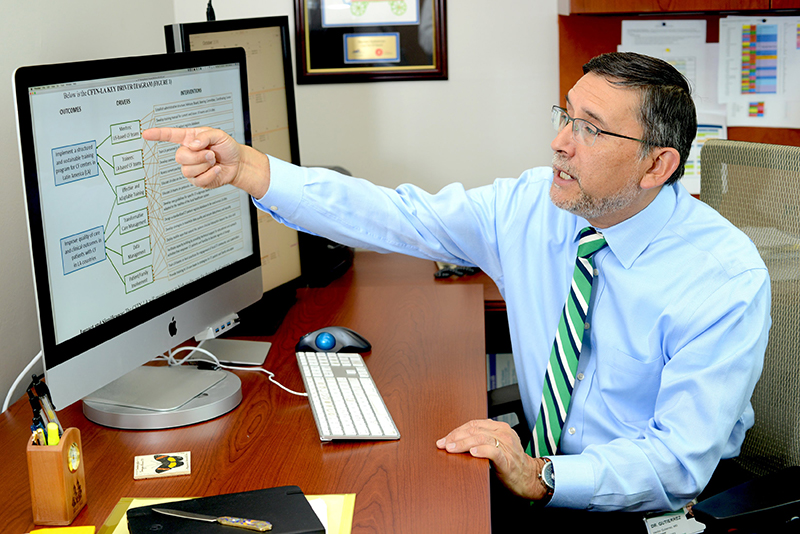
From his office on the south side of Birmingham, Alabama, pediatric pulmonologist Hector Gutierrez, M.D., shares his passion to help cystic fibrosis (CF) patients around the world. In addition to being director of the University of Alabama at Birmingham (UAB) Division of Pediatric Pulmonology and the Cystic Fibrosis Center at Children’s of Alabama, Gutierrez is also principal investigator of the Cystic Fibrosis Training Network for Latin America (CFTN-LA). He leads a specialized team whose goal is to establish CFTN-LA as a permanent presence in Latin America.

“Unlike the United States, most Latin American countries lack a center network to provide shared information and collaboration to help improve the care of patients. Because of this, they have been at a great disadvantage,” Gutierrez said. “A sustainable training program for CF centers can help improve quality of care, clinical outcomes and life expectancy for Latin American CF patients.”

The CFTN-LA strives to meet the same goals of the CF Foundation, which over the past 60 years has established itself as a global leader in rare disease research and advancement of new CF therapies in the U.S. The network aims to provide high-quality care for thousands of Latin American patients, to establish comprehensive, multidisciplinary CF centers and to address preventive barriers. Gutierrez said the network would open important avenues for future research and drug development.

“Several factors limit the optimal CF delivery of care in these countries,” Gutierrez said. “Whereas diagnostic testing and medications are increasingly available here in the United States, there has been a paucity of expert manpower and a lack of multidisciplinary team approach in Latin America.”

Gutierrez said the CFTN-LA would lay the foundation for a well-integrated infrastructure for CF centers and their teams, with future training efforts led in qualified Latin America centers, ensuring continued growth and sustainability of the network.  Since 2014, Gutierrez has led eight benchmarking visits to Chile to help ensure access to high-quality care and establish the CFTN-LA. In turn, the Santiago, Chile-based Hospital Clínico San Borja Arriaran (HCSBA) CF team, among the partners in this endeavor, visited Birmingham for a two-week training to accelerate the project.

Because the current Latin America healthcare delivery systems do not integrate or share information, patients may change from one system to another without proper follow-up and data acquisition. In addition, some health professionals essential to the CF team work as independent contractors to both public and private systems, resulting in higher costs to insurers and families.

The CF Center at Children’s has proposed establishing a multidisciplinary CF Center in Santiago, Chile, providing care adhering to CF Foundation standards. Collaborative work has led to significant improvement in clinical outcomes and team expertise for a number of hospitals in Chile.  In 2015, the HCSBA CF team was approached by five other Santiago-based hospitals that are now part of the project as affiliate hospitals. After the incorporation of the affiliate hospitals, the HCSBA CF Center renamed itself Regional CF Center Santiago.

“This project started with one center, one hospital, and other hospitals in Santiago started to get interested,” Gutierrez said. “They joined by participating in our visits in Chile, and we provided similar information and feedback, but the first center (HCSBA) that came to Birmingham became their leader and the point group for the others to learn from them.”

Efforts thus far have shown a marked improvement in nutritional outcomes, lung function and microbiology among CF patients cared for by the participating hospitals in Chile, Gutierrez said.

“We have been in discussion for two years with the government officials in Chile and other Latin American countries to work toward developing a solid CF network similar to what we have in the United States,” Gutierrez said. “We have explained the benefits, however, the structure of care deliveries, health care benefits, et cetera are different. Although we have started small, we feel we are making progress and hope to continue to do so in the years to come.”

A mentorship by high-performing, U.S.-based CF teams, namely Children’s, UAB and the Baylor College of Medicine in Houston, plans to expand and train Latin America-based CF teams in Chile, Mexico and Uruguay. The mentorship would continue the development of an effective, adaptable and scalable training program for both mentors and trainees, and adapt transformative care management to local resources, culture, customers and healthcare delivery.

Pulmonary Clinics
Learn more about some specialized pulmonary services at Children’s of Alabama.

Nephrology

Telenephrology: Bringing the Nephrologist to the Patient—Virtually

Nephrology_Telemedicine

With only six pediatric nephrologists in the state, families must often drive hundreds of miles—and many times stay overnight—for appointments with Children’s of Alabama physicians. In fact, 48 percent of the hospital’s transplantation patients come from more than 100 miles for each appointment, and 32 percent  from more than 200 miles, said Daniel Feig, M.D., Ph.D., who directs the pediatric nephrology and renal transplantation program.

“It’s more than a slight challenge to get here,” Feig said.  “It entails missed school and work and the cost of getting back and forth.”

And that, in turn, can compromise the quality of care or even lead to missed opportunities for care.

Now, however, families can “see” a doctor just a few miles from home thanks to the practice’s new telenephrology program. The program, which began in June, builds on the success of the adult telenephrology program for dialysis patients started by Director of Telehealth Eric L. Wallace, M.D. in collaboration with the Alabama Department of Public Health. It involves teaming with the public health department in each of the state’s 67 counties to see patients remotely.

“So all families are within 25 miles of a site of care,” said Feig.

Families Appreciate the Convenience

To date, seven patients have been seen a total of 16 times remotely.

“Every family said they would like to continue the remote visits,” Feig said.

The primary difference in the visits, of course, is that the patient and doctor are not in the same place. Other than that, nearly everything else is the same. Lab and radiology tests are obtained before the visit so the doctor can evaluate them prior to meeting; a high-resolution camera enables the physician to examine the skin, mouth and ears; and Bluetooth technology allows for a heart and lung exam. A nurse in the room facilitates the exam.

“What we lose is the physical feel of the belly exam or the pulse,” Feig said.

This is why patients chosen for telehealth are those who are most amenable to visual exam evaluations.

Still, nephrologists deliberately started the program with renal transplant patients—“the most complex patients possible, said Feig. These patients see a multitude of providers when they come to the on-site clinic, including the pharmacist, child life and social workers, the transplant nurse and transplant counselor – all of whom participate in the virtual visit.

“If we can manage the most complex patients through telemedicine, we can leverage the scale to those who need less in the way of specific practitioners involved in the visit,” Feig said.

Moving forward, Feig and Wallace said they plan to significantly increase the number of patients seen, including first-time patients. Challenges include not only the physical infrastructure, but training staff to schedule telehealth visits versus inpatient visits.

“A true telemedicine clinic is the goal,” Feig said.

Wallace agreed.

“For many in Alabama, the reality is that it is telehealth versus no care,” Wallace said.

For instance, 17 percent of families in Wilcox County do not own vehicles.

“A big part of telehealth is reaching people who would never have been able to be seen,” Wallace said.

Nephrology Research
Learn more about research conducted by Daniel Feig, M.D., Ph.D., and other nephrology specialists at https://www.childrensal.org/nephrologyresearch.

Neonatology

Joined at the Hip

Neonatology_Hip

The sky bridges connecting the University of Alabama at Birmingham (UAB) Women & Infants Center and Children’s of Alabama provide more than a means of travel from point A to B. For the UAB/Children’s Division of Neonatology, the sky bridges not only facilitate seamless clinical care, but also seamless research collaborations.

“It’s a tremendous benefit,” said Trent Tipple, M.D., UAB associate professor of pediatrics, director of neonatology faculty development and co-director of the Neonatal-Perinatal Medicine Fellowship Training Program. “The integration is one that just makes sense. It eliminates a lot of barriers that can make research frustrating and allows one to focus on designing the best study with the necessary personnel; to really think about how to execute a study rather than whether a study can be done.”

“It’s one of the unique features here. UAB’s Regional Neonatal Intensive Care Unit and Children’s NICU are literally joined at the hip,” said Namasivayam Ambalavanan, M.D., UAB professor of pediatrics, neonatology division co-director, director of the Translational Research in Normal & Disordered Development (TReNDD) Program at UAB and principal investigator of the UAB Research Center. “This makes clinical care a lot better and research also improves.”

Carl “Tim” Coghill, M.D., UAB professor of pediatrics and medical director of Children’s NICU, said the physical proximity not only serves as a benefit to clinicians and researchers, but also patient families facing what can be a stressful experience.

“Many freestanding children’s hospitals are blocks away from their associated delivery units, making it difficult for consultants to see the infants without transfer away from the mother,” Coghill said. “Children’s of Alabama used to be two blocks from UAB with no connecting bridge. With the present bridge, the closest NICU bed at UAB is only 75 feet from the nearest NICU bed at Children’s, which is closer than some beds are to each other in other respective units.”

Coghill continued, “The ability to stay with a nursing staff that you know and a hospital that you are familiar with while continuing to get the best care is a confidence builder, and delivering great care is only good enough if it is perceived to be great care by the patients and families as well.”

As a founding member of the Eunice Kennedy Shriver National Institute of Child Health and Human Development (NICHD) Neonatal Research Network (NRN), part of the National Institutes of Health (NIH), UAB/Children’s is consistently one of the top centers in developing, leading, enrolling and analyzing randomized controlled trials and clinical studies. For example, neonatology division members have led three major innovative NRN studies – the SAVE Factorial Trial, the Cytokine Study and the SUPPORT Factorial Trial. A fourth trial led by UAB/Children’s neonatologists testing the effects of caffeine late in the neonatal course and at home to shorten hospitalization and decrease apparent life threatening events began enrollment this year.

In its more than 30 years of existence, the NRN has defined the standards of multi-institutional collaborative research resulting in increased survival and decreased morbidity rates of extremely low birth weight infants and other critically ill infants in the U.S. Wally Carlo, M.D., Edwin M. Dixon Endowed Chair in Neonatology and neonatology division co-director, and Ambalavanan are principal investigators for the NRN and have led nationwide studies on ventilator care, antenatal steroids, chronic lung disease and neurodevelopment outcomes. A study in the NRN published in the New England Journal of Medicine reported that neonatal mortality has been decreased over the last 10 years, including decreases in almost all specific causes of neonatal mortality, because of improvements in care implemented in the NRN centers.

In addition, UAB/Children’s is the only facility in the U.S. to be awarded grants in all three perinatal networks from the NICHD – the NRN, the Maternal-Fetal Medicine Units Network and the Global Network for Women’s and Children’s Health Research. For more than two decades, these networks have awarded UAB/Children’s more than $20 million to fund research for pregnant women and babies. The most recent grants, awarded in 2016, will bring a total $1.1 million per year through 2021.

Under the Global Network, UAB/Children’s researchers have led seminal investigations of resuscitation and essential newborn care in 100 communities in six countries, which included almost 200,000 infants. These trials established the effectiveness of these interventions in reducing stillbirths and neonatal mortality, and led to worldwide implementation of training, including the globally-implemented Helping Babies Breathe Program and the Essential Care for Every Baby Program launched in 2014. The programs have been introduced in more than 75 countries to save babies’ lives at birth, with the potential to reduce infant deaths soon after birth by 1 million.

“It should save a million lives every single year at almost no cost,” Carlo said of the programs. “It will save the most lives in the world.”

Division of Neonatology
Learn more about the Division of Neonatology, including specialty clinics and faculty bios, at https://www.childrensal.org/neonatology.

Hematology and Oncology

The Institute for Cancer Outcomes and Survivorship Focuses on Key Quality-of-Life Issues

HemOnc_ICOS

As more patients—adult and pediatric—become long-term cancer survivors, it becomes ever more imperative to identify ways to prevent, or at least manage, long-term complications from the cancer and its treatment.

Just how to do that forms the cornerstone of the research conducted at the University of Alabama at Birmingham (UAB) School of Medicine through its Institute for Cancer Outcomes and Survivorship (ICOS). “We are interested in developing a strong base of researchers who are focused on studying cancer outcomes long-term and identifying the issues cancer survivors face,” said ICOS Director Smita Bhatia, M.D., MPH. “We are continually striving to improve the quality of life of cancer survivors.”

Diverse Group

A diverse group of researchers from UAB participates in ICOS, including epidemiologists, physician scientists, behavioral scientists, molecular biologists and nurse scientists. They come from numerous departments, including radiation oncology, medical and pediatric oncology, and surgical oncology. Within ICOS, they have access to a state-of-the-art infrastructure that supports outcomes research, thus facilitating the transitional research that is integral to the Institute’s mission.

“The overarching goal of the ICOS is to conduct cutting-edge research in cancer outcomes across the age spectrum,” Bhatia said.

Since its founding in 2015, Institute researchers have received more than $10 million in grants from the National Institutes of Health and private foundations, and published more than 250 papers in peer-reviewed journals, a third of them high-impact journals.

Asking the Right Questions

All research studies start with asking the questions that no one has asked before, Bhatia said. “Questions are definitely going to move the field forward and make people’s lives better,” she noted.

For instance, a current study is examining long-term morbidity in pediatric cancer survivors, 60 percent of whom will eventually develop complications related to their cancer treatment. “We are systematically studying the molecular basis of these long-term complications,” Bhatia said.

Questions include: Why does radiation increase the risk of other cancers? How does a child’s DNA make them more prone to radiation-related cancers? Are there ways to predict children who are more likely to develop  treatment-related conditions and find alternative treatments to attack their cancer?

The Institute is also studying adherence to oral chemotherapy. “We find that children with acute lymphoblastic leukemia (ALL) often don’t take their medications as directed,” increasing their risk of relapse, Bhatia said. “We are now testing strategies to improve adherence to oral chemotherapy.”

To explore the impact of radiation and chemotherapy on the developing brain, researchers are using MRI to identify cellular signs of “chemo brain” and looking for ways to protect the brain during treatment.

“When a new patient comes in with cancer, the first thing we have to do is get rid of that cancer,” Bhatia said. That typically means using agents known to increase the risk of neurocognitive deficits. “So we have to develop methods to reverse or halt these complications.”

Several other research questions are under investigation, including ways to:

  • Expand the HPV vaccination rates in childhood cancer survivors
  • Determine the burden of morbidity older cancer survivors experience
  • Understand the best way to treat older patients with cancer without causing undue toxicity
  • Improve end-of-life experiences for cancer patients


Understanding ICOS Research
Learn more about ICOS research and watch an interview with Smita Bhatia, M.D., MPH.