Cardiology, Inside Pediatrics

Improving Quality and Outcomes in Cardiology

Ashley Moellinger, RN, CRNP, Cardiovascular Services, Children's of Alabama

Ashley Moellinger, RN, CRNP, Cardiovascular Services, Children’s of Alabama

Children’s of Alabama is deeply committed to continual improvement in every part of the care pathway. Two quality-improvement projects in cardiology are already showing the results.

Handoff of Care

Medical errors are the third-leading cause of death in the United States.[1] The Joint Commission reports that two-thirds of serious medical errors, or “sentinel events,” are tied to poor communication, and half involve communication during care handoff, such as when a patient is transferred from the intensive care unit (ICU) to surgery or back.[2]

The handoff is an important faultline for miscommunication that can lead to patient harm, said Children’s of Alabama cardiovascular intensivist Hayden Zaccagni, M.D. It’s not just communication between the intensivist and the surgeon; it involves the pediatric anesthesiologist, bedside and surgical nurses, advanced practice practitioners, and respiratory therapists.

“It’s a big team that cares for these patients,” Dr. Zaccagni said. Research shows that standardizing the handoff from the ICU to the operating room increases communication without delaying surgery and increased provider satisfaction and patient readiness for surgery while reducing errors.[3],[4]

The cardiology service didn’t have standardized protocol for handoffs, so Dr. Zaccagni, together with Ashley Moellinger, RN, CRNP, leda quality-improvement (QI) project to develop a process that prioritized clear, concise, and consistent communication from the cardiac ICU to the operating room or catheterization lab.

They started with a survey of 82 staff members, which found that 69 percent had experienced a safety event related to inadequate handoff. The survey also showed that communication was the primary barrier to transition followed by organizational barriers.

The team developed a tool and process for handoffs that involved all clinicians who interacted with the patient. “This multidisciplinary approach is so important,” said Moellinger.

Now, the night prior to surgery, the nurse practitioner, bedside nurse, and respiratory therapist complete a data form on the patient. The next day, the entire team meets at the bedside to review the form and bring up any concerns. “A big part of this is around situational awareness, or concerns we have about the patient that might not be obvious from reading through the chart or notes,” said Moellinger.When the patient is transferred, the team verbally goes through the tool again to ensure there are no outstanding questions or changes in condition.

The team is also tracking what it calls “moments of clarity”—when the process unveiled a potentially problematic issue such as a difficult airway, unavailability of vasoactive drip, patient cardiac arrest the prior night, or airway management for a patient with worsening oxygen levels.

The goal, or “smart aim,” was to demonstrate a standardized handoff in 80 percent of transition interactions, with 80 percent completion of patient data points by December 2021, and 95 percent compliance by July 2022.

Reintervention Reduction

This reintervention reduction QI project focuses on the most complex cardiothoracic surgery performed in newborns. Called the Norwood procedure, the surgery involves constructing a new, larger aorta for babies born with hypoplastic left heart syndrome. Nationally, patients who don’t require an intervention after their surgery have a mortality rate of about 6 percent compared to the 26 percent mortality rate in those who require another surgery or catheterization procedure.

The project, which is part of the National Pediatric Cardiac Quality Improvement Collaborative, was designed to understand why reinterventions occurred and identify opportunities to recognize the warning signs early in the post-operative period.

The Children’s team first performed a root-cause analysis of the 69 patients who required additional interventions between January 2015 and June 2020. That involved identifying what triggered the complication and how it could have been prevented. Of the 69 patients, 23 (34 percent) required an unplanned cardiac surgery or catheterization while hospitalized after the first-stage operation. Half of the surgical interventions were to explore unexplained bleeding, and half of the catheterization interventions were for conduit stenting to improve pulmonary blood flow. Fewer than five patients (12.5 percent) who required a reintervention died compared to none in the other group.

Reviewing the entire care pathway from the cardiovascular ICU to the operating room and back, including rates of post-operative bleeding and the timing for administering blood products, “we were essentially able to come up with a solution that we should communicate more effectively between team members in the operating room,” said Dr. Zaccagni. One way to improve communication is to wait at least 30 minutes in the operating room after closing the sternum to estimate chest tube output. Another is to standardize blood work when a patient is bleeding in case it’s due to a rebound effect of blood thinners given during the surgery. In addition, the team developed a standardized tool for the post-operative debriefing with the entire team.

The efforts are already paying off, said Moellinger, with fewer reinterventions since they began in 2020. “Standardization and, thus, reducing variation in everything we do is an important component for the best outcomes,” she said.


[1] Makary MA, Daniel M. Medical error—the third leading cause of death in the US. BMJ. 2016;353:i2139.

[2] The Joint Commission. Inadequate hand-off communication. Sentinel Event Alert. September 12, 2017. Issue 58.

[3] Caruso TJ, Marquez S, ,Luis J, et al. Standardized ICU to OR handoff increases communication without delaying surgery. Int J Health Care Qual. 2017;30(4):304-311.

[4] Joy BF, Elliott E, Hardy C, Sullivan C, Backer CL, Kane JM. Standardized multidisciplinary protocol improves handover of cardiac surgery patients to the intensive care unit. Pediatr Crit Care Med. 2011 May;12(3):304-8.

Inside Pediatrics, Nephrology

Childhood Household Dysfunction Predicts Hypertension, Vascular Injury in Adolescents 

Dan Feig, M.D., Ph.D., is a pediatric nephrologist at Children’s of Alabama and a professor in the Division of Nephrology in the University of Alabama at Birmingham Department of Pediatrics.

Dan Feig, M.D., Ph.D., is a pediatric nephrologist at Children’s of Alabama and a professor in the Division of Nephrology in the University of Alabama at Birmingham Department of Pediatrics.

Verbal and physical abuse; neglect; and household dysfunction such as divorce, domestic violence, and poverty in early childhood (called adverse childhood experiences, or ACEs) affect approximately 25 percent to 30 percent of children in the United States. They also put those children at significantly increased risk for health issues like hypertension and cardiovascular disease as adults.  

“Ideally, we would like to prevent neglect, maltreatment, abuse, and household dysfunction,” said Children’s of Alabama pediatric nephrologist Daniel Feig, M.D., Ph.D. “But until that can be achieved, we need to work on mitigating their long-term effects.” Dr. Feig’s work looks at whether experiences have already changed the vascular function of individuals exposed to ACEs and whether those changes are reversible.  

“We want to see if there’s a detectable signal, something that puts them in the risk category for future disease and identify those who would benefit from intervention or therapy,” he said. 

Dr. Feig and his team used validated questionnaires to screen 78 teens for the three types of ACEs: abuse, neglect, and household dysfunction. Nearly 70 percent had been exposed to at least one ACE. The investigators also tracked the adolescents’ blood pressure with a 24-hour continuous ambulatory blood pressure monitor; measured their pulse wave velocity (a marker of blood vessel elasticity and reactivity); and looked for markers of inflammation and increased vascular tone in their bloodwork. 

They found that compared to teens with no exposure or with exposure to abuse and neglect, individuals exposed to household dysfunction had a significantly higher 24-hour diastolic blood pressure without the normal drop that occurs at night. They also found a significantly increased baseline inflammatory state. Those who experienced sexual abuse had substantially altered pulse wave velocity, which meant their blood vessels were stiffer. Despite these changes, the children had normal blood pressure. 

“This tells us that even as early as 10 to 12 years after exposure there are detectable alterations in vascular biology associated with the ACEs,” Dr. Feig said. “These individuals might benefit from interventions to reverse or slow those changes to prevent the progression of hypertension and the later risk of cardiovascular disease.” 

The team expected to see more changes in children with a history of exposure to abuse. Dr. Feig hypothesizes that the chronic nature of household dysfunction may be behind the vascular changes. “Things that reset the biology of the vessels are slow and steady effectors,” he said. “That can be dietary, that can be obesity, that can be emotional stressors, or chronic inflammation. I think that the household dysfunction category might have a greater continuous effect as opposed to episodes of horrific injury.” 

The next step is to intervene with medications to try and reduce inflammation and prevent the progression of vascular dysfunction.  

The group is currently following the study participants and hope to secure funding for larger longitudinal studies. 

Inside Pediatrics, Nephrology

Tracking Kidney Transplant Rejection in the Blood and Urine 

Michael Seifert, M.D., is a pediatric nephrologist at Children’s of Alabama and an associate professor in the Division of Nephrology in the University of Alabama at Birmingham Department of Pediatrics.

Michael Seifert, M.D., is a pediatric nephrologist at Children’s of Alabama and an associate professor in the Division of Nephrology in the University of Alabama at Birmingham Department of Pediatrics.

Children who receive kidney transplants at Children’s of Alabama undergo a routine biopsy six months after the procedure to look for signs of rejection. In about 20 percent of patients, those signs are there, even if their blood and urine tests look normal. “On the flip side,” said Children’s pediatric nephrologist Michael E. Seifert, M.D., “that means about 80 percent of our patients are getting biopsies that are normal.” 

The holy grail, then, would be a non-invasive biomarker test using blood or urine that can identify kidney transplant injury without needing a biopsy — which is exactly what Dr. Seifert and his lab are working on. Their research relies on a biorepository of patients’ blood, urine, and kidney biopsy tissue collected throughout and after the transplant process. 

One of the blood tests they’re working on uses technology originally developed to screen maternal blood for signs of fetal abnormalities. The test looks for cell-free DNA, or cfDNA, which comes from the fetus and differs from maternal DNA. Since transplanted kidneys also have DNA different from the patient’s own kidney, “you can look in the bloodstream for the proportion of the DNA coming from the transplant versus the normal background from the recipient’s non-transplant cells,” Dr. Seifert said. High levels of cfDNA is a sign of acute kidney injury that could be due to rejection.  

Studies in adults validate this as a good method to detect rejection. “But the problem is, those are done in adults whose native kidneys would be roughly similar in size to the transplant they’re carrying,” Dr. Seifert said. Children often have a much larger, adult-sized transplant compared to the size of their native kidneys, so the cutoff levels used for diagnosing rejection in adults may not work in children. “We’re trying to make these existing diagnostic tests more pediatric specific,” he said. 

The story is different for urinary biomarkers. It’s been known for years that the kidney releases certain proteins when it’s injured. Tests to detect those proteins, however, can take days. But a new device called SimplePlex, currently available only in the research setting, can measure several of these proteins at one time in a single sample in less than an hour.   

“We’re looking at ways to get this technology closer to the clinic, so you’re not just profiling kidney transplant patients’ risk for injury based on their standard blood tests like creatinine, but you’re also adding these additional biomarkers that can tell you more information about what’s happening inside the organ,” Dr. Seifert said.  

Being able to determine via blood and urine tests who needs a biopsy and who doesn’t would have a huge impact for pediatrics, particularly at Children’s, where these biopsies are done on a universal basis, he said. Ideally, the tests could also provide information on the underlying cause of the rejection. For instance, the cfDNA test is good at picking up antibody-mediated rejection, but not as good at recognizing cell-mediated rejection. The urine biomarkers are good at identifying both rejection types, but not at identifying rejection related to viral infections. 

“Once we understand more about the clinical scenarios in which the biomarkers perform well,” said Dr. Seifert, “we’ll be able to design interventional trials to treat the patient based on the biomarker changes rather than just the standard clinical tests such as creatinine.”  

Inside Pediatrics, Nephrology

Neonatal Kidney Collaborative Advances Understanding of Acute Kidney Injury

David Askenazi, M.D., is a pediatric nephrologist at Children’s of Alabama and a professor in the Division of Nephrology in the University of Alabama at Birmingham Department of Pediatrics.

David Askenazi, M.D., is a pediatric nephrologist at Children’s of Alabama and a professor in the Division of Nephrology in the University of Alabama at Birmingham Department of Pediatrics.

A bunch of pediatric nephrologists and neonatologists walk into a National Institutes of Health meeting on neonatal acute kidney injury (AKI) in 2013. The punchline? They are inspired to form the Neonatal Kidney Collaborative (NKC) with the clever website address of babykidney.org.

“At that NIH meeting, we recognized that bringing people to work together on multicenter studies was a critical step in moving the field forward,” said Children’s of Alabama pediatric nephrologist David J. Askenazi, M.D., one of the founding members and current NKC Board chair.

Today, the collaborative boasts 77 participating institutions with 168 members and 19 published manuscripts. Several of those publications come from the group’s inaugural study called AWAKEN (Assessment of Worldwide Acute Kidney Injury Epidemiology in Neonates), the first multinational, multicenter study on neonatal AKI.

The study involved a retrospective review of three months of data on 2,162 infants in Level 2 or 3 neonatal intensive care units in four countries, a third of whom had AKI. The investigators found those with AKI were 4.6 times more likely to die and stayed in the hospital an average of 8.8 days longer than those without. Other results from AWAKEN include risk factors for mortality and the development of AKI (such as low albumin and hemoglobin levels) and hypo- and hypernatremia, as well as a link between intraventricular hemorrhage (bleeding in the brain) and AKI.

“We chose the name AWAKEN because we felt like the field needed to be awakened,” Dr. Askenazi said. And it’s worked, he said, with the number of studies, initiatives and young people interested in neonatal nephrology growing exponentially.

The collaborative, he said, “not only provides opportunities to study neonatal kidney disease, but we also have committees to address the educational, advocacy, and research needs of this evolving field.”

The group recently received a significant research grant from Nuwellis, a global company focused on fluid management solutions for pediatric and adult patients, to perform the ALMOND (Assessing Longitudinal Micropreemie Outcomes in Neonates at Risk for Renal Disease) study. “This research effort will expand our understanding of neonatal kidney disease in extremely premature neonates who were enrolled in a multicenter trial called PENUT (Preterm Erythropoietin Neuroprotection Trial),” he said.

The study will use the PENUT database, which contains thousands of clinical data points and hundreds of thousands of urine biomarker data points from more than 900 babies. “It’s a goldmine,” said Dr. Askenazi. “It will allow the NKC to pose and answers questions about kidney disease in extremely premature neonates, including whether caffeine, commonly prescribed to these infants, can prevent AKI; determine the fluid provision to improve clinical outcomes; and identify additional risk factors for neonatal AKI, among other questions.”

“The work of this collaborative is contagious, and it drives me,” he said. “It makes me want to continue to help move the field forward and support young doctors who are filled with energy and excitement.”

Inside Pediatrics, Neonatology

Quality Improvement Significantly Improves Outcomes for the Tiniest Babies

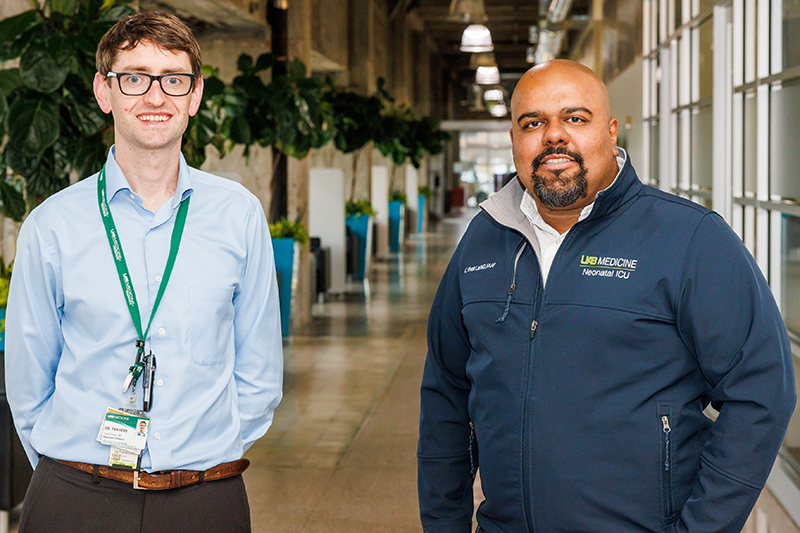
Left, Colm Travers, M.D., and right, C. Vivek Lal, M.D., are neonatologists at Children's of Alabama and faculty in the Division of Neonatology in the University of Alabama at Birmingham Department of Pediatrics.

Left, Colm Travers, M.D., and right, C. Vivek Lal, M.D., are neonatologists at Children’s of Alabama and faculty in the Division of Neonatology in the University of Alabama at Birmingham Department of Pediatrics.

In 2014, when neonatologists C. Vivek Lal, M.D., and Colm Travers, M.D., began digging into the data on extremely preterm infants (those born before 28 weeks), they found that Children’s of Alabama and the University of Alabama at Birmingham had some of the best outcomes in the country. But there was still room for improvement.

Infants born so early are at high risk of death and intracranial hemorrhage, or brain bleeds, the most devastating outcomes in the first week after birth.

“We saw a tremendous opportunity to improve mortality and other outcomes,” said Dr. Lal. “We saw this as a chance to fine-tune our practices, and not only be the best in outcomes, but also create a narrative for others to follow.”

“Our goal was to reduce the rates of brain bleeds or deaths in the first week,” said Dr. Travers. “There’s some evidence that non-adherence to certain practices and a lack of standardization can lead to worse outcomes in the smallest babies. We felt that by standardizing care to the best available evidence we could improve those outcomes.”

That’s exactly what they did with the Golden Week™ program, a multidisciplinary, evidence-based, standardized quality-improvement plan to improve the care and outcomes of the micro-preemies. It incorporates a variety of changes in how care is provided, with detailed protocols for the first hour of life, the first 72 hours, and days four to seven.

When the initiative began in 2016, the rate of severe brain bleeds or death was 27.4 percent. Today it’s less than 10 percent and continuing to fall.

The team involves neonatologists and neonatal fellows, as well as respiratory therapists, nurses, residents, and other stakeholders who care for the tiny babies at the bedside.

The initiative began with a comprehensive literature search of every clinical trial or observational study related to mortality or brain bleeds in these babies, identifying successful interventions and then integrating them into the care pathway.

These include ensuring that the mother receives corticosteroids before delivery to help the fetus mature; delayed cord clamping after delivery; putting the baby into a certain position once they’re admitted; initiating evidence-based order sets; and limiting fluid and bicarbonate boluses and the use of inotrope drugs as well as blood transfusions.

Some of the changes were tiny, but with big payoffs, including how the nurses change the babies’ diapers. “We make sure they don’t move the head too much or lift the body too much. Anything that might cause a change in the blood flow going to the brain,” Dr. Travers said. Overall, the team made 24 changes in the care provided during the first week.

The key was not one change, but the changes as a whole, said Dr. Travers. “It was when we put all of these small changes together that we saw the impact,” he said.

The results are being published in the journal Pediatrics this spring.

Cardiology, Inside Pediatrics

Harmony Device Saves Children from Open-Heart Surgery

Harmony transcatheter pulmonary valve

In July 2021, interventional cardiologist William McMahon, M.D., Mark Law, M.D., and the Pediatric Cardiac Catheterization Lab team at Children’s of Alabama, snaked a catheter device through a vein in a 16-year-old girl’s leg up to her heart and replaced the valve. She went home the next day with just a small scar on her leg that will eventually become invisible. The U.S. Food and Drug Administration approved the device, called the Harmony transcatheter pulmonary valve, in March. Drs. McMahon and Law were the first cardiology specialists in a 10-state region to use it.

Fewer than 20,000 children are born each year with Tetralogy of Fallot, a condition marked by four major heart defects: ventricular septal defect, or a hole in the two lower chambers of the heart; a narrowing of the pulmonary valve and main pulmonary artery; malaligned aortic valve; and ventricular hypertrophy, or thickening, of the right ventricle. These children often need surgery soon after birth and a pulmonary valve replacement by the time they’re adolescents or young adults.

In the past, that meant another open-heart surgery and time spent on cardiopulmonary bypass, which carries significant risks of complications; a week or more in the hospital; scarring; weeks of recovery at home; and a low but real risk of death. In addition, because the children have already had major heart surgery, scar tissue from the previous procedure makes the valve replacement even more difficult.

In July 2021, however, interventional cardiologist William McMahon, M.D., and his colleague Mark Law, M.D., together with the Pediatric Cardiac Catheterization Lab team at Children’s of Alabama, snaked a catheter device through a vein in a 16-year-old girl’s leg up to her heart and replaced the valve. She went home the next day with just a small scar on her leg that will eventually become invisible.

The U.S. Food and Drug Administration had just approved the device, called the Harmony transcatheter pulmonary valve, in March. Drs. McMahon and Law were the first cardiology specialists in a 10-state region to use it. While similar devices have been available for pulmonary valve replacement, few children with Tetralogy of Fallot qualified because of their previous surgeries. Now, Dr. McMahon estimates that four out of five children with the condition will qualify.

The new procedure is a game-changer, he said. “We have many patients who live in fear of that surgery because they’ve been told they need another open-heart surgery since they were 8 or 10. We certainly have some patients who reasonably don’t want to do it and some who put it off. That becomes a problem because it means their heart is working harder.”

Dr. McMahon says the advantages to the Harmony device are obvious: “There’s a quicker recovery; lower risk of major complications and death; and they’re able to get on with their lives sooner.” The team has completed 10 procedures so far with no complications other than some arrhythmia that resolved with treatment.

Some patients returned to work or school three days after the procedure. And while the valve won’t last forever, Dr. McMahon expects a new valve could be inserted within the old one in the same manner. “That’s the overall goal of these valves,” he said. “To reduce the total number of heart surgeries that our patients need during their lifetime.”

William McMahon, M.D.

William McMahon, M.D., is an interventional cardiologist at Children’s of Alabama and a professor in the Division of Pediatric Cardiology, University of Alabama at Birmingham Department of Pediatrics.

Inside Pediatrics, Pulmonology

New Pulmonary Faculty Join Children’s of Alabama

Spencer Poore, M.D., Ryne Simpson, M.D., and Christopher Fowler, M.D.

Left to right, Spencer Poore, M.D., Ryne Simpson, M.D., and Christopher Fowler, M.D. All three are assistant professors in the Division of Pediatric Pulmonary & Sleep Medicine, University of Alabama at Birmingham Department of Pediatrics.

The Division of Pulmonary and Sleep Medicine at Children’s of Alabama has added three physicians to its team.

Christopher Fowler, M.D.

Christopher Fowler, M.D., is used to the South, having completed medical school at the Medical College of Georgia, his pediatric residency in South Carolina, and his pediatric pulmonary fellowship at the University of Alabama at Birmingham. So leaving simply wasn’t on the table. “I enjoyed being here so much as a fellow that I really wanted to stay and keep working with this awesome team,” he said.

Dr. Fowler entered pediatrics because, as his wife put it, when he was on the pediatrics rotation in medical school, he was happiest and most excited to come home and tell her about his day.

The pulmonology specialty came after caring for his first cystic fibrosis (CF) patients, all of whom were hospitalized with pneumonia. “These kids had a lot going on. And they were very smart. They taught me all about their disease and how they take care of themselves when they’re at home and then how I should take care of them while they were in the hospital. I enjoyed getting to know them and learn from them so much that I decided pulmonology was the thing for me.”

His research focuses on investigating adrenal complications from steroids CF patients take. Chronic use leads to adrenal insufficiency, with symptoms mimicking a respiratory disease. Studies in adults with CF show that about 8 percent develop adrenal problems over a 10-year period, but there are no studies in children, he said. “I don’t know if it’s going to be as big a problem in children as it is in the adults. But I think it’s a good question to answer.”

When he’s not trying to answer complex research questions, Dr. Fowler can be found corralling his own children and playing the drums.

T. Spencer Poore, M.D.

Spencer Poore, M.D., is quite familiar with Children’s of Alabama, having completed his pediatric internship and residency in Birmingham. Now, after three years in Colorado for his pulmonology fellowship, he’s back as one of the pulmonology division’s newest faculty.

He chose Children’s for his first academic position because it provides the opportunity to treat a wide variety of patients, from urban to rural, with common conditions like asthma to extremely rare pulmonary conditions. “I wanted a big program that could expose me to anything and everything,” he said, “as well as springboard me into any direction I wanted to go given its world-renowned experts.”

He brought with him his research on fungal infections and lung inflammation in children with cystic fibrosis. “Fungus is an interesting organism in that in some people it causes infection and in some an allergic reaction,” he said. “And there’s probably some degree of overlap, but we don’t know the pathways. So it feels like chipping away at an iceberg.”

Whatever they find, he said, the recognition should go to the patients. “If it weren’t for the patients willing to help people they’ll never even meet, we couldn’t do this,” he said.

Outside of work, Dr. Poore enjoys cycling, both mountain biking and road biking.

Ryne Simpson, M.D.

Having grown up in Chattanooga, Tennessee, and attended medical school at the University of Tennessee in Memphis, Ryne Simpson, M.D., was not quite prepared for the weather when he completed his residency in Kansas City, Missouri, and his fellowship in Cincinnati, Ohio. So Children’s of Alabama — with its warm climate and proximity to his family — was a perfect fit. “I was tired of the cold Midwestern winters that never ended,” he said.

His focus on pediatric pulmonology comes from the “complex nature of the patients,” he said. “I enjoy that we get to do procedures like bronchoscopy, and also the continuity of working with the patients.”

Dr. Simpson’s prior research focused on identifying best practices for flexible bronchoscopy and chronic ventilation in children based on outcomes and readmission rates. He enjoys such quality improvement and systems process studies, he said, given their more immediate impact on clinical outcomes compared to basic or clinical research. “I don’t always have the mindset for multi-year longitudinal studies,” he said.

Since coming to Birmingham, he’s enjoyed trying new restaurants. Now that he has his own house, he said, he’s looking forward to getting a set of drums “and playing when I want.”

Inside Pediatrics

U.S. News & World Report Names Nine Children’s of Alabama Programs to Best Children’s Hospitals List

U.S. News & World Report has named nine pediatric specialty services at Children’s of Alabama among the nation’s best children’s hospitals for 2021-22.

Children’s ranked in the top 50 programs in the United States for:

This is the 12th consecutive year that Children’s has participated in the program and 12th consecutive year to be included in the rankings among the best children’s hospitals in the nation. This is also the first year U.S. News & World Report has ranked hospitals by state and region. Children’s ranked as the top hospital in Alabama for children and tied for third in the southeast region. The complete listing and corresponding rankings for the magazine’s 2021-22 Best Children’s Hospitals is online at www.usnews.com/childrenshospitals.

“We’re particularly proud of our people and programs being recognized on the national and regional levels, as we continue to provide the finest possible care and treatment to the children and families we serve,” said Children’s CEO and President Tom Shufflebarger. “Last year was entirely unique, and this year has been challenging as well, as we bounce back from COVID-19. It’s also been a rewarding year and one that has made us better as we carry out our mission to be a leading pediatric medical center.”

Children’s and the University of Alabama at Birmingham (UAB) Departments of Pediatrics and Surgery collaborated to submit the requested information. Children’s is the primary site for pediatric clinical and educational programs for the UAB School of Medicine. Children’s has provided specialized medical care for ill and injured children since 1911, offering inpatient and outpatient services throughout Central Alabama.

U.S. News & World Report introduced the Best Children’s Hospitals rankings in 2007 to help families of sick children find the best medical care available. Children’s and UAB began participating in the pediatric rankings in 2011.

Since 1911, Children’s of Alabama has provided specialized medical care for ill and injured children, offering inpatient, outpatient and primary care throughout Central Alabama. Ranked among the best children’s hospitals in the nation by U.S. News & World Report, Children’s serves patients from every county in Alabama and nearly every state. Children’s is a private, not-for-profit medical center that serves as the teaching hospital for the University of Alabama at Birmingham (UAB) pediatric medicine, surgery, psychiatry, research and residency programs. The medical staff consists of UAB faculty and Children’s full-time physicians, as well as private practicing community physicians.

Inside Pediatrics, Pulmonology

Solving the Mystery of Lung Disease in Children with Sickle Cell Disease

Dr-Saadoon-Ammar-Pulmonology-Headhsot-Resized

Children’s of Alabama pulmonologist Ammar Alishlash, M.D.

If lung disease is the leading cause of death in children with sickle cell disease, then why aren’t pulmonologists more involved in their care earlier? That’s a question Children’s of Alabama pulmonologist Ammar Alishlash, M.D., wanted to answer. “I felt for us to take care of those patients, especially those with underlying lung disease, would serve them better clinically,” Dr. Alishlash said. 

In the past, the leading cause of death in those with sickle cell disease was infections. But the use of prophylactic antibiotics changed that. Today, it’s acute chest syndrome (ACS), marked by shortness of breath, low oxygen levels and fever. Many patients progress to respiratory failure, and some die. Yet lung specialists are not usually involved in their care while in the hospital or after discharge. Instead, in most children’s hospitals they are managed solely by hematologists. 

“The problem is, we don’t have any specific treatment targeted for acute chest syndrome,” said Dr. Alishlash. Instead, patients are managed with supportive therapy, including oxygen, fluids, antibiotics and sometimes invasive or non-invasive ventilation. 

Now Dr. Alishlash is on a mission to change that dynamic. He’s launched a three-pronged research initiative: identifying risk factors for ACS to proactively recognize children with a higher risk, developing clinical pathways to prevent progression and mortality and researching novel therapies to treat the condition. 

“I became interested in this condition because I feel that, as pulmonologists, we have experience with other lung diseases,” he said. “We can apply our knowledge from other lung diseases to the sickle cell population, which could open a lot of doors for diagnosis and new treatments.” 

So far, Dr. Alishlash has instituted a clinical pathway to standardize the care children with ACS receive after admission. The pathway has been in place for about 18 months, and the results are encouraging, with a nearly 50 percent reduction in length of stay. In addition, all patients have survived. Previously, one out of every 100 children would die. “That’s pretty significant, especially when you’re talking about children, who are typically between 2 and 4 years of age when they are most likely to develop ACS,” he said. 

Dr. Alishlash has also made progress in identifying risk factors for ACS in children with sickle cell disease. One is nocturnal hypoxemia, when oxygen levels drop at night. This seems to induce the sickling and is associated with increased risk of ACS.1 He also found a correlation between the neighborhood where patients live and ACS, due to, he thinks, air quality, socioeconomic factors and greater stress.2 

On the laboratory side, Dr. Alishlash and his team are using a sickle cell mouse model to test potential treatments as well as identify triggers. One interesting finding is that chlorine can cause sickling, leading to the release of heme from red blood cells, which is toxic to the lung endothelium and subsequent development of ACS. A medication called hemopexin, however, scavenges the free heme. When given to mice exposed to chlorine who developed ACS, hemopexin reduced the death rate from 80 percent to 20 percent.3 

At the same time, Dr. Alishlash has started a twice-monthly clinic for sickle cell patients with underlying lung disease. The clinic is very busy, he said. “And patients’ outcomes are improving, which is very encouraging.” 


1 Nourani AR, Rahman AKMF, Pernell B, et al. Nocturnal hypoxemia measured by polysomnogram is associated with acute chest syndrome in pediatric sickle cell disease. J Clin Sleep Med. 2021;17(2):219–226.

2 Alishlash, AS, Rutland, SB, Friedman, AJ, et al. Acute chest syndrome in pediatric sickle cell disease: Associations with racial composition and neighborhood deprivation. Pediatr Blood Cancer. 2021; 68:e28877

3 Alishlash AS, Sapkota M, Ahmad I, et al. Chlorine inhalation induces acute chest syndrome in humanized sickle cell mouse model and ameliorated by postexposure hemopexin. Redox Biol. 2021;44:102009. doi:10.1016/j.redox.2021.102009

Inside Pediatrics, Neurology & Neurosurgery

Pioneering Surgery Spares Parents and Infants from Helmets

The Cleft and Craniofacial Center at Children’s of Alabama is one of the busiest in the country, with some of the most experienced physicians and support staff. From cleft palate to craniosynostosis (a condition in which the skull fuses too early) and complex tumor surgeries, the center draws patients from the entire Southeast region and beyond. It is a truly multidisciplinary group with neurologists, neurosurgeons, plastic surgeons, and a craniofacial pediatrician. 

It also offers state-of-the art therapies, including a new type of endoscopic surgery for craniosynostosis in infants as young as three months that is only performed in a few centers in the U.S. “The typical procedure is an endoscopic release of the craniosynostosis followed by post-operative helmet therapy,” said neurosurgeon James M. Johnston, M.D. “Helmet therapy works well, but kids have to wear it for 23 hours a day, and that can be a lot of work for families, especially when they live far from Birmingham,” he said. In addition, the Alabama Medicaid program, which covers most of these children, does not pay for the helmets, which can cost thousands of dollars (and children often need more than one). This puts tremendous financial strain on many families.  

So Dr. Johnston, joined by neurosurgeon Curtis J. Rozzelle, M.D., and plastic surgeons Rene’ P. Myers, M.D., and John Grant, M.D., brought spring-mediated cranioplasty, which was developed at Wake Forest University, to Children’s. It starts with the same endoscopic craniectomy used for children who would require helmets. Only in this procedure, the plastic surgeon steps in and inserts custom-made springs into the bony defect created by the surgery. The springs work to expand the skull over several months to correct the abnormal head shape and ensure appropriate cranial volume for brain growth. A few months later, the plastic surgeon removes the springs during a same-day surgery.  

“What’s nice is that there’s no need for a helmet,” Dr. Johnston said. Plus, studies show the procedure is just as safe and effective as cranioplasties requiring helmets.1 It’s also covered by all health insurance. “So, we’re able to do it for all children,” he said.  

A similar procedure using cranial distractors like those used to lengthen femurs is used for skull expansion, explained Dr. Grant. This technology is used in older children who need more intracranial volume but who are beyond the age at which the skull can form new bone to fill in surgically created soft spots. By “stretching” the bones of the skull more slowly, he said, the child’s body adjusts by making bone to fill in the growing gap. 

Regardless of the procedure used, early referrals are critical for these babies, said Dr. Rozzelle. “If we can see them by 2 months of age, that gives us plenty of time to get whatever preoperative assessments we need and get them on the schedule so that either the spring or endoscopic craniectomy with subsequent molding helmet is a viable option,” he said. Older babies cannot be treated endoscopically and require standard open surgery, which may lead to more blood loss and longer hospital stays.2 

Yet the craniofacial clinic still sometimes sees babies 6 months or older who never received a diagnosis or whose pediatrician didn’t refer them to Children’s. “That’s frustrating,” Dr. Rozzelle said. 

Nonetheless, said Dr. Myers, “Since we are comfortable with all of the techniques, we can tailor a plan to the individual child. No one is exactly the same.” 


1 Arko L, Swanson JW, Fierst TM, et al. Spring-mediated sagittal craniosynostosis treatment at the Children’s Hospital of Philadelphia: technical notes and literature review. Neurosurg Focus. 2015 May;38(5):E7

2 Hashim PW, Patel A, Yang JF, et al. The effects of whole-vault cranioplasty versus strip craniectomy on long-term neuropsychological outcomes in sagittal craniosynostosis. Plast Reconstr Surg 134:491–501, 2014.